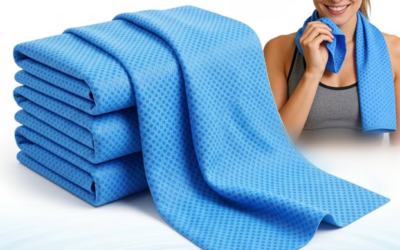
A cooling scarf and a neck gaiter aren’t interchangeable, even though they look similar enough to confuse anyone who hasn’t tried both. One relies on evaporative cooling, while the other works as sun armor and a dust shield. Pick the wrong one, and you’ll sweat through your workday or your next run anyway. We’re breaking down how each one performs in real heat, real humidity, and real sweat, so you can stop guessing and start cooling down the right way.
What Is a Cooling Scarf? How It Works for Heat Relief

A cooling scarf uses water to pull heat from your skin without batteries or electronics. Soak the fabric, and it cools through evaporation, superabsorbent polymers, or a phase-change gel. Wrapping one around your neck, wrists, or forehead puts the cooling effect directly over pulse points where blood vessels run closest to the skin.
The three main cooling technologies work differently:
-
Evaporative PVA/microfiber — Soak the material for 30–60 seconds (thicker weaves need up to 3 minutes). As water evaporates from the fibers, it pulls heat away for 2–4 hours. This is the classic cooling towel designed for dry, breezy conditions.
-
SAP polymer beads — These hold far more water than PVA. Soak for 5 minutes, then let the beads swell for another 15–20 minutes before wearing. You get 4–6 hours of gradual moisture release, but avoid twisting them hard, which can tear the casing.
-
PCM/gel core — These do not require water. Pre-chill the insert in a fridge or freezer, and it cools through phase change rather than evaporation. Relief lasts between 45 minutes and 3 hours, depending on core size.
Evaporative scarves lose effectiveness in high humidity. When the air is already saturated, it cannot absorb moisture from the fabric, slowing the cooling process. In extreme conditions, combining gear helps: a construction heat-stress study found that wearing a scarf alongside a vest and gel-pack hat covered 4.2% of body surface area, compared to 3.3% with a vest alone, keeping skin temperature and heart rate more stable.
What Is a Cooling Neck Gaiter? How It Works for Heat Relief
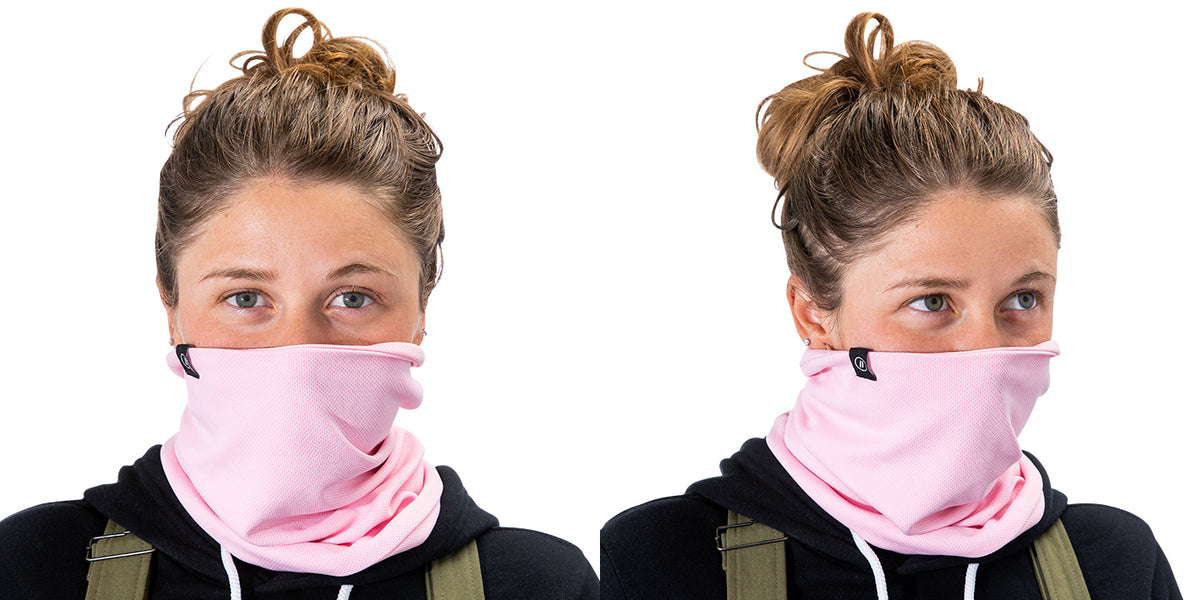
It is a seamless tube of stretch fabric you can wear around your neck, pull over your face, or twist into a beanie. There are no clasps, buckles, or extra parts to deal with.
Cooling works on the same principle as an evaporative scarf. Water spreads through the fabric and pulls heat away from your skin as it evaporates. Submerge most water-activated gaiters for about 30 seconds, wring them out, and you are ready. Milwaukee claims up to 2 hours of cooling per soak, making its gaiter a solid wrap for running or working a full shift on a job site.
Build and fit matter. Columbia’s Freezer Zero II measures 14–16 inches tall by 8.5–11.25 inches wide and uses an 89% polyester and 11% elastane blend. That fabric hugs the skin to wick away sweat consistently, while laser-cut vents speed up airflow and evaporation.
UV protection sets these gaiters apart from a basic cooling bandana. Columbia rates at UPF 50, while Milwaukee and Ergodyne reach UPF 50+, blocking 98% of UV rays. That coverage matters for anyone working or training under direct sunlight all day.
Worn dry, the tube functions as a dust mask and sweat-wicking layer for landscapers, warehouse crews, and commuters without regular access to water. Like any evaporative fabric, it cools best in dry air with a steady breeze and loses efficiency in heavy humidity.
Cooling Scarf vs Neck Gaiter: Side-by-Side Comparison Table
Numbers settle arguments faster than opinions. Here is how a cooling scarf compares to a neck gaiter across cooling mechanisms, humidity performance, UV protection, and price.
|
Comparison Point |
Neck Gaiter |
|
|---|---|---|
|
Cooling Mechanism |
PVA, microfiber, gel beads, or PCM phase-change |
Knit polyester/elastane, evaporative (soak 30 sec, wring, wear) |
|
Duration (realistic) |
PVA: 2–4 hrs; microfiber: 1.5–3 hrs; gel beads: 4–6 hrs; PCM: 45–120 min in actual use |
1–2 hrs typical; Milwaukee/Ergodyne cap at ~2 hrs, then re-soak |
|
High-Humidity Performance |
PVA drops to 30–60 min at 80–90% humidity, turns into a wet rag |
Also slows down, but stretch fabric keeps shape and contact |
|
Breathability |
Longer coverage feels heavier and clammier once soaked; PCM can feel bulky |
Single-layer or 4-way stretch (Ergodyne Chill-Its 6487) stays lighter |
|
Stability During Movement |
Wraps and knots can shift during running or jumping |
Tube shape stays put; doubles as a headband or face mask |
|
Re-Cooling |
PVA and microfiber re-soak easily; PCM needs cold water or a freezer |
Quick re-soak, wring, back on with no gear needed |
|
UV Protection |
Varies by fabric; ask for UPF test data |
UPF 50/50+ common, blocks ~98% of UV rays |
|
Retail Price |
Basic: $8–$22; PVA: $10–$25; hybrid/antimicrobial: $35–$65; PCM: $25–$48 |
Entry-level: $13–$17 (Ergodyne $13.25, Mission $16.99); premium with moisture-wicking core: ~$24.99 |
|
Best Use Case |
Gardening, warehouse work, static jobs needing neck/shoulder coverage |
Running, cycling, construction; anywhere stability and face/ear sun coverage matter |
For broader neck and shoulder coverage, choose a wide PVA or gel scarf. If you need something that stays put, covers your face, and blocks UV, a neck gaiter works better. In humid climates, ignore the “8-hour” marketing claims. Plan around 30–120 minutes of actual cooling, and pick whichever option is easiest to re-wet during your day.
Which Is Better for Hot, Humid Weather?
Humidity changes the math. Evaporative fabrics, from scarves to cooling bandanas, rely on dry air to pull moisture off the fibers. Saturate that air, and the cooling stalls. When relative humidity climbs from 30% to 70% at 30°C, lab tests show some evaporative gear drops to a 4.3–4.7°C temperature reduction. In thick humidity, that damp fabric against your skin feels clammy rather than cool.
PCM accessories handle humidity better. Phase-change gel absorbs heat by melting at a set temperature, regardless of moisture in the air. In a heat-stress test at 34°C and 60% RH, PCM vests kept torso skin temperature 2–3°C lower—conditions where a standard evaporative scarf fails.
PCM still has limits. Its practical ceiling runs around 80% RH at 28°C, dropping to 53% at 35°C and 31% at 45°C. Beyond those thresholds, pair PCM with a small fan or a desiccant layer to stop moisture from building up inside the gear.
In muggy climates, skip pure evaporative cooling towels. Choose PCM inserts instead, or wear a neck gaiter with ventilated, moisture-wicking panels that will not trap sweat against your skin.
Which Is Better for Dry Heat and Outdoor Work?
Dry air changes everything. On a desert job site or in any low-humidity setting, a water-activated evaporative scarf works far better than a standard cotton bandana or an ice pack melting down your shirt. But if you face heavy physical labor, direct sun, and no time to re-wet gear every hour, a PCM neck gaiter gives you more dependable cooling.
Water trapped in the fabric evaporates and pulls heat away from your skin. Dry air and moving wind accelerate this process, giving you an immediate chill the second a breeze hits.
Humidity sets the limit:
– Below 60% relative humidity: evaporative scarves perform well
– Above 65%: cooling slows down
– At 80–90% humidity: effective cooling drops to 30–60 minutes
Best conditions for evaporative cooling:
– Ambient temperatures between 24–35°C
– Natural wind or steady movement
– Fabric kept damp without dripping
– Direct contact with the sides of the neck, nape, and collarbone
To activate most scarves, soak them for 30 seconds to 3 minutes, then wring out the excess water.
Material Performance in Dry Heat
|
Material |
Cooling Window |
Best For |
|---|---|---|
|
PVA/superabsorbent polymer |
2–4 hours |
Gardening, building inspections, light outdoor labor |
|
Microfiber |
1–3 hours |
Lighter, dries faster |
|
PCM gel |
45–120 minutes |
High-intensity work, limited water access |
Why Wide Scarves Win for Moderate-Activity Jobs
Landscapers, site supervisors, nursery crews, and loading-dock workers benefit more from surface coverage than heavy airflow. A wide scarf (8–15 cm wide, 80–120 cm long) rests across the nape, carotid area, and collarbone together. That spread cools the neck evenly without needing rapid motion to create a breeze, while shielding skin from the sun.
The tradeoff comes down to drying time and fit. Wider cuts carry more water and dry out faster in low humidity or stiff wind. Heavy sweating and safety harnesses can also pull them out of place during hard labor.
Packages that promise six hours of cooling assume mild airflow and steady shade, conditions you will rarely find on a July job site.
Best Choice for Running, Cycling, and Active Sports
Sweat changes the rules. For running, cycling, or any workout that spikes your heart rate, look for a lightweight, four-way stretch, moisture-wicking gaiter with ear loops, a drawstring, or an adjustable toggle. That physical anchor keeps the fabric over your nose and mouth so you never have to pull it back up mid-sprint.
A plain stretch tube like the BUFF CoolNet UV+ wicks moisture and dries fast, but without ear loops, it tends to slide down when you move your head. Reviewers also report pilling after repeated washes. The ROCKBROS Summer Cooling Neck Gaiter solves the fit problem with adjustable ear loops, a drawstring toggle, and mesh ventilation panels. Cyclists and runners report minimal slippage and no need to adjust it mid-ride, though a few note that the mesh feels slightly tacky against bare skin.
Fabric Weight Matters More Than You’d Think
|
Metric |
Lightweight Quick-Dry |
Heavy Fabric |
|---|---|---|
|
Common materials |
Polyester, polyester/spandex, ice-silk, 4-way mesh |
Heavy cotton, wool blends, dense knit |
|
High-intensity fit |
Running, cycling, hot-weather training |
Low-intensity, cold-weather use |
|
Sweat handling |
Spreads moisture outward, evaporates fast |
Absorbs and holds water, dries slowly |
|
Breathing comfort |
Mesh stays breathable, no clammy buildup |
Traps heat/moisture over nose and mouth |
For reference, Pioneer’s Cooling/Warming Gaiter weighs about 190 GSM in a rayon/spandex blend. That works for year-round wear, but it runs warmer than you want for summer running. Any fabric lighter than that breathes noticeably better once you start sweating.
Best Choice for Daily Commuting and Travel
Commuting gear should stay out of the way until you need it, then work immediately. A thin, four-way stretch neck gaiter beats a traditional scarf on every count. Look for UPF 50+ fabric, which blocks about 98% of UV rays. Carhartt’s Force All Season Gaiter hits that spec with a 150 GSM recycled polyester and spandex blend.
On dusty sidewalks, bike commutes, or windy bus stops, you need fabric you can pull over your nose in one motion. It shields against road dust and wind between home and office, though it is no substitute for a certified particulate respirator.
Weight and Packability
Target 50–70g and 23–64cm in length. A merino sample weighs about 64g at 25×9.5 inches (63.5×24.1cm), which is compact enough to slide into a coat pocket. Merino also handles odor and moisture better during sudden temperature swings.
Thin Gaiter vs. Traditional Scarf
|
Factor |
Thin Gaiter |
Traditional Scarf |
|---|---|---|
|
Put on/off |
Seconds, one hand |
Wrapping, adjusting |
|
Stability while biking |
Stretch fabric holds |
Can loosen from wind/collar friction |
|
Coverage |
Neck, nose, partial head |
Shoulders, chest; travel scarves run 70–80 in. long |
|
Cleaning |
Machine wash, quick-dry |
Wool/cashmere often needs hand wash |
|
Best for |
Daily commute, cycling, variable temps |
Formal wear, deep cold, shoulder coverage |
Travel Rotation
Pack two gaiters so you can wash one while wearing the other. Many brands sell 4- or 8-packs for this rotation. Compressed, a gaiter takes a fraction of the space of a 227–283g scarf, even if a cashmere scarf can double as a flight blanket.
Make a UPF 50+ thin stretch gaiter your default choice for commuting. Save merino or fleece options for freezing destinations, and leave the heavy scarf at home.
How to Choose: Buying Checklist for Cooling Neck Wear
Product specs do not tell the whole story. Before adding anything to your cart, run it through this checklist. It breaks down the cooling tech, fabric, upkeep, and fit that determine whether a piece belongs in your gear bag.
Match the Technology to Your Environment
|
Technology |
Best-Use Conditions |
Buying Criteria |
Main Drawback |
|---|---|---|---|
|
Evaporative fabric / SAP beads |
Dry heat with airflow, outdoor work, sports |
Stated activation time, cooling duration (typically 2–4 hrs), bead containment, re-wetting instructions |
Slows down in high humidity, feels damp, needs re-soaking |
|
PCM phase-change insert |
Humid climates, indoor work, vehicles, low-airflow spaces |
Operating temperature (some solidify at 21°C), insert replacement, runtime (2–4 hrs typical) |
Costs more, adds weight, needs chilling |
|
Ice-crystal / cold-pack inner |
Stagnant indoor air, max initial chill |
Leak-resistant seals, stated runtime (one commercial pack holds ~64°F/18°C for up to 2 hrs without airflow) |
Bulky, can feel too cold, depends on freezer access |
Rule of thumb: evaporative for dry, ventilated work; PCM or cold-pack for humid, still air.
Fabric and Sun Protection
-
Blend: Polyester and spandex blends provide the right balance of stretch, wicking, and breathability.
-
Ventilation: Mesh panels or laser-cut vents at the mouth, sides, and nape allow airflow without sacrificing sun coverage.
-
UPF: Target UPF 50+, which blocks about 98% of UV radiation. Look for a verified standard like AATCC 183, ASTM D6603, or AS/NZS 4399, because unverified “UV fabric” labels mean very little.
Maintenance and Durability
-
Check the wash instructions for cold cycle, laundry bag use, no bleach, and air-drying.
-
SAP-bead products can take 3–4 days to air-dry completely before storage.
-
Look for a verified cycle life of 100+ washes or activations rather than an unsubstantiated “reusable” claim.
-
Soak, squeeze, and wear the piece for 5 minutes. Reject anything that drips or swells unevenly.
Frequently Asked Questions About Cooling Scarves and Neck Gaiters
Six questions come up more than any others once people test these products. Here are the direct answers.
Does a cooling scarf last longer than a neck gaiter?
Material matters more than shape. A PVA scarf runs 2–4 hours in dry, warm air, with premium models stretching to 5 hours. Standard evaporative gaiters top out around 2 hours, though advanced blends claim 2–8 hours depending on airflow and humidity. Pre-chilled PCM or ice-pack options deliver steady, targeted cooling for 2–5 hours.
Can you wear either one dry?
Yes, though you lose the cooling effect. Dry scarves and gaiters still block sun and dust. Milwaukee’s gaiter maintains UPF 50+ protection even when dry, but evaporative cooling requires water to work.
Do scarves and gaiters do the same job?
They overlap, but they suit different activities. Scarves offer more surface area and a longer evaporative window of 2–4 hours for PVA, though loose fabric can snag during active work. Gaiters fit snugly, pair well with helmets and masks, and stay put, trading some cooling surface for a secure fit.
Does humidity really kill the cooling effect?
Yes. Dry, breezy air speeds up evaporation, while heavy humidity stalls it. In muggy climates, PCM or hybrid designs hold up better. PCM delivers 45+ minutes of steady relief, and hybrid models can stretch to 4 hours.
How often should I re-wet or remove the gear?
Re-wet evaporative fabric as soon as it dries out. Take cooling packs off every 2–3 hours for 5–10 minutes so your skin can breathe. Handle PVA gently, since wringing or twisting tears the fibers.
Conclusion
Pick the cooling gear built for your specific heat. If you’re battling humidity or need a quick evaporative cooling scarf for errands and desk-to-car commutes, crystal-infused fabric wins on convenience. If you’re grinding through a job site, trail run, or long bike ride, a neck gaiter’s UV protection and moisture-wicking stretch will outlast you. Buying blind leaves you with a product that sits in a drawer by July.
Match the gear to how you sweat, move, and spend your afternoons, and you’ll stop wasting money on heat-relief accessories that don’t pull their weight. Browse icebeartech.com’s cooling lineup, filter by your activity, and let the specs decide.