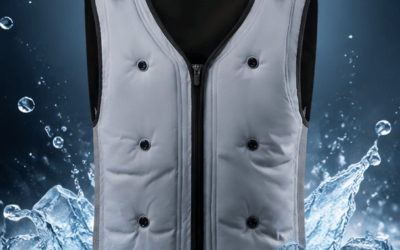
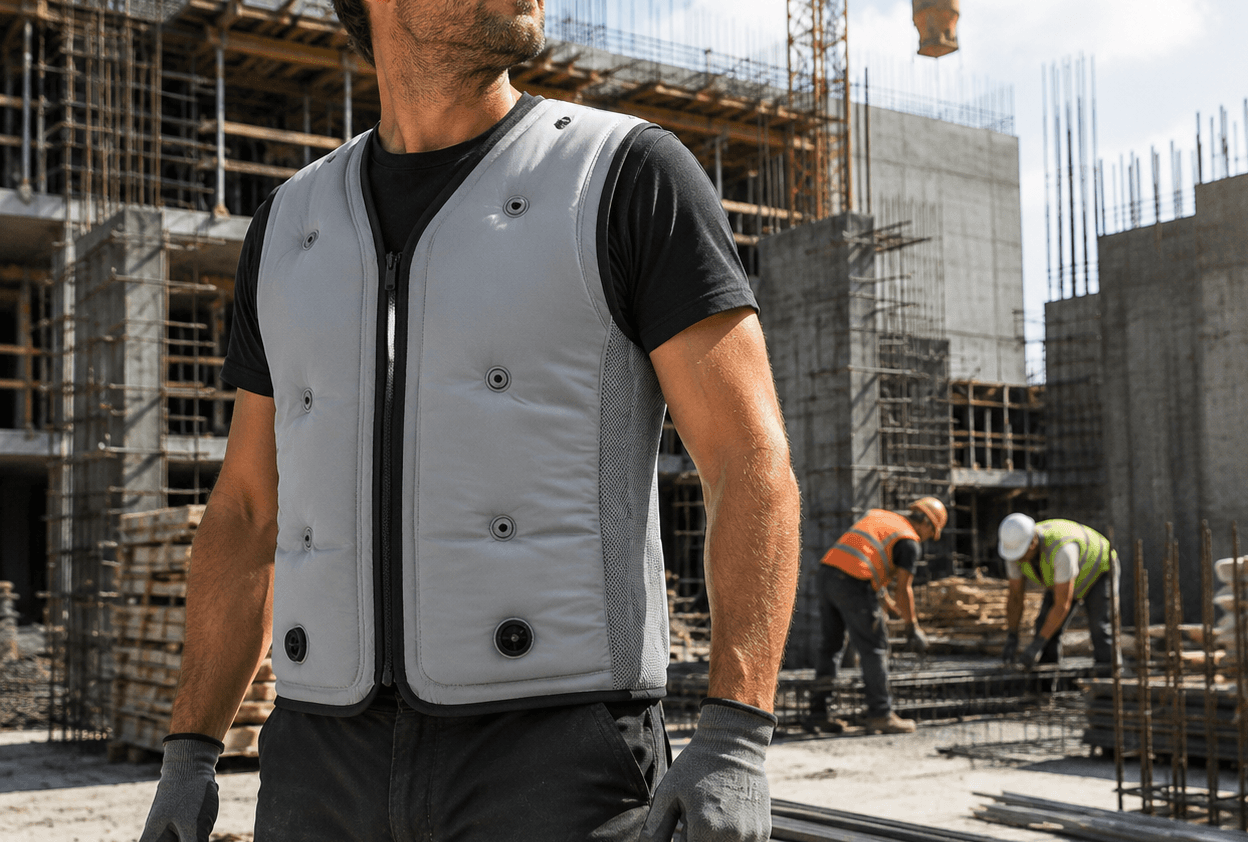
A warehouse worker in a 100°F facility straps on a cooling vest and feels relief within minutes. That’s basic thermodynamics doing its job.
How does a water cooling vest pull heat away from your body, and why do some designs outperform others in real working conditions? The mechanics behind circulating water cooling technology matter more than most buyers realize. The difference between a well-engineered pump system and a gimmicky knockoff could mean the difference between preventing heat stress and just feeling slightly damp.
This guide breaks down what’s happening inside that vest: the components, the physics, and the circulation cycle. You’ll know what you’re evaluating before you spend money on gear that’s supposed to keep you safe.
What Is a Water Cooling Vest and How Does It Differ From Other Cooling Systems
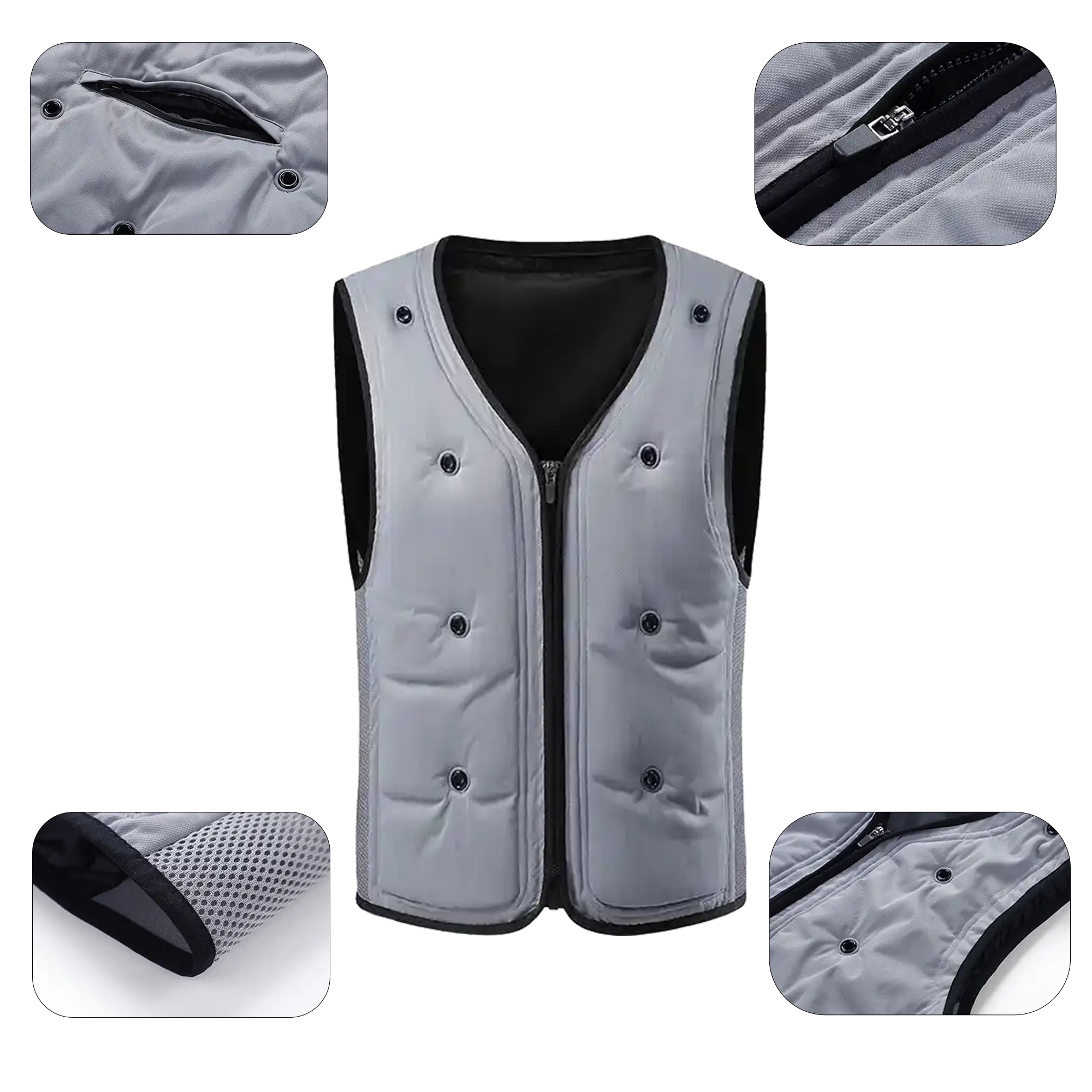
A water cooling vest is a wearable heat exchanger. A small pump pushes chilled water through tubing sewn into the garment. The water absorbs heat from your skin, travels to an external cooling unit or reservoir, gets re-chilled, and loops back around. This closed-loop cycle repeats, and that’s the entire point.
The mechanical loop sets battery powered cooling vest systems apart from passive alternatives. Ice-pack vests, phase change cooling vest designs, and evaporative cooling vest options have zero moving parts. They work by storing cold energy upfront, then releasing it until that stored cold runs out. A phase change cooling vest might give you two to four hours per cycle before you need a fresh insert. A water tube cooling vest, by contrast, keeps circulating as long as power and chilled water supply hold up.
Performance data backs this up. One published study on water-recirculating garments used inlet water at 10–12°C with flow rates between 2.6 and 5.1 liters per hour. Test subjects in 35–40°C heat maintained core temperatures around 36.7–37.5°C over two full hours. Industrial-grade cooling vest pump system models run 320–370 mL/min flow at 5V, weigh under 2 kg, and deliver 3–4 hours of cooling, dropping to about 2.5–3 hours once temperatures hit 40°C+.
Pick water circulation for long shifts and heat stress prevention gear needs. Pick PCM or ice-based options when you need something simpler and untethered from power.
Core Components: What Makes Up a Water Circulating Cooling System
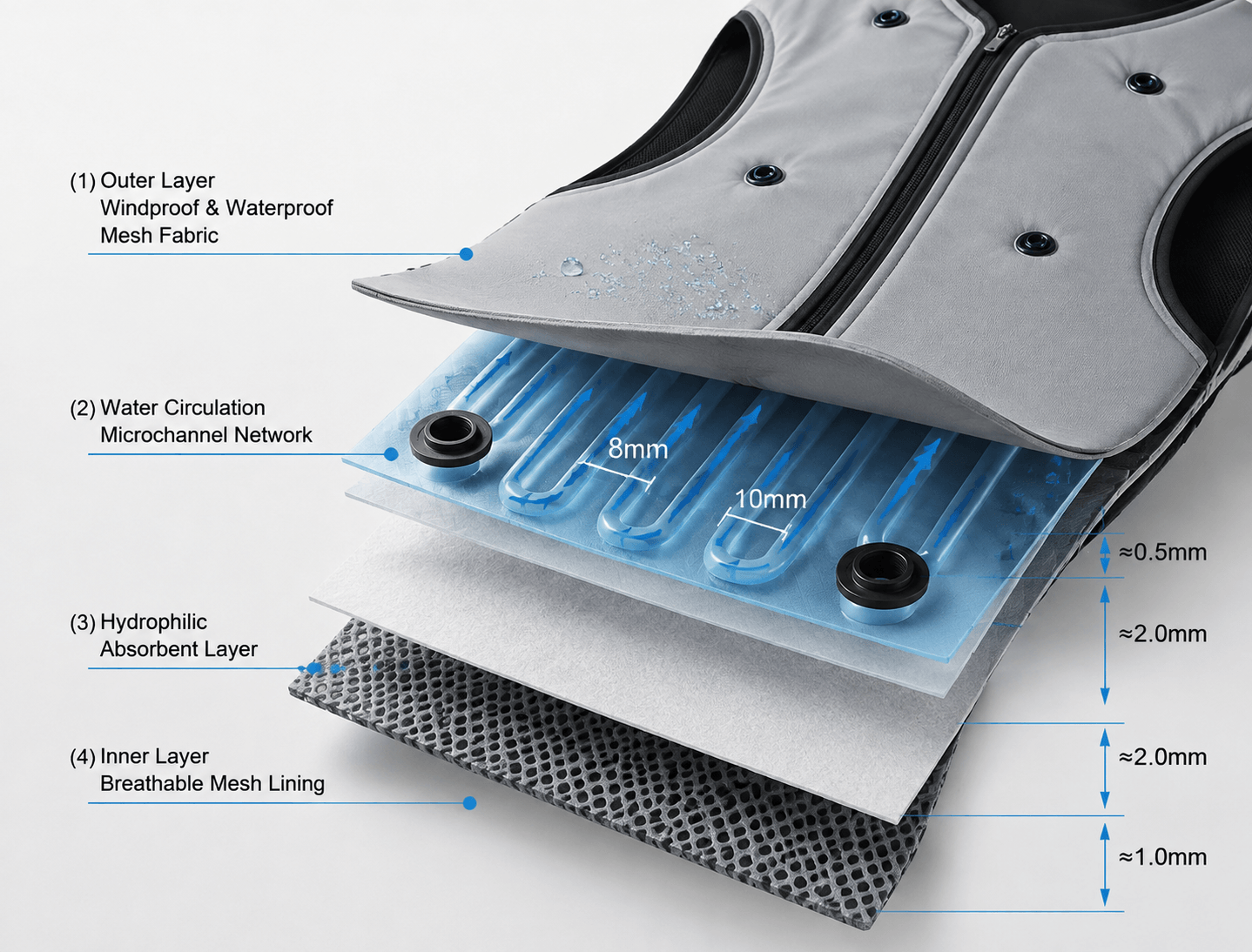
Four parts do all the work. Skip one, and the whole system falls apart.
Vest tubing forms the network moving cooled water across your chest and back. Manufacturers weave this tubing into mesh vests, prioritizing coverage over your torso’s major heat zones. You won’t find exact tube-length specs on most product pages, but you should check whether the design covers chest, back, and abdomen—that’s where your body sheds the most heat.
The pump pushes water through those tubes. Commercial-grade cooling vest pump systems offer three flow settings: 200, 350, and 500 ml/min. Higher flow means faster heat transfer, but also faster battery drain. Noise matters too—one commercial unit clocks in at 45 dBA, quiet enough for warehouse floors but worth checking if you’re working somewhere silence is required.
Cold reservoirs (bladders) store your chilled water supply. Capacity ranges from 1.5L to 4.0L, with 3.0L hitting the sweet spot for most industrial buyers. TPU material dominates this category. Look for options resistant to folding damage, low temperatures, and leaks.
Battery packs power everything. Standard setups run 7.4V at 2200mAh. Heavier-duty configurations push to 5000mAh, sometimes paired with external 20,000mAh power banks for extended shifts.
Runtime: What You Get
Battery powered cooling vest runtime breaks down predictably:
-
Basic setups: 2–4 hours per charge
-
Mid-tier configurations: 4–6 hours
-
Hot-swappable battery systems: 8–12 hours continuous use
Charging requires a 110–220V charger, though hot-swap designs cut downtime to under a minute—critical for workers who can’t afford extended breaks. Some commercial models claim 8-hour runtimes or 10-hour battery life outright. Always verify these numbers against your actual shift length before buying.
How Does a Cooling Vest Work: The Step-by-Step Circulation Process
Five steps run the whole show, and each one has a failure point worth knowing about.
Step 1: Fill the reservoir. Load the water tank or bladder with cold water, often mixed with ice. The fill level needs to cover what the loop requires to keep moving.
Step 2: Power on the pump. Flip the switch. A small electric pump—usually battery-driven or running off 5V USB—kicks into gear.
Step 3: Cold water enters the tubing. The pump forces chilled water through flexible channels stitched into the vest. That forms a closed loop across your chest and back.
Step 4: Heat transfers by conduction. Body heat moves from your skin into the cold water running through the tubes. This is the entire mechanism: cold liquid absorbs heat, then cycles back for re-cooling.
Step 5: Warm water returns for re-chilling. Once the water picks up heat, it flows back to the reservoir. It gets cooled again by ice or a refrigeration unit, then re-enters the loop.
Picture it as a straight line: reservoir → pump → vest tubing → heat absorption at skin → return flow → re-cooling → repeat.
How Fast You Feel It, and How Long It Lasts
Effective cooling duration swings wildly depending on setup—anywhere from 45 minutes to 3 hours. Field studies measuring subjective cooling comfort found averages around 69–84 minutes, roughly 75 minutes across four industries tested. Some short-use scenarios, like halftime breaks with gear changes, only deliver about 14 minutes of real benefit.
Skin temperature drops fast when the system works right—about 0.74°C within 5 minutes. That first 15 minutes carries the strongest cooling sensation; everything after tapers off gradually.
Four mistakes kill performance every time: low water or ice levels, a battery running below full charge, tubing that doesn’t sit flush against skin, and letting the ice supply melt away without recharging it. None of these show up until you’re already sweating.
The Science Behind Cooling: Conduction & Convection Explained
Two physics principles run this entire system: conduction and convection. Mix them up, and you’ll misjudge how your cooling vest works.
Conduction happens when heat moves directly from your skin into the cooler vest surface, like touching an ice cube. Convection happens when moving fluid or air carries that heat away, creating a cooler microclimate around your torso. A water cooling vest relies on both. The tubing makes skin contact (conduction), while circulating water hauls the absorbed heat elsewhere (convection).
Why Torso Coverage Isn’t Just a Design Choice
Your torso does most of the heat-generating work. Trunk viscera make up just 34% of body mass but produce 56% of resting heat. Muscle and skin? They’re 56% of body mass but contribute only 18% at rest. That’s why every thermal regulation vest worth buying targets chest, back, and armpits, zones packed with heat production and superficial blood vessels.
The numbers back this up. Resting metabolic heat output runs around 100 W, or 60–70 kcal/hr. Under cooling stress, lean subjects saw heat production climb from 44.7 to 53.4 W/m²; overweight subjects rose more modestly, from 44.7 to 47.5 W/m².
Torso-covering liquid circulation designs cut neck and scapula skin temperature by about 0.9°C, slowing core temperature rise. Compare that to a phase change cooling vest, where torso fabric temperature dropped by 1.6°C, 1.2°C, or as little as 0.2°C, depending on configuration.
One reference splits resting heat loss as convection at 18%, conduction at 3%. Another cites radiation near 60%, evaporation 20%, conduction 20%. The split shifts with clothing, environment, and vest design, but torso-first cooling stays the constant that works.
Water Cooling Vest vs PCM Vest vs Evaporative Vest: Which Cooling Mechanism Wins
Numbers settle this argument fast. In an 8-hour head-to-head test, active liquid-circulating vests delivered 331 Wh·m⁻² of cooling efficiency. PCM inserts managed 164 Wh·m⁻². Evaporative vests trailed at 113 Wh·m⁻². That’s not a small gap—water cooling nearly doubles PCM performance and nearly triples evaporative output.
Each mechanism wins a different fight, though.
PCM: Strong Start, Weak Finish
Phase change cooling vest packs hit peak performance early, then taper off as the material approaches melt equilibrium. Runtime lands around 2–4 hours, depending on PCM mass and how hot your environment runs. The upside: PCM doesn’t need airflow or evaporation, so it keeps working under enclosed PPE or in humid rooms where other systems stall out.
Evaporative: Cheap, Light, Humidity-Wrecked
Evaporative vests cost less and weigh less. That’s the entire pitch. But raise relative humidity from 20% to 40% at 35°C with light airflow, and cooling capacity drops by 28% on average. Evaporation slows when the air’s already saturated with moisture—basic physics working against you. Save these for dry, well-ventilated conditions. Humid warehouses or coastal job sites will disappoint you fast.
Water Cooling: Built for Long, Hard Shifts
For heat stress prevention gear on long shifts—industrial floors, defense applications, hot-climate PPE—water cooling vest technology outperforms both alternatives. It demands a pump, battery, and periodic refills, but that tradeoff buys sustained intensity that neither passive option matches.
Quick decision guide:
-
Water cooling vest: heaviest heat load, longest duration, willing to manage a portable cooling system
-
PCM vest: humid or enclosed environments, moderate 2–4 hour windows, no airflow available
-
Evaporative vest: tight budget, dry climate, minimal logistics
Skip evaporative for tropical or high-humidity work—cooling drops too much as moisture climbs. Skip PCM if you need all-day cooling without swapping or refreezing packs mid-shift. For outdoor work or industrial workers facing sustained heat, circulating water remains the reliable choice.
Who Needs a Water Cooling Vest: Key Use Cases and Real-World Applications
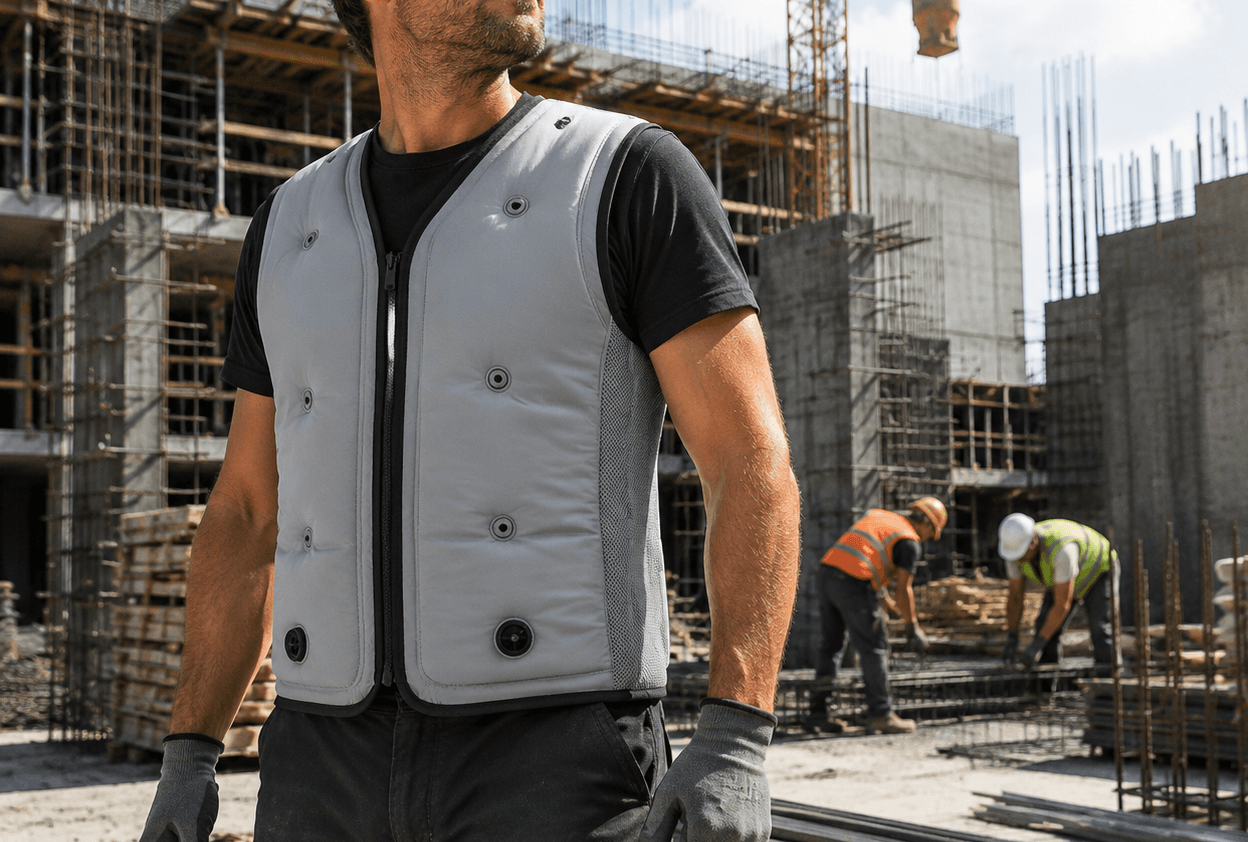
Five distinct groups rely on water cooling vests, and each one needs the technology for a different reason.
Industrial Workers Facing Sustained Heat
Anyone working in 30–45°C environments without adequate engineering controls needs this gear. Research on workers wearing gas-extraction protective suits found liquid cooling cut heat storage rate by 65%. Air cooling managed 56%. PCM/ice-based cooling trailed at 48%. The priority for a cooling vest for industrial workers is steady suppression of core temperature, heart rate, and sweat load across an entire shift. Construction, mining, petrochemical, maintenance, and landscaping crews fit this profile.
Outdoor Labor and Athletes
At 40°C ambient temperature, targeted cooling at the neck, chest, and underarms slows body temperature rise while reducing core temperature, heart rate, estimated sweat volume, and perceived heat load. One documented case showed post-exercise peak body temperature dropped 0.8°C with the vest on, and previously reported headaches and tachycardia disappeared. Outdoor workers deal with heat exposure while moving, often under direct sun and high humidity simultaneously, a combination this gear handles well.
Firefighters and Emergency Responders
Firefighting requires short-burst, high-intensity cooling during recovery periods between deployments. Research explicitly warns against using cooling vests as rapid cooling for heat stroke victims. Ice-water immersion remains the correct emergency intervention for severe hyperthermia. Firefighters need faster recovery between shifts and reduced cumulative heat strain. One study found combining skin cooling with fluid replacement improved heat stress markers more than cooling alone.
MS Patients and Heat-Sensitive Medical Users
Multiple sclerosis patients experience worsened symptoms with heat exposure, making them a core demographic for cooling vests. Product specs vary widely: standard ThermoPak inserts deliver about 3 hours of cooling, while some specialized products claim 72 hours of function at 104°F and 90% relative humidity, extending to 75 hours when pre-frozen. They need low-bulk, wearable-under-clothing designs to prevent symptom flare-ups during daily activity, not maximum cooling power.
Anhidrosis and Other Heat-Intolerant Conditions
Case reports on anhidrosis-related heat intolerance show water cooling vests suppress post-exercise temperature spikes. In testing that raised room temperature from 28°C to 38°C at 60% humidity, skin temperature rise dropped by 1.2°C and esophageal temperature rise dropped by 0.4°C compared to no cooling. Heart rate increases were suppressed too. This group, like MS patients, needs daily, continuous relief.
Matching Vest Type to Use Case
-
For long-duration heat exposure, use liquid or circulating water cooling to prioritize stable heat storage reduction and heart rate control.
-
For short, intense recovery windows like firefighting, choose fast on/off designs for between-task use, never as heatstroke first aid.
-
For MS or heat-sensitive medical conditions, select lightweight, skin-contact, all-day wearable options with 3–72 hour cooling windows.
-
For outdoor sports or labor, look for vests proven to hold performance under combined heat and humidity, judged by core temperature and heart rate suppression.
Practical Limitations of Water Cooling Vests
No cooling vest works forever. Three limitations show up no matter which brand you buy.
Power dependency tops the list. Pump-driven vests need battery power. Marketed runtimes—4–6 hours, 8–12 hours, sometimes 9 or 10—shift with heat, workload, and cooling mode.
Coolant refills come next. Most systems need fresh ice water every 2–4 hours, dropping to 1–3 hours under heavy heat or intense work.
Weight climbs once you load it with water, ice, pump, and battery. A 1.0 kg dry system can hit 1.5 kg loaded. Water tube cooling vests range from 760g empty to 2.0 kg with everything added.
How Long Cooling Lasts
Real-world numbers rarely match the box. Circulating water and ice-based vests deliver 1.5–4 hours, sometimes as little as 45–60 minutes in tough conditions. Battery-powered systems claiming 9–10 hours run at low power to get there. Heat above 38°C, high humidity, and stagnant air all shorten effective cooling time.
Selection Benchmarks That Matter
-
Shift length: Under 2 hours, pick PCM or ice. 2–4 hours, confirm quick-swap ice packs. Over 4 hours, prioritize battery capacity and spares.
-
Weight ceiling: Systems above 1.5–2.0 kg strain shoulders during extended wear. They work for short high-heat tasks but tire you out during climbing or constant movement.
-
Power budget: Phone-power-bank compatible units running 10+ hours mean gentler cooling. Stronger cooling settings cut that to 4–6 hours.
Where Marketing Overpromises
Three gaps trip up buyers every time. Advertised runtimes assume low heat, low load, low airflow—real job sites blow past those conditions fast. “2–4 hours of cooling” usually means strong cooling that gradually tapers into mild relief. And spec sheets list dry weight only, skipping water, ice, and battery—easily adding 0.5–1.0 kg once loaded.
Confirm two numbers before buying: total loaded weight and actual tested runtime in heat, not theoretical maximums. In humid or high-sun conditions, choose vests with replaceable coolant or hot-swappable batteries so one failure doesn’t shut down your whole shift.
FAQ: Common Questions About How Water Cooling Vests Work
Buyers ask the same handful of questions before committing to a portable cooling system.
How long does a cooling vest last? Battery-powered models run 4–8 hours per charge, with industrial versions sometimes quoting 4–6 hours, or 8–12 with a hot-swap pack. Frozen-bladder systems last 2–4 hours per bladder.
Does it need a special charger? Yes—use the manufacturer-specified charger matched to your battery’s voltage. Store batteries at 40–60% charge if unused for 30+ days, and check for swelling or damaged connectors before each use.
Can you replace the bladder yourself? Usually. Quick-connect fittings make bladder swaps user-serviceable. Confirm hose diameter, connector type, and bladder volume (3L is common) before ordering replacements.
Conclusion
The core principle of a Water Cooling Vest is not complex: a pump drives cold water to continuously circulate inside the vest, carrying away heat generated by the body and providing more sustained localized cooling than simply relying on airflow. The real factors affecting its effectiveness are water temperature, circulation speed, cooling area, and overall system design.
If you are comparing Water Cooling Vests, PCM Cooling Vests, and Evaporative Cooling Vests, it is recommended not to simply look at “which one cools more effectively,” but rather to choose based on the actual usage environment. Working hours, ambient temperature, humidity, portable weight, and the availability of ice, power, or other cooling facilities on-site will all influence the final product selection.
For construction, manufacturing, mining, outdoor work, and other high-temperature work scenarios, water-circulating cooling vests are more suitable for applications requiring continuous active cooling. If you are purchasing or developing custom products for a team, you can further confirm solutions with professional manufacturers based on working hours, target cooling temperature, mobility requirements, and cooling system configuration.
If you would like to learn more about the structure, working principle, and OEM/ODM customization solutions of Water Cooling Vest, please visit ICEBEARTECH to view more cooling products and technologies.