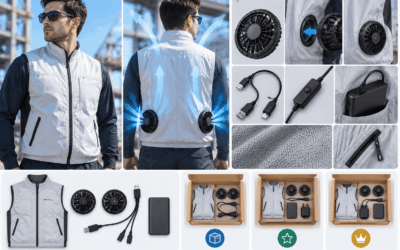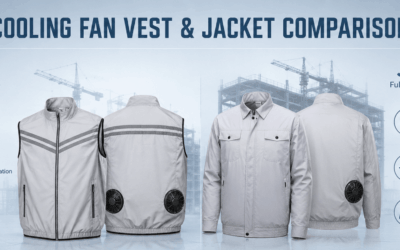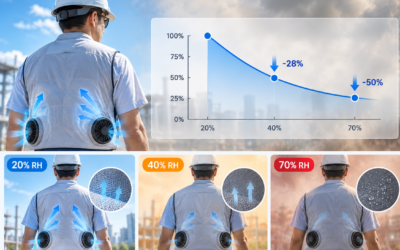
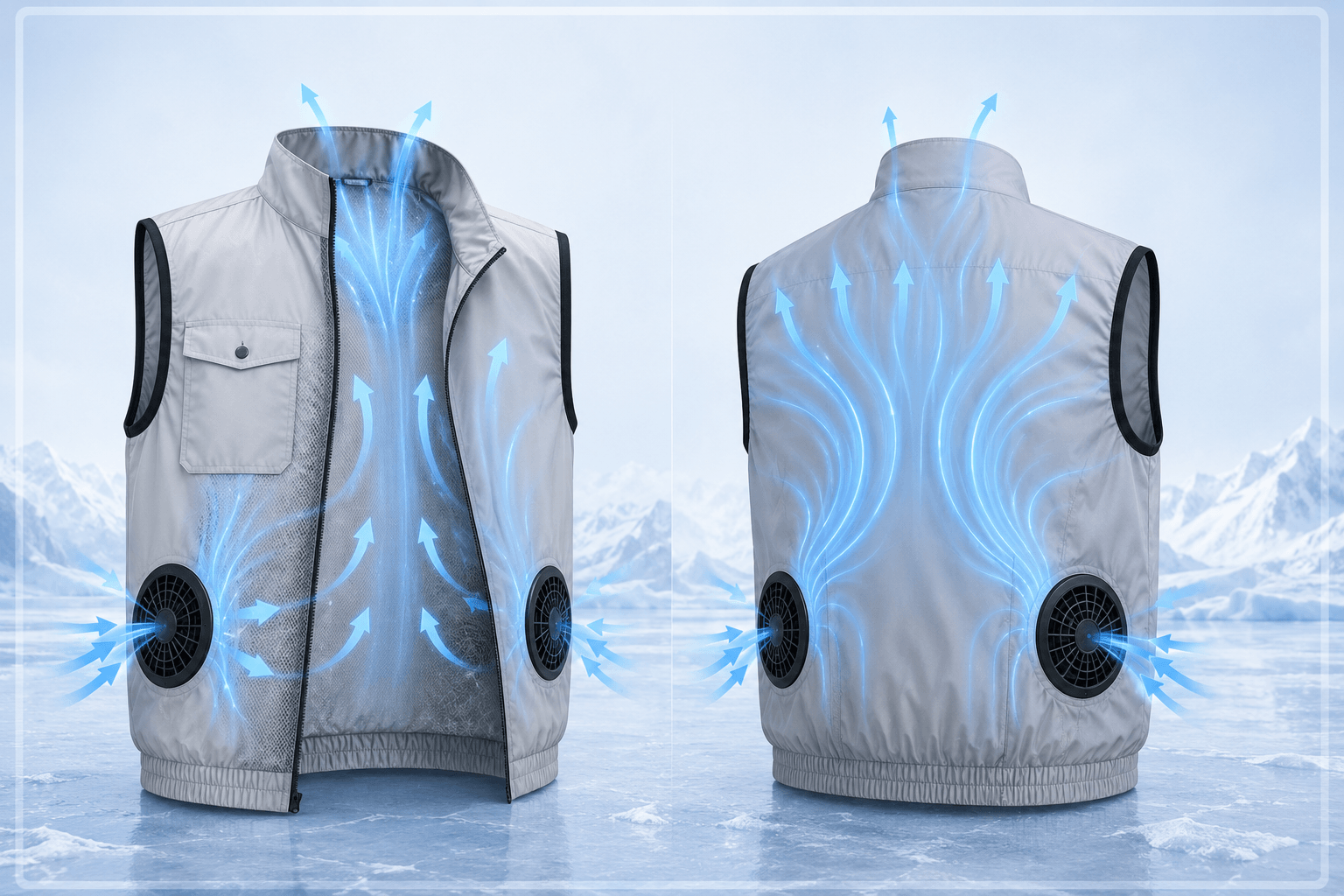
When your workforce is sweating through 40°C heat on a construction site or pulling warehouse shifts under a tin roof, “just drink more water” is not a heat stress strategy. It’s a lawsuit waiting to happen. That’s why procurement teams in construction, logistics, and agriculture are looking for custom fan cooling vest manufacturers who deliver real results, not just marketing fluff.
Not every “cooling vest factory China” listing on Alibaba can back up their 8-12°C cooling claims with actual test data, certifications, or the OEM flexibility your brand and budget need. How do you find manufacturers who can scale with your order volume, without getting stuck in MOQ negotiations for weeks?
This guide covers what to look for—production capabilities, customization options, pricing structures, and certification requirements—using Icebeartech’s manufacturing process as a real-world benchmark for what a serious cooling workwear supplier should deliver.
Icebeartech: Nineteen Years Building Cooling Vests
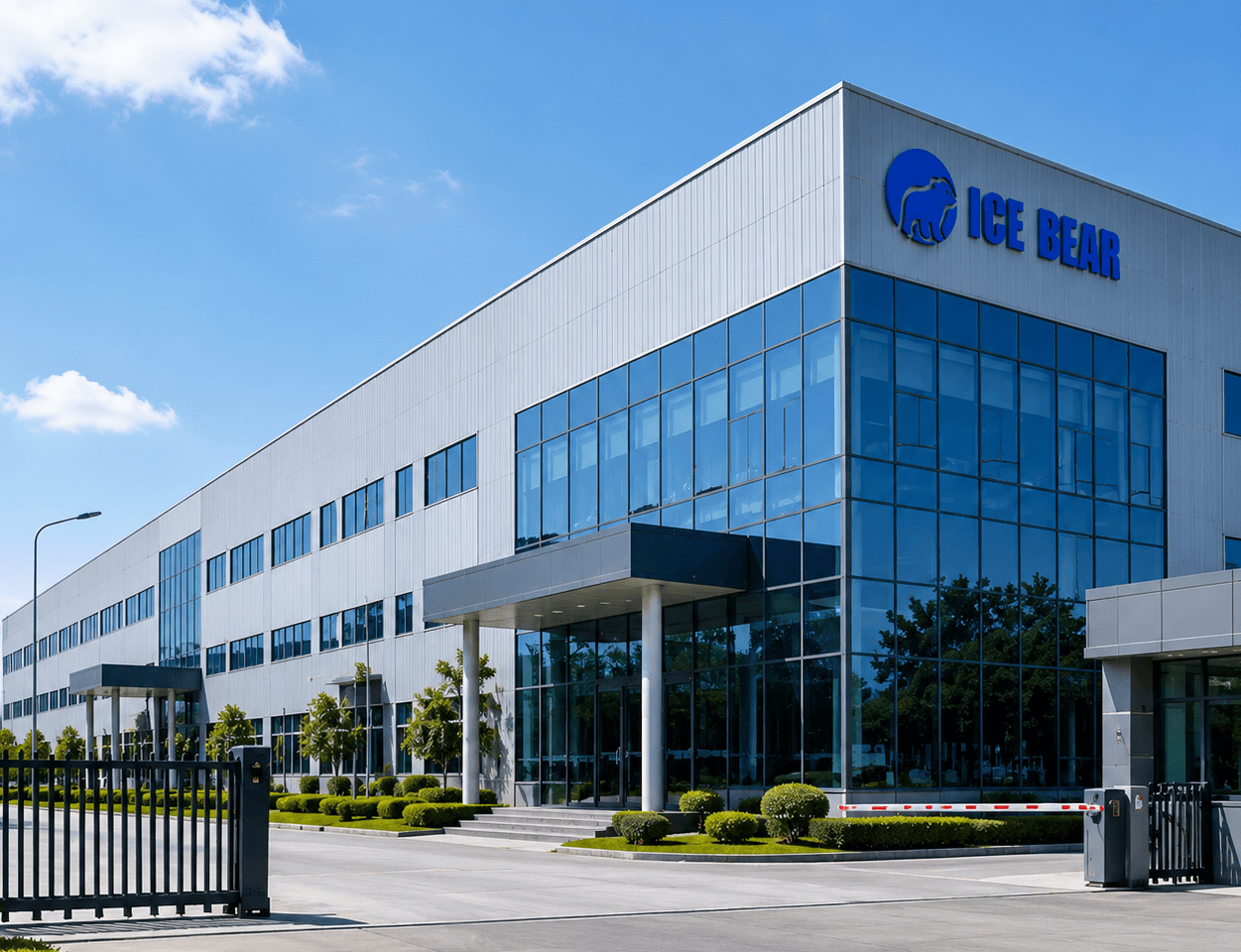
Nineteen years in business tells you something a sales pitch can’t. Nanchang ICE BEAR Cooling and Warming Household Products Co., Ltd. opened in 2007 in Nanchang, Jiangxi, China. That’s nearly two decades of making battery powered fan vests that survive real job sites.
Factory footprint: Company pages report 2,500 m²; marketplace listings show 5,000–5,600 m². The discrepancy likely comes from expansion or different reporting periods. It’s a real factory with real floor space.
Monthly output: Icebeartech states 50,000-plus units per month, with on-time delivery built into their operation. For a logistics company ordering 3,000 vests before summer, or a construction firm scaling PPE cooling vest orders across multiple sites, that capacity matters more than a glossy brochure.
In-House Production
Sewing, PCM filling, and electronic fan assembly all happen inside the Nanchang facility. The parts that determine whether a cooling vest performs or fails in the field are made in-house.
Their product range includes PCM cooling vests, cooling accessories, and pet cooling gear. That range reflects engineering depth.
They serve manufacturing and industrial workwear, logistics and transportation, outdoor labor and agriculture, and promotional wholesale private label programs.
If you’re vetting a cooling workwear supplier for a multi-year contract, production consistency across 50,000-plus monthly units, verified in-house, is what separates a real factory from a reseller with a fancy website.
Fan Cooling Vest Technology: How 8-12°C Cooling Performance Works
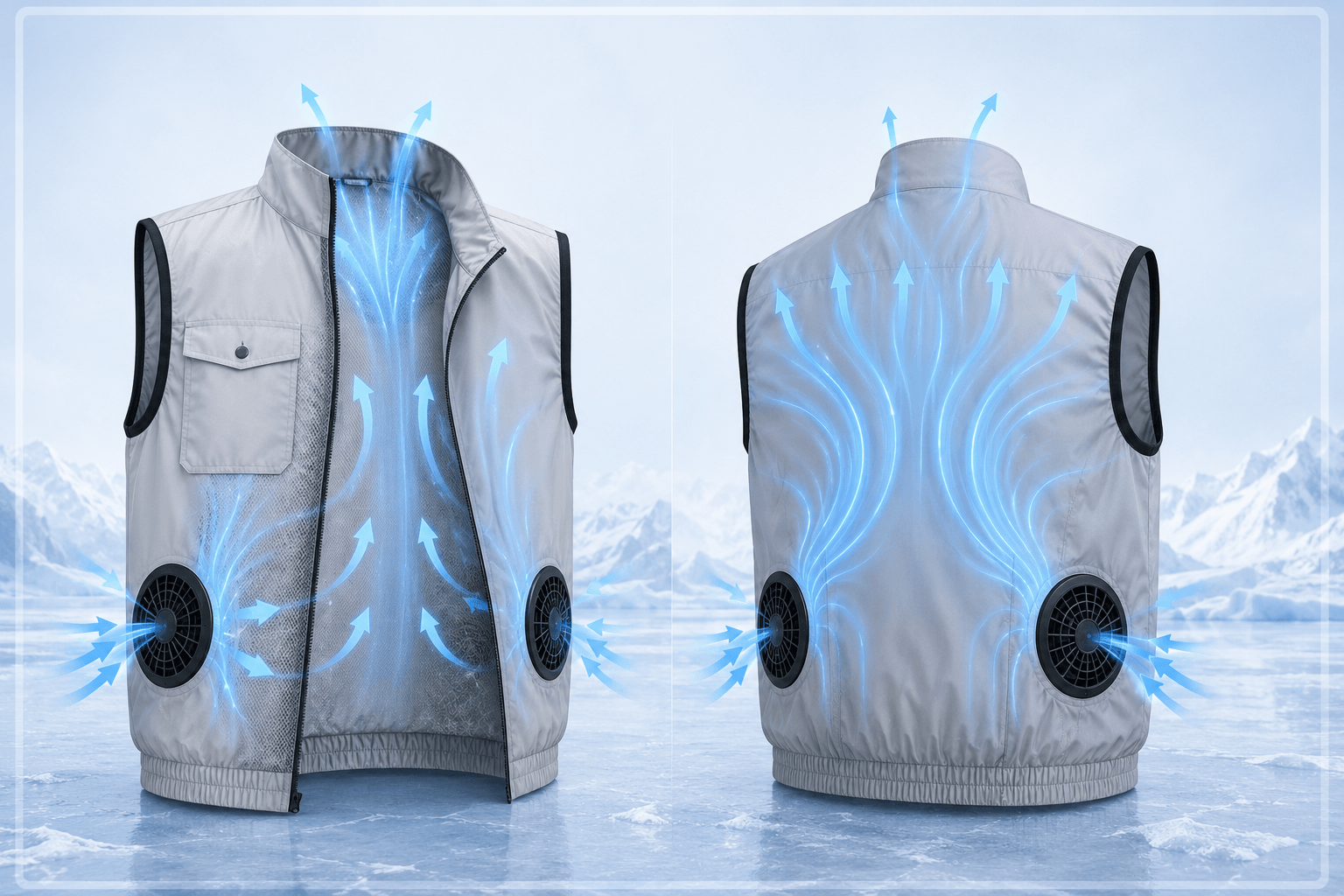
The physics is simple, but the results matter for your buyers. Fan cooling vests force ambient air across the skin and clothing layer. That airflow speeds up sweat evaporation and pulls heat away from the body before it builds into heat stress. A hot-humid study measured fan-only cooling power at 56–67 W. Add a PCM layer, and that number climbs to 67–86 W. If you’re briefing clients on how an air conditioned cooling vest actually performs, this is the mechanism they need to understand.
Over an 8-hour trial, active cooling vests extracted 331 W·h·m⁻² of total heat—nearly double what PCM vests managed at 164 W·h·m⁻², and well ahead of hybrid systems (146 W·h·m⁻²) and evaporative vests (113 W·h·m⁻²). That’s the data behind the 8-12°C cooling claims your prospects are researching before they commit to a supplier.
Where This Heat Stress Prevention Gear Performs Best
Fan vests aren’t magic in every climate. Research testing conditions at 30°C/40% RH and 45°C/18% RH showed the strongest benefit in dry-to-moderately humid environments. Industry guidance sets the practical threshold at below 95°F (35°C) in dry air, with typical runtime of 4–8 hours per charge.
Battery Runtime Buyers Should Ask About
Runtime scales with battery capacity:
-
2,000–4,000 mAh → 2–4 hours
-
5,000–7,000 mAh → 5–8 hours
-
8,000 mAh+ → 12+ hours
A common 10,000 mAh setup delivers roughly 5.5–6 hours at moderate speed, stretching past 10 hours on low. One benchmark example ran a 24V, 3.2A battery (76.8W peak), drawing about 27.5W in normal operation—6 hours at max speed, up to 30 hours at low speed across 3 fan modes.
For continuous shifts, this battery powered fan vest approach beats PCM or ice-pack systems, which cool harder but shorter. One ice-pack benchmark lasted just 151 minutes before refill.
OEM/ODM Customization Options for Outdoor Work Cooling Vests
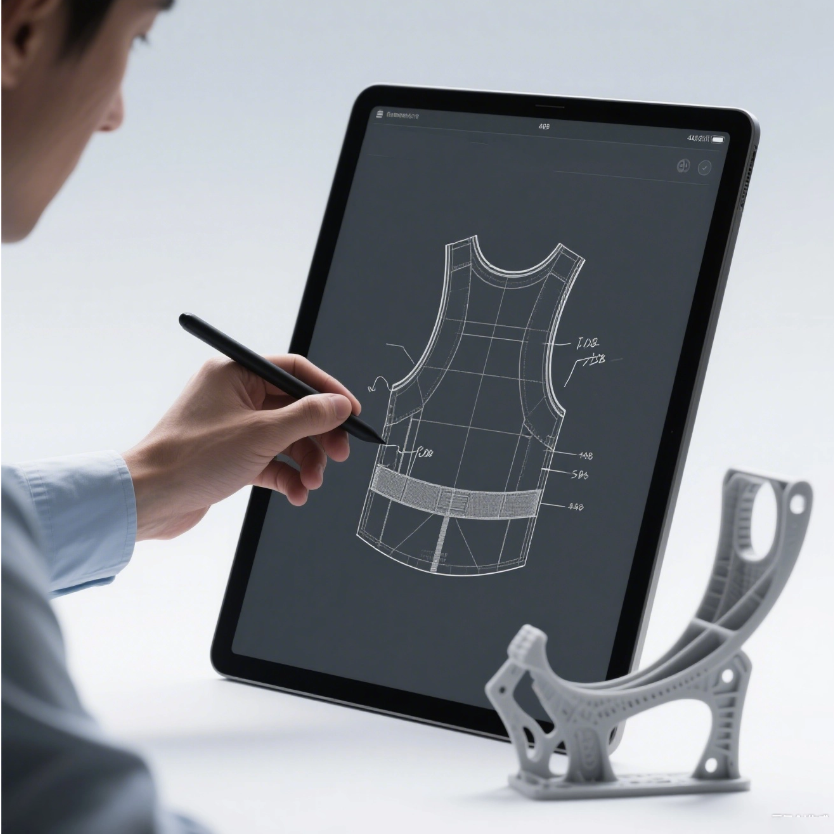
Two buyers can ask for “custom cooling vests” and mean completely different things. One wants a logo swapped onto an existing shell. The other needs a redesigned cooling structure with private label packaging. Icebeartech splits these into two clear paths, so you’re not guessing which one fits your budget.
Fabric options include breathable mesh, ripstop nylon, workwear-grade canvas, hi-vis material for roadside crews, and fluid-resistant shells for water-circulation vests. Color matching runs through Pantone codes, so your brand color lands exact—no “close enough” swatches. Logo application covers screen print, heat transfer, embroidery, woven labels, and printed hangtags, depending on your budget per unit.
Packaging also covers poly bags, retail boxes, barcode and country-of-origin labeling, master carton marking, plus hang tags and outer carton labels for full private label rollout.
Standard Logo Print vs. Deep OEM
-
Standard logo print: Existing vest structure, swap logo/labels/packaging only. MOQ around 1,000 pcs (some suppliers go to 500 units). Lead time is 15–20 days at 500 pcs per color.
-
Deep OEM: Fabric, color, pocket structure, reflective strip placement, cooling system, and packaging all change. MOQ starts at 3,000 pcs, climbing to 5,000 pcs for mold-level tooling. Timelines run longer because design review, sampling, BOM confirmation, and process validation all add weeks before mass production starts.
Fan Configuration Isn’t Fixed
Fan count, position, and airflow logic get matched to your use case—construction sites need different coverage than warehouse picking routes. Voltage requirements enter the conversation early, since that determines motor tier and cooling duration.
What to Have Ready Before You Inquire
Bring target scenario, order volume estimate, fabric preference, Pantone codes, logo files, packaging artwork, voltage requirements, fan count/placement, and any PPE cooling vest certification needs to your first call. Icebeartech’s private label process (consultation, quotation, sampling, confirmation, production, inspection, delivery) moves faster when this data arrives upfront.
MOQ, Pricing & Sample Process: What Buyers Need to Know
Numbers win arguments in procurement meetings faster than promises do. Here’s what to actually ask for.
MOQ tiers vary more than most factory websites admit. Direct-from-factory OEM/ODM offers often start at 50 pcs per design or color—useful for testing a new market segment. Mid-tier apparel and workwear suppliers commonly set 100 pcs per style as their floor. Once customization, formula development, or specialty material sourcing enters the picture, 1,000 pcs becomes the realistic benchmark. Smart buyers ask for pricing at three separate levels—sample/trial quantity, standard MOQ, and volume order—rather than accepting one blanket quote.
Pricing swings on complexity, not just material cost. OEM quotes in comparable apparel categories range from $15–$50 depending on construction, while broader buyer data shows $5.80–$38.95 across the market. Lower prices reflect simpler builds and minimal customization. Higher prices reflect premium fabric, multiple components, and tighter QC specs. Setup or tooling costs typically run $200–$2,000 before per-unit economics improve—factor that into your first quote comparison.
Sample Timelines and What Speeds Them Up
Seven-day sampling is standard when you already have a reference sample or tech pack and stick to existing materials. New molds, custom fabrics, or specialized construction push sample cycles to 10–18 days. Bulk production commonly runs 15 days post-approval for standard runs, though 25 days after deposit and artwork sign-off is the more conservative benchmark for custom orders. Ask if digital mockups (24–48 hours) are available before committing to a physical sample—it saves a full sampling cycle.
Before requesting samples, confirm: cost, shipping, whether the fee credits against your bulk order, and quote validity period.
Industry-Specific Applications: Construction, Logistics & Agriculture
Heat doesn’t hit every industry the same way. US construction workers face a 13x higher risk of heat-related death than workers in other sectors, with roofers and road crews carrying the heaviest exposure. The same heat drags construction site productivity down by 29–41.3%. When you’re quoting a job at $50/hour per worker, that loss shows up on the bottom line fast.
Agriculture carries an even bigger share of the problem globally. Its share of worldwide heat-related work-hour loss was 83% back in 1995, projected to settle around 60% by 2030. Field picking, weeding, irrigation, and livestock pen work stack heat exposure on top of continuous physical output, exactly the combination that makes cooling vests worth the line-item.
Logistics riders face a different bottleneck: heat trapped in their gear. Helmets and uniforms restrict airflow during delivery runs, stop-and-go stair climbs, and idle waiting periods. Battery runtime and quick-swap capability matter more here than raw cooling power.
Municipal and landscaping crews sit in the “next-priority” tier: road maintenance, cleaning, utility inspection. Work is mobile, supply points are scattered, and durability against mud, sweat, and frequent washing matters more than peak cooling output.
What Actually Gets Piloted First
Shaded rest areas, cold water, adjusted work-rest scheduling, heat acclimatization plans, training, and cooling vests make up the standard stack of construction site heat controls. Japanese construction sites add heart-rate and fluid-loss monitoring alongside active recovery breaks. HSE managers, farm operation leads, and fleet dispatch supervisors are the buyers, and they usually start pilots with roofing crews, field pickers, or delivery riders before rolling out to sanitation and landscaping teams.
Certification & Compliance for Battery-Powered Cooling Vests
A cooling vest with a lithium battery is a regulated product the moment it crosses a border. Skip the paperwork, and your shipment sits in customs while carriers refuse it outright.
Get CE and RoHS for EU compliance, UN38.3 for battery transport, and IEC 62133 for battery pack safety. Add FCC or UKCA if you’re shipping into the US or UK. Icebeartech’s product pages list CE, RoHS, and UN38.3 upfront. ISO 9001 and BSCI aren’t publicly shown, so confirm those during quoting if factory audits matter to your compliance team.
UN38.3 needs extra attention. Since 2020, the test summary has become mandatory across air, sea, and road freight. No report, no shipment. Carriers won’t take the risk.
Documents to Request Before Ordering
-
UN38.3 test report + test summary
-
Battery datasheet (voltage, Wh, cycle life)
-
CE DoC and RoHS declaration
-
MSDS/SDS for battery materials
Cross-check report headers against the supplier’s legal name, and match battery model numbers to the physical unit photos before signing off.
Step-by-Step Procurement Process: From Inquiry to Delivery
Eight steps separate a vague email inquiry from a container leaving Nanchang port. Skip any of them, and you’re the buyer chasing a factory for answers three weeks before your shipment deadline.
Step 1: Inquiry/RFQ. Send application/use case, target quantity, monthly forecast, target price, customization list, required certifications, destination, and Incoterms in one message. Battery-powered products need extra detail: target application, cell chemistry, capacity, and C-rate, so the factory locks the right motor and battery spec on the first quote.
Step 2: Sample Confirmation. Check four things: fabric feel (GSM, hand feel, shade match, shrinkage after wash), fan function (noise, airflow, no rattling), battery runtime (actual discharge test against spec), and logo work (placement, print clarity, colorfastness). Sign off against a PP sample before moving forward. Verbal approval creates disputes later.
Step 3: Bulk Production Lockdown. Confirm BOM, material substitution rules, batch color consistency, size chart, AQL tolerance, and lot/serial number ranges for battery units. This is your paper trail if a bulk batch drifts from the approved sample.
Step 4: Inspection & Shipping. Lock three milestones: sample approval date, mid-production inspection, and pre-shipment inspection before container loading. Choose Incoterms early. FOB if you control freight and insurance, CIF if you want the supplier to handle it to port, DDP for first-time orders until the relationship stabilizes. Before cargo moves, collect UN38.3, MSDS, commercial invoice, packing list, and bill of lading. No UN38.3 report means no carrier acceptance.
How to Choose the Right Fan Cooling Vest Supplier
Most factory websites say the same things. “Full customization.” “Fast delivery.” “Trusted supplier.” None of that tells you whether they can actually execute your order. How they answer specific, hard questions separates a real manufacturer from a middleman.
Check MOQ transparency first. A serious supplier breaks pricing down by customization tier. Basic OEM runs around 500 pcs, standard logo/label work at 1,000 pcs, functional changes at 3,000 pcs, and full mold tooling at 5,000 pcs. If they quote one flat number regardless of complexity, that’s a red flag.
Pin down quotes against fixed specs. With the same MOQ, same fabric, same fan configuration, and same packaging, compare pricing and lead time. Expect 7–10 day sampling, 24-hour quote turnaround, and 30-day bulk delivery. Suppliers who can’t lock price to a defined configuration are guessing.
Verify Credentials Before You Commit
Ask for the full compliance package, including business license, quality manuals, third-party test reports (SGS/BV), REACH/RoHS/FDA documentation, and relevant standards like EN ISO 20471 or ANSI/ISEA 107. Request a video factory tour and watch for fan power-on tests, connector durability checks, and sign-off against approved samples before shipment.
Confirm Real Industry Case Studies
Don’t accept “we’ve served construction clients” without proof. Ask for verifiable references: client names, region, order category, partnership timeline, order photos, or masked packaging labels. A supplier who produces a project-based quote for your exact use case, including work conditions, airflow, runtime, weight, and certification needs, usually has real manufacturing capability.
Test Before You Scale
Run a 20–100 piece trial order first. Check dimensional accuracy, fan noise, airflow consistency, battery runtime, seam strength, and packaging integrity. Require a signed sample confirming fabric batch, fan model, and connector spec. Production must match it exactly. Bulk orders should follow AQL 2.5 inspection standards, with 100% PO quantity matched against packing lists before shipment.
Conclusion
Choosing the right custom cooling fan vest manufacturer comes down to three things: verified production capability, flexible OEM/ODM customization, and transparent pricing at your required MOQ. Icebeartech checks all three. It combines certified manufacturing (ISO, CE), proven 8-12°C cooling technology, and real-world validation across construction, logistics, and agriculture, where heat stress prevention is an operational necessity.
Procurement managers and distributors evaluating cooling workwear suppliers get fewer supplier failures, faster time-to-market, and a partner who understands battery powered fan vest engineering at scale.
Ready to move from research to results? Request a sample, get your custom quote, or start a bulk inquiry with Icebeartech today. Equip your workforce with cooling technology built for the field.