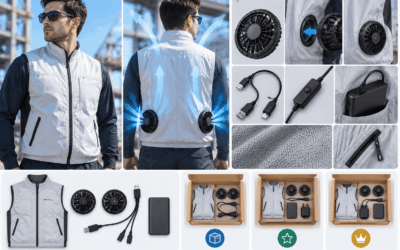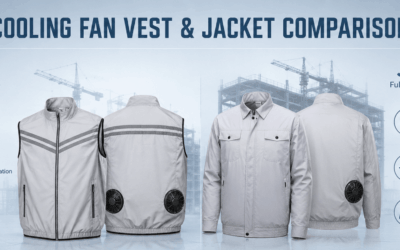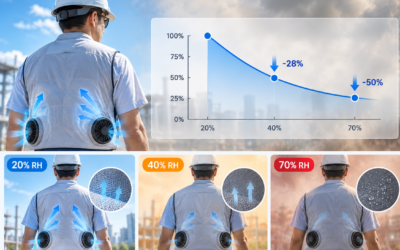
If you’ve spent a summer working outdoors—or watched a buddy nearly go down from heat exhaustion on a jobsite—you already know why a battery powered cooling vest has become less of a novelty and more of a survival tool.
Walk into that search bar and you’ll find dozens of options claiming to be the best fan vest for construction workers, warehouse crews, or weekend riders. Almost none of them explain what separates a vest that keeps you working for eight hours from one that dies by lunch. Fan power, battery life, breathability, noise level—these details matter more than the marketing copy lets on.
This guide breaks down what to look for, so you can buy once, buy right, and stop guessing.
What Is a Men’s Electric Fan Cooling Vest and How Does It Work
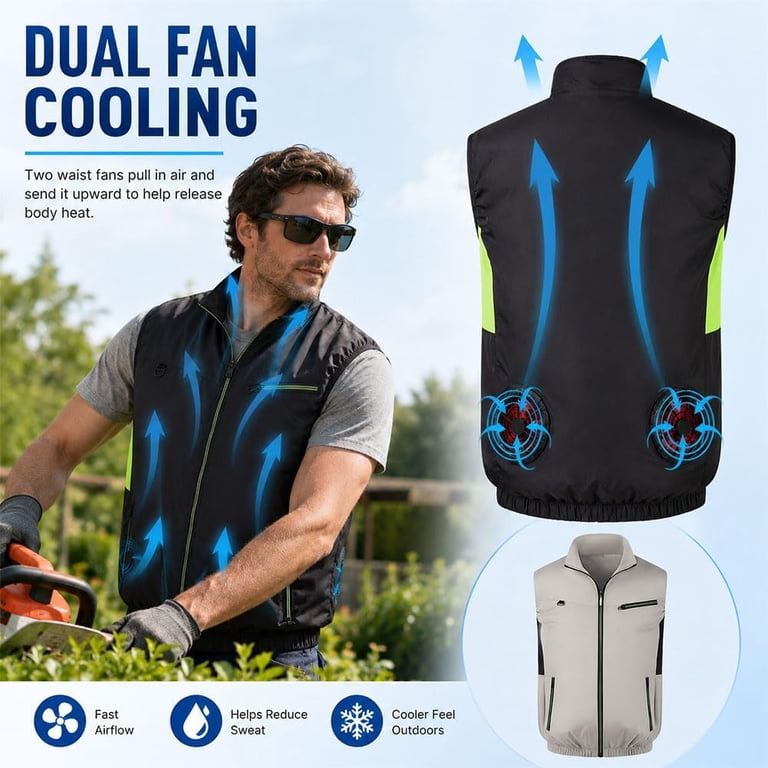
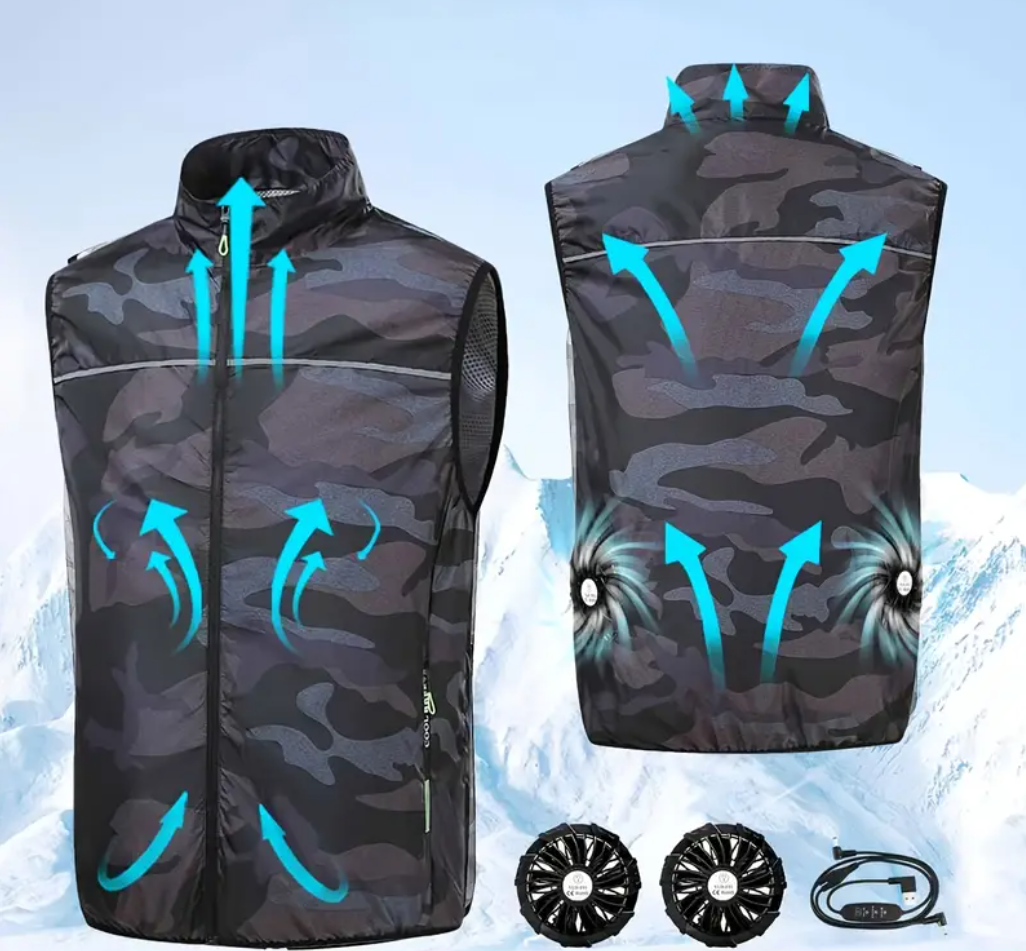
A men’s electric fan cooling vest works like this: small battery-powered fans embedded in the fabric pull outside air into the garment and push it across your torso. That moving air speeds up sweat evaporation on your skin, which cools you down. No refrigerant, no compressor—just physics.
This is why “air conditioned vest” is a stretch. You are not getting refrigerated air. You are getting a personal microclimate of moving, evaporating air.
Fan Vests vs. Ice and PCM Vests
Buyers often confuse these, so here is the breakdown:
-
Fan vests cool through airflow and evaporation. They do not store cold energy. They keep air moving so you feel drier and cooler.
-
PCM (phase-change material) vests use sealed packs that absorb heat as they melt at a specific temperature. That gives you steady cooling for a limited window, usually 2-4 hours per charge cycle.
-
Ice vests use frozen packs for direct cold storage. You get an intense initial chill, but runtime is short, and some guys find it uncomfortably cold.
Fan vests trade instant chill for battery life that stretches 8 to 32 hours, depending on your battery and fan speed settings. That is the difference between recharging at lunch and running an entire shift—or two—without touching a charger.
For anyone working outdoors, riding, or just needing consistent relief through a long hot day, that runtime advantage matters more than a few extra degrees of initial cold.
Sizing & Fit: How to Measure for the Right Cooling Vest Size
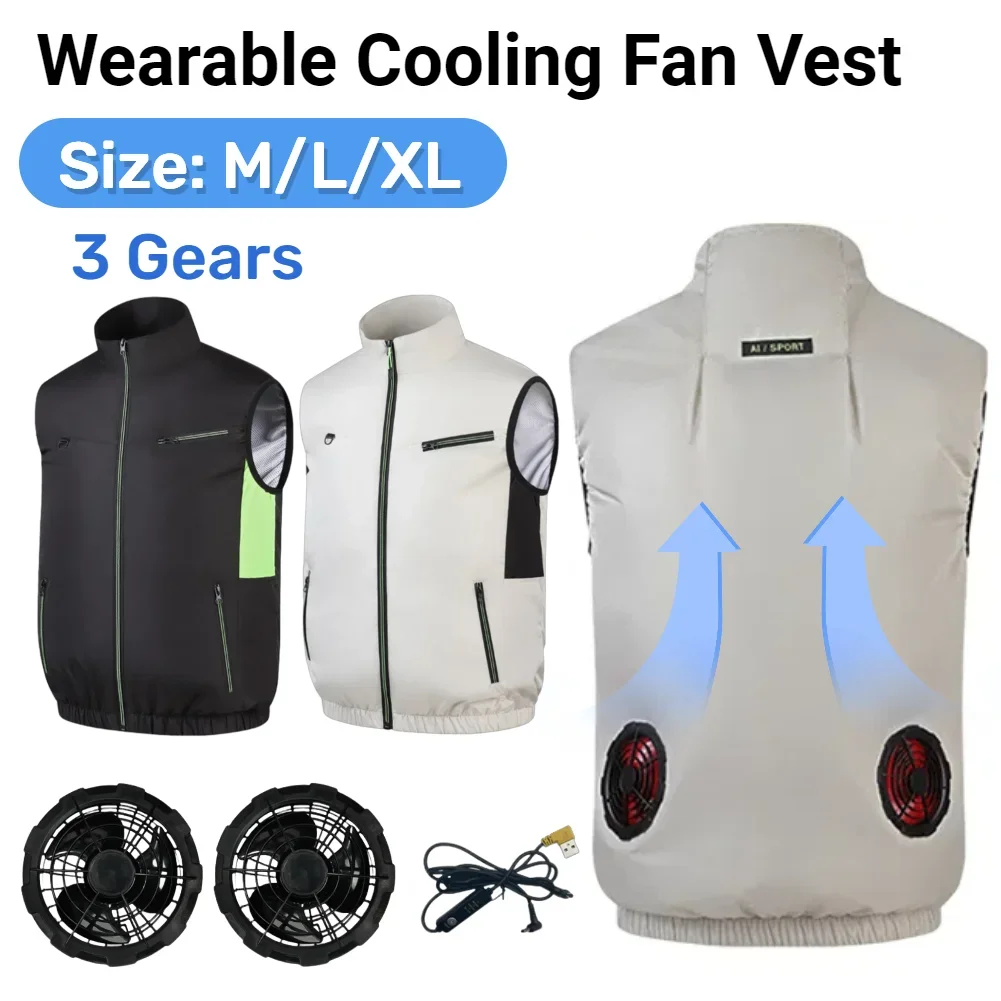
Get the size wrong, and even the best cooling fan vest for construction workers turns into an overpriced windbreaker. Fit is the mechanism, the vest has to stay against your body to move air effectively. Too loose, and airflow escapes before it does any cooling. Too tight, and you’ll rip it off by 10am out of pure discomfort.
Two measurements matter most. Measure your chest/torso circumference by wrapping a soft tape around the fullest part of your chest, under the arms, across the shoulder blades. Keep it level, snug but not tight. Then measure your torso length from the clavicle notch down the center front to your belly button. Do it standing and sitting, then average the two numbers for accuracy.
Why S/M/L Labels Lie to You
Every brand runs its own logic. Ergodyne’s Large covers 38–42 inches. Techniche’s M/L spans 32–40 inches with a 23.5-inch torso. Polar Products’ Large jumps to 39–42 inches, skipping right past what most guys consider medium. These differences are several inches apart, so check the brand’s actual chart, not the generic label.
Sizing Over PPE
Wearing a harness or work shirt underneath? Use whichever measurement is larger, chest or waist, and add 2–4 inches for room. Direct skin or T-shirt wear only needs 1–2 inches.
Battery & Runtime: Choosing the Right Power Capacity
A cooling vest that dies at hour six on an eight-hour shift is dead weight. Match battery capacity to your actual shift length, not the marketing number on the box.
Runtime by shift length:
– 6 hours: 6,000–8,000mAh covers it. Higher-draw fans need 10,000mAh for buffer.
– 8 hours: 8,000–10,000mAh is the safer bet. A 10,000mAh pack at typical 1A draw runs about 6–7 hours.
– 10+ hours: Look at 10,000mAh minimum, or better, a swappable battery setup.
– 12+ hours: 12,000–20,000mAh or dual/hot-swap batteries. One 10,000mAh pack won’t reliably carry a high-draw fan through a double shift.
Battery life on a 10,000mAh pack depends on load. Lower-power fans (2–3W) can stretch to 8–15 hours. Higher draw at 5W drops you to about 5.2–6.3 hours.
Battery chemistry matters too. Lithium-ion/polymer packs are lighter and denser than older nickel-based cells, which makes them the industry standard for any lightweight cooling vest built for full shifts.
USB-C vs. Micro-USB
USB-C charges a 10,000mAh battery in 2.5–3.5 hours. Micro-USB takes 4–6 hours on the same pack. For a USB fan vest you’re recharging daily, that gap adds up fast. Skip Micro-USB models.
For shifts past 10 hours, hot-swappable batteries beat bigger capacity. Swap packs on break instead of waiting out a charge cycle.
Fan Configuration: Speed Settings, Dual-Fan Design & Mounting
Fan settings differ, and picking the right one keeps you comfortable without draining your battery early.
Low speed is your quiet setting. It works best for a cooling vest in hot weather that doesn’t need maximum airflow, like light office duty or overnight shifts. It’s also the most battery-efficient option. Medium speed splits the difference with balanced airflow, moderate noise, and moderate power draw. That’s your default for general use. High speed handles full sun, kitchen work, or wide-open outdoor spaces where you need real airflow fast. Dropping fan speed by 20% cuts noise output by roughly 3–6 decibels. If you’re working somewhere noise matters, don’t default to high just because it feels stronger.
Dual-Fan Design
Dual fans spread airflow across a wider area of your torso. This gives you even cooling across your back and chest instead of concentrating it in one spot. That matters if you’ve got broad shoulders or want consistent coverage.
Mounting: Skip the Adhesive
Fans need to stay put through sweat, movement, and heat cycling. Screw-mounted fans are the most reliable for long-term, high-vibration use. Clip or snap mounts offer faster installation and easier maintenance while still resisting rattle. Adhesive mounting is the weak link – heat and repeated wear cause it to loosen over time. If you’re comparing an outdoor cooling vest men will actually rely on daily, check how the fans attach before you check anything else.
Material & Breathability: Mesh Lining and Comfort Factors
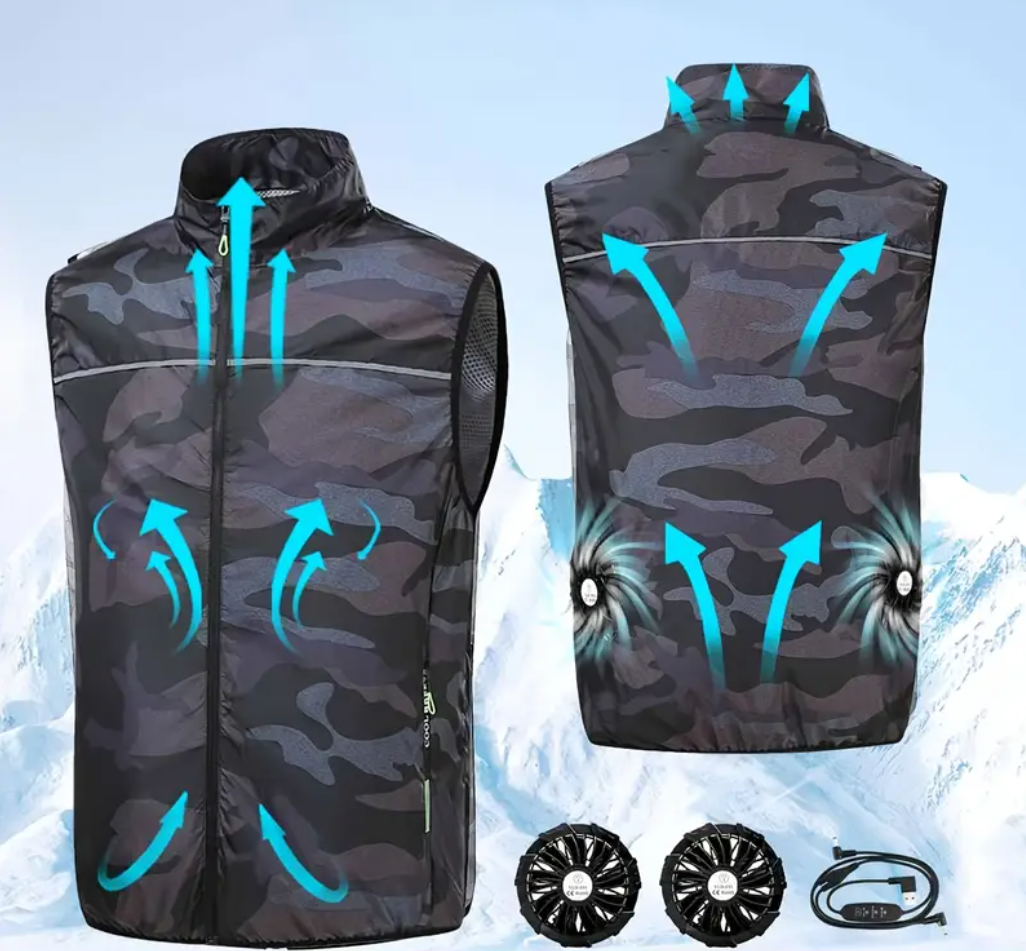
Fabric decides whether that airflow actually reaches your skin or just rattles around uselessly inside the vest. Mesh lining is the workhorse here. Open-weave construction moves air fast and speeds sweat evaporation. That’s the whole point of a cooling vest for hot weather work.
Skip the marketing adjectives and look for these numbers:
-
Open area percentage (OAP) of 15–25%. Drop below 10%, and airflow noticeably tanks.
-
Pore size around 0.5–1.2mm.
-
MVTR (moisture vapor transmission rate) of 1,500–3,000 g/m²/24h. That’s how fast the fabric moves sweat out.
Low-profile mesh keeps things light without bulking up under gear. That matters if you’re layering under a harness, coveralls, or boots. Structured airmesh with vertical fibers holds an air channel between layers and keeps pushing air through as you move. It cuts down on that trapped, swampy feeling.
Outer Shell: Durability for Jobsite Abuse
Mesh handles airflow. The outer shell handles abuse. Construction-grade vests lean on cotton twill, Cordura, ripstop, or poly-cotton blends. A 65/35 poly-cotton mix is standard for a reason: it dries fast, resists wear, still breathes. Twill weaves outlast plain weave by 50–70% in abrasion testing. A 7 oz/yd² cotton twill tears at roughly 30% higher strength. Lighter 6 oz twill trades some durability for mobility — fine for bending and climbing, less fine for scraping against rebar all day.
Noise Level & Durability Considerations by Work Environment
A warehouse fan will wreck a control room, and a control room fan won’t last a week in a warehouse. Treat them the same, and you’ll end up annoyed or unprotected. Noise tolerance and durability requirements shift hard depending on where you’re standing.
For focused indoor work — offices, dispatch booths, monitoring stations — keep the fan on your cooling vest running at 40–45 dB. Anything louder starts chipping away at concentration. At a front desk or break room, 50 dB is your ceiling.
Warehouses and logistics floors can take more ambient noise, but don’t get careless. Run fans at 55–62 dB on low, and watch the total. Add forklifts, radios, and foot traffic, and you’re closing in on the 85 dB threshold where OSHA starts requiring hearing protection.
Construction and heavy outdoor work loosen the noise rules but tighten durability standards. This is where a lightweight cooling vest still needs real backbone.
Material Durability by Component
-
Frames/mounts: galvanized steel or stainless steel — takes impact, resists corrosion.
-
Fan blades: aluminum alloy — light, heat-resistant, holds up better than plastic under sun and dust.
-
Outdoor exposure: anything with anti-corrosion coating or IP-rated protection survives rain and grit longer.
-
Frequent transport setups: aluminum frame plus reinforced plastic parts — best weight-to-durability ratio for guys moving gear daily.
Steel beats aluminum on impact resistance. Aluminum beats steel on weight and corrosion. Plastic loses to both once UV and heat cycling set in.
Weather Resistance & Safety Compliance for Outdoor/Work Use
Rain doesn’t stop a jobsite, and a cooling vest that quits when the sky opens up isn’t worth the money. Check the IP rating before anything else. IPX4 through IPX8 covers the range, and higher numbers mean stronger protection against spray or submersion. If a listing just says “water resistant” without a number, that’s a red flag—ask what IP rating backs it up, and whether it’s tested for driving rain, heavy spray, or brief submersion. Those are different scenarios with different failure points.
Look at the seams next. Fully taped seams, waterproof zippers, and adjustable cuffs are where water actually gets in. A vest with good fabric but untaped seams still soaks through.
High-Visibility Standards for Roadside and Jobsite Work
If you’re near traffic, ANSI/ISEA 107 compliance matters. Class 2 covers construction sites and loading docks with moderate risk. It requires 775 sq in of background material and 201 sq in of reflective tape. Class 3 steps up for highway work, night shifts, and low-visibility weather, needing 1,240 sq in background and 310 sq in reflective material, plus sleeve coverage for full body-outline recognition at roughly 1,280 feet. A sleeveless vest alone won’t hit Class 3 requirements. Check the spec sheet for sleeve inclusion before assuming compliance.
Cleaning & Maintenance: Washability of Fan Vests
Sweat, dust, and grime build up fast on a lightweight cooling vest you’re wearing eight hours a day. Skip cleaning, and you’ll shorten the life of both the fabric and the electronics. It’s a simple process, but order matters.
First: remove everything electronic before the fabric gets wet. Fans, cables, and battery packs are not washable. Water finds its way into motors and connectors fast, and that’s how a $60 fan unit turns into scrap. Makita’s cooling jacket instructions spell this out directly. You remove the fan units and battery holster, then wash only the shell. THANKO’s cooling vests work the same way. You pull out the cooling unit and battery, then wash the garment like a normal shirt.
Vests with quick-release fans and battery compartments make this a five-minute job. Vests without them turn cleaning into a hassle. That hassle leads to skipped cleanings, salt buildup, and worn seams at the connection points.
Between Washes
Wipe the fan intake with a dry microfiber cloth to keep dust from choking airflow. Never submerge the fan itself. Keep the battery dry, store it separately from the vest, and if it’s sitting unused for a while, leave it at roughly 40–60% charge rather than full or empty. Fully dry everything before storing it away. Trapped moisture corrodes connectors and breeds odor and mildew, and that’s a bad way to start next season.
Choosing by Use Case: Construction, Hiking, Warehouse & Long Shifts
Not every job site needs the same vest. A guy pouring concrete in Phoenix has different priorities than a warehouse picker in a humid Georgia distribution center. Matching your battery powered cooling vest to your actual work environment matters more than chasing the highest-rated fan on paper.
Construction and outdoor labor demand full-shift runtime first, heat/humidity tolerance second, PPE compatibility third, mobility last. Standard fan vests deliver 6–8 hours per battery in industrial settings, but that cooling drops off hard once you cross 95°F (35°C) or hit heavy humidity.
Hiking and outdoor recreation flip the priority list. Weight, quiet operation, and comfort against a pack strap matter more than raw power. Dry heat favors a fan vest for hot weather work. Humid trail conditions favor PCM instead.
Warehouse work needs steady, humidity-resistant cooling over long, stationary shifts. If your facility runs hot and damp, PCM or active battery cooling outperforms fan-based evaporation.
Warranty, Returns & Red Flags to Avoid When Buying
A cheap vest with no warranty isn’t cheap, it’s a bet you’ll lose eventually. Set your baseline at a 1-year warranty and 30-day returns.
Read the return policy. It should require the vest to be unused and in original condition, with original packaging intact, and proof of purchase or RMA number.
Watch for restocking fees. Many sellers charge 15–25% on returns, which quietly eats your refund.
Red Flags That Should Stop You Cold
-
No stated warranty terms: legit sellers say “1 year” or “24 months on electronics,” not vague promises
-
Micro-USB only: outdated, and a real downside for a USB fan vest you’ll charge daily
-
Glued fan mounts: often labeled non-returnable once bonded to the housing
-
“Lightweight” with no numbers: ask for actual weight and airflow data
-
PPE exclusions: some sellers won’t accept returns on respirators or safety gear bundled with the vest
Before you buy, screenshot the listing, confirm the size chart, and check if accessories (charger, filters) are included. Missing parts void most returns.
Green zone: 1-year warranty, 30-day returns, ≤15% restocking fee. High-risk zone: no warranty, no return window, bonded parts.
Conclusion
Choosing the right men’s electric fan cooling vest comes down to three things: matching battery life to your shift length, getting a fit that won’t bind when you’re swinging a hammer or hauling gear, and picking fan power that cuts through real heat. A battery powered cooling vest is as good as the runtime and airflow it delivers when you need it most.
Don’t grab the first workwear cooling vest that pops up in a search. Measure yourself properly, check the specs against your actual work environment, and read the fine print on warranties before you buy.
Browse ICEBEARTECH’s lineup of engineered cooling vests built for men who work hard in hot conditions, and gear up before the next heatwave hits.