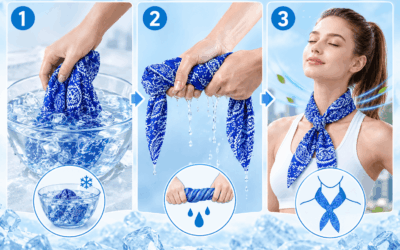
Many people have similar questions when they first see a cooling scarf: Does a wet scarf really help cool you down, or is it just a marketing gimmick?
The answer is: evaporative cooling technology itself is effective, but the actual effect depends on the environment and method of use.
Cooling scarves utilize a long-proven principle of evaporative cooling. As the water in the scarf gradually evaporates, it carries away heat from the skin’s surface, thus helping to reduce the feeling of heat. This technology is widely used in outdoor sports, high-temperature work, and industrial protection.
However, cooling scarves don’t work the same way in all situations. Air humidity, wind speed, activity level, and how they are worn all affect the final experience.
In this article, we will explain how cooling scarves work, analyze their cooling performance in actual tests, and discuss which scenarios they are suitable for and in which situations their effectiveness is limited, helping you determine if this product is right for your needs.
Do Cooling Scarves Really Work?

The answer is: yes, but it doesn’t rapidly lower core body temperature as some advertisements claim.
The real effect of a cooling scarf is to help lower the surface temperature of the skin, making you feel more comfortable in hot environments. This cooling sensation is real, not just a placebo effect.
Some real-world tests have proven this. In an outdoor test conducted in Abu Dhabi, participants wearing evaporative cooling scarves experienced a 4.1°C drop in neck skin temperature in just about 90 seconds. Simultaneously, participants’ ratings of discomfort from heat also significantly decreased, from “very hot” to “slightly warm.”
However, there was no significant drop in core body temperature during the test. This indicates that cooling scarves primarily improve localized heat sensation and comfort, rather than directly altering the body’s internal temperature like air conditioning or medical cooling devices.
Different materials used in cooling scarves (such as evaporative and PCM phase-change types) typically provide a skin surface cooling effect of approximately 3–10°C in tests, depending on the material, how it is used, and environmental conditions. Core body temperature typically changes only slightly, usually within 0.5–1.0°C, and may not even change noticeably during exercise.
Therefore, the scientific principle behind cooling scarves is sound. What truly needs to be considered are some exaggerated claims, such as “instantly lowering core body temperature.” Its more accurate function is to help dissipate heat from the body surface, reducing discomfort in hot environments and making one feel cooler and more comfortable.
How Do Cooling Scarves Work? The Principle Behind Evaporative Cooling
The cooling effect of a cooling scarf isn’t some kind of magic; it utilizes a very simple physical process—the evaporation of moisture carries away heat.
When the water in the cooling scarf changes from a liquid state to water vapor, it absorbs heat from the surrounding environment, including heat from the skin and the scarf itself. This process is very similar to how the human body cools down through sweating, except that the cooling scarf stores more water, providing an additional way for the body to dissipate heat.
In short, the cooling process roughly involves several steps:
The absorbent fibers first store moisture, keeping the scarf moist;
The heat generated by the skin around the neck is transferred to the moist fabric;
The water absorbs heat and gradually evaporates into the air;
As the moisture evaporates, heat is continuously carried away.
As long as the scarf remains moist and there is airflow around it, heat will continue to be transferred from the skin to the fabric and then released into the air.
What are the differences in cooling time between different absorbent materials?
Currently, cooling scarves on the market mainly use different types of absorbent materials, with PVA and SAP being two of the most common.
PVA (polyvinyl alcohol) cooling material is one of the materials used in many high-performance cooling scarves. It has strong water absorption capacity, quickly absorbing large amounts of moisture and providing a noticeable cooling sensation in a short time. It is usually ready to use after soaking for about 1 minute, and the cooling effect generally lasts for 2-4 hours.
SAP (superabsorbent polymer) material uses a different approach. It absorbs and stores more moisture, then extends the cooling time by slowly releasing it. Therefore, these products usually require a longer soaking time (about 15-25 minutes), but provide a more lasting cooling experience, with some products lasting 4-6 hours.
In contrast, ordinary microfiber cooling scarves have a simpler structure and activate quickly, but their duration is usually shorter.
Why are cooling scarves sometimes ineffective?
The biggest characteristic of evaporative cooling, and also its biggest limitation, is its dependence on environmental conditions.
Moisture can only continuously remove heat when it can continuously evaporate. If the air humidity is high, and the air already contains a large amount of water vapor, new moisture is more difficult to evaporate, and the cooling effect will naturally decrease.
Generally, the evaporation rate slows down significantly when the air humidity exceeds about 65%. Therefore, the same cooling scarf may work well in a dry, windy outdoor environment, but its cooling effect may be significantly reduced in hot and humid weather.
How to interpret real-world testing?
Is there scientific evidence to support the effectiveness of cooling scarves?
Regarding the effectiveness of cooling scarves, test results generally present a consistent conclusion:
They have a significant effect on lowering skin temperature and alleviating the sensation of heat, but their impact on core body temperature is usually limited.
This doesn’t mean they are without value. For outdoor work, sports, and daily activities in high-temperature environments, reducing skin heat sensation and decreasing the body’s thermal burden provides tangible benefits.
Outdoor Workers: Reducing Thermal Stress and Improving Comfort
A study conducted by the Hong Kong Occupational Safety and Health Bureau and the Hong Kong Polytechnic University tested the performance of outdoor workers after using cooling equipment.
The study included construction workers, kitchen staff, and airport ground staff, who worked in environments with temperatures of approximately 30–32°C and high humidity.
The results showed that after using cooling equipment, some workers experienced a decrease in thermal stress indicators such as heart rate and respiratory rate. The reduction in thermal stress was more significant for kitchen and airport staff, and improvements were also observed in construction workers.
Participants generally reported feeling less fatigued, breathing easier, and experiencing a delayed onset of fatigue after wearing the cooling equipment.
This indicates that even without a significant change in core body temperature, a cooling scarf can still help the body better cope with high-temperature environments.
It also helps specific populations and sports scenarios.
Some studies on heat-sensitive individuals have found improvements in activity levels, balance, and recovery experience after using cooling equipment.
Interestingly, these improvements are not necessarily accompanied by a significant change in core body temperature.
Similar observations have occurred in the sports field. For example, during running tests in high-temperature environments, athletes using head or neck cooling devices showed improved performance and experienced a more pronounced localized cooling sensation.
Why is the change in core body temperature not significant?
Many people mistakenly believe that cooling products must cause a significant drop in body temperature to be effective.
In reality, the human body possesses a very strong capacity for thermoregulation. Cooling scarves, towels, and similar products primarily work on the skin’s surface and provide localized warmth, helping the body release heat more quickly and reducing discomfort from heat, rather than directly altering the body’s internal temperature like medical cooling devices.
Related research shows that personal cooling gear typically has a small impact on core body temperature, but it can lower heart rate, improve comfort, and help people maintain better performance in high-temperature environments.
For outdoor work, sports training, or daily commutes in summer, reducing heat and fatigue are often the greatest benefits of cooling gear.
Different Types of Cooling Scarves: Which One is Right for You?
Not all cooling scarves use the same technology. While they may look similar, there are significant differences in their cooling methods, duration of cooling, and ease of use.
Currently, there are three main types of cooling scarves on the market:
-
Evaporative Cooling Scarf
-
PCM Phase Change Cooling Neck Wrap
-
Ice Pack/Gel Cooling Scarf
Each technology has its advantages, and the choice should be based on the environment and specific needs.
Evaporative Cooling Scarf: Lightweight, Simple, and Suitable for Dry Environments
Evaporative cooling scarves are currently the most common type of product. They primarily utilize PVA fibers, microfibers, or SAP superabsorbent materials to store moisture, which then evaporates to remove heat.
The biggest advantage of this type of product is its ease of use—usually, it only requires soaking in water to activate, without the need for a refrigerator or power source.
Different materials have varying absorption capacities and durations of cooling effect:
Ordinary microfiber products typically provide a cooling experience of about 1-3 hours; Superabsorbent SAP materials can extend this to 4-6 hours.
Evaporation is more pronounced in dry, well-ventilated environments; however, in high humidity, the cooling time and sensation decrease because the air cannot quickly absorb moisture.
Suitable for:
Outdoor sports; Hiking and camping; Outdoor work in dry areas; Daily summer use.
PCM Phase Change Cooling Scarf: Stable, Long-lasting, Unaffected by Humidity
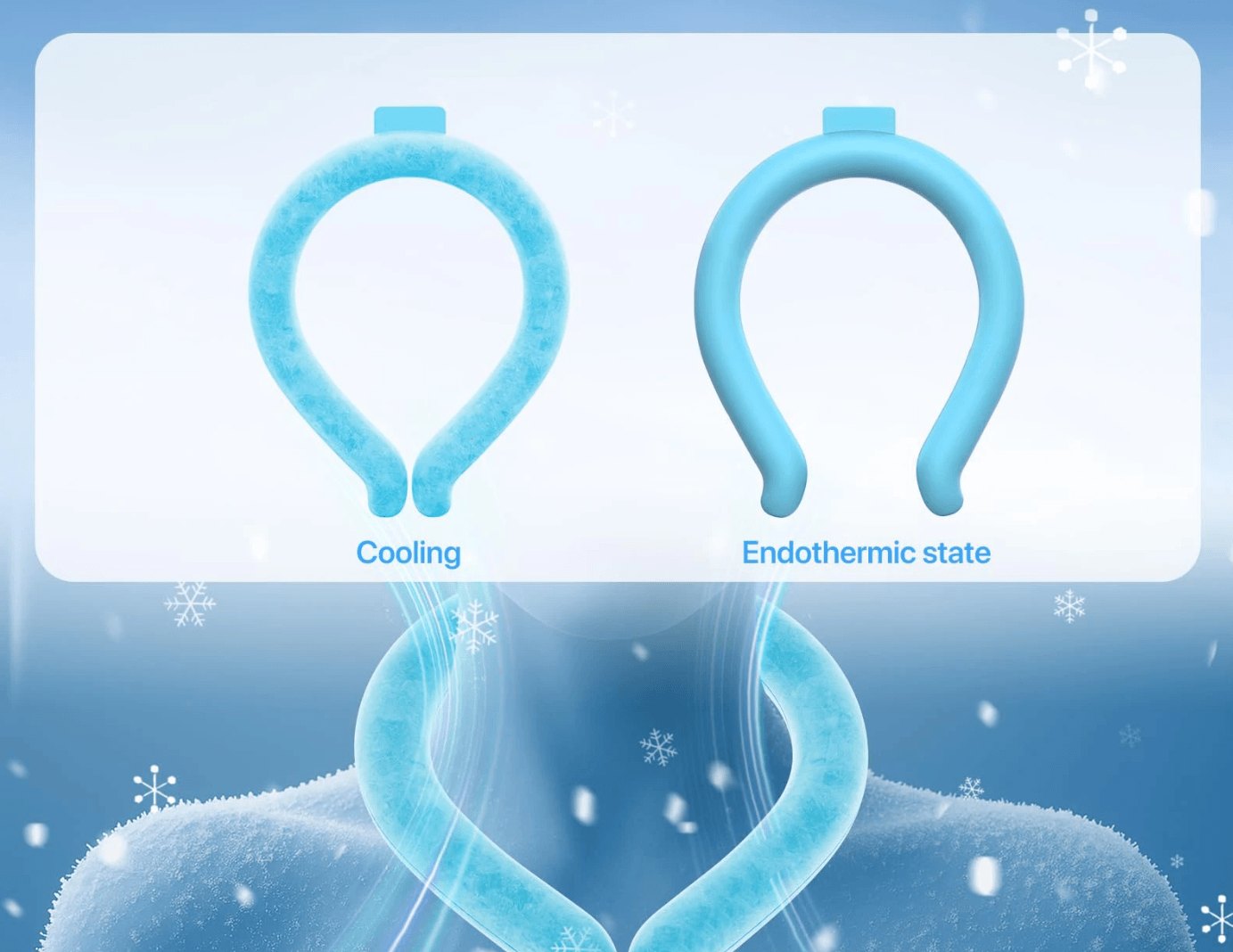
PCM cooling scarves use phase change materials, absorbing heat through a process of solid-to-liquid transition and maintaining it within a set temperature range.
Compared to evaporative cooling products, PCM’s biggest advantage is its independence from air humidity.
It needs to be pre-cooled before use, typically by placing it in a refrigerator or freezer for a period of time to activate it. During use, it provides a more stable cooling experience without the noticeable, irritating low temperature of ice.
PCM cooling scarves typically provide cooling for approximately 3-6 hours, depending on the PCM capacity, ambient temperature, and activity intensity.
Suitable for:
High humidity areas;
Prolonged outdoor activities;
Industrial work;
People requiring stable cooling.
Ice pack/gel cooling scarves: Rapid cooling, suitable for short periods in hot environments.
Ice packs or gel cooling scarves directly absorb heat through low-temperature materials, providing the most noticeable cooling sensation among the three types.
Its advantages are rapid cooling and its independence from air humidity. However, it also has significant disadvantages:
Requires pre-freezing;
Limited usage time;
May cause discomfort at excessively low temperatures;
Requires additional spare ice packs.
Therefore, it is more suitable for short-term, high-intensity cooling needs, such as rapid cooling during hot outdoor activities, exercise recovery, or extreme weather conditions.
When is a cooling scarf most effective?
While a cooling scarf isn’t a universal solution for all high-temperature environments, its portability and immediate cooling capabilities are particularly noticeable in certain situations.
Daily Heat Discomfort: Helps Relieve Heat Sensation
The neck is one of the most sensitive heat dissipation areas of the body. Therefore, lowering the temperature around the neck with a cooling scarf can quickly alleviate discomfort caused by heat.
For people prone to sudden hot flashes, such as menopausal women, neck cooling can help relieve intense heat sensations that occur in a short period. Related studies have found that localized cooling devices can reduce heat sensitivity scores and help improve comfort.
When using a cooling scarf, wear it around your neck, or place it on your shoulders, forehead, or other areas as needed to enhance the localized cooling experience.
Outdoor Sports and Daily Fitness
For low- to moderate-intensity outdoor activities such as running, hiking, and cycling, a cooling scarf is a simple and convenient way to assist in cooling down.
In environments that are warm but relatively dry, PVA or microfiber cooling scarves can typically provide a cooling experience for about 1 to 3 hours. Soak the scarf in water and wring it until damp before use. If the cooling effect diminishes during exercise, rehydrate to reactivate it.
It is particularly suitable for: Summer running; Outdoor training; Hiking; Camping.
Outdoor work and prolonged exposure environments
For outdoor work such as construction, landscaping, and municipal maintenance, the cooling scarf can serve as a simple personal cooling aid.
Compared to products requiring batteries or refrigeration equipment, the evaporative cooling scarf requires no additional power; it only needs to be rehydrated to continue use, making it ideal for work scenarios requiring frequent movement.
However, for continuous high-intensity physical labor environments exceeding 8 hours, the cooling scarf alone may not meet all cooling needs and usually needs to be used in conjunction with rest breaks, hydration, and other cooling equipment.
Commuting, event workers, and daily use
In urban heat island environments, such as summer high-temperature city commutes, outdoor event management, and exhibition workers, the cooling scarf is also very practical.
It is lightweight, requires no charging, and does not hinder movement, making it ideal for people who need to be outdoors for extended periods but cannot easily carry large cooling equipment.
In what situations is its effectiveness limited?
While cooling scarves are very convenient, they also have significant limitations:
High humidity environments (approximately 70%–80% or higher): The rate of moisture evaporation decreases, reducing the cooling effect; High-intensity exercise: When the body generates a large amount of heat, a scarf alone may not be sufficient to meet the heat dissipation needs; Prolonged periods without maintenance: After all the moisture has evaporated, it needs to be reactivated.
In short, cooling scarves are best suited for:
Everyday cooling scenarios requiring lightweight, rapid cooling without the need for a power source.
For extreme high-temperature or high-intensity work environments, more powerful cooling solutions such as PCM, water circulation, or fans should be considered.
Limitations and Common Misconceptions about Cooling Scarves
Cooling scarves are not portable air conditioners. Multiple studies (Bulbulian 1999, Tyler 2011, Ando 2015) have confirmed that neck cooling devices have virtually no effect on rectal or core temperature—the cooling area is too small to be noticeable. A cycling trial found that cooling vests significantly improved athletic performance, while cooling neckbands showed no measurable difference in heart rate, core temperature, or perspiration rate compared to the control group.
The claim of “30°F cooling” is technically correct, but misleading. This figure refers to the skin contact temperature at the moment of activation, not a 30-degree drop in actual body temperature or ambient air temperature. If a scarf could actually lower core temperature by 30°F, you would be hypothermic. In reality, you gain delayed fatigue and reduced heat discomfort—real benefits, just not what the advertisements suggest.
The Risk of Backlash from Dry Fabrics
Evaporative cooling fabrics only work when damp. If left to dry in direct sunlight (500–800 W/m², with slow air circulation), the surface temperature of a dark or heavy scarf can reach 45–55°C, approaching or exceeding the skin’s pain threshold (43–45°C). Industry heat tests on lightweight synthetic fabrics have found that in low wind conditions (35–38°C), a completely dry scarf can reach a surface temperature of 48–52°C, making the wearer feel hotter rather than cooler. The solution is simple: re-wet the scarf every 30–60 minutes in strong sunlight, and never wear a semi-dry scarf directly against the skin, especially on children or the elderly.
Humidity and air circulation are crucial.
When relative humidity exceeds 65%, the evaporative cooling effect decreases rapidly. In tropical regions (80–90% relative humidity), a PVA scarf with a nominal cooling duration of 2–4 hours may only provide a noticeable cooling effect for 30–60 minutes. Placing a portable fan about 30 cm from your neck can promote moisture evaporation and extend the cooling effect by 30-40%—this is helpful if you remain stationary; however, the effect is less noticeable if you are moving around.
Limitations
Cooling scarves can improve your perceived temperature, but they cannot prevent heatstroke, replace hydration, or replace rest in extreme heat. If people believe that cooling scarves alone are sufficient for cooling, they may still overheat even after strenuous exercise.
Product Lifespan
Evaporative cooling scarves typically last 2-3 years with proper care; phase change material (PCM) cooling devices experience a significant decrease in phase change performance after 12-18 months; and Peltier effect cooling bandages have a noticeable decrease in battery life within 18-24 months. If your scarf doesn’t feel as effective as before, this is a sign of aging and is normal.
How to Maximize the Effectiveness of a Cooling Scarf
The method of use is equally important. The same cooling scarf may only provide two hours or twenty minutes of soothing effect, depending on how it is activated, worn, and cared for.
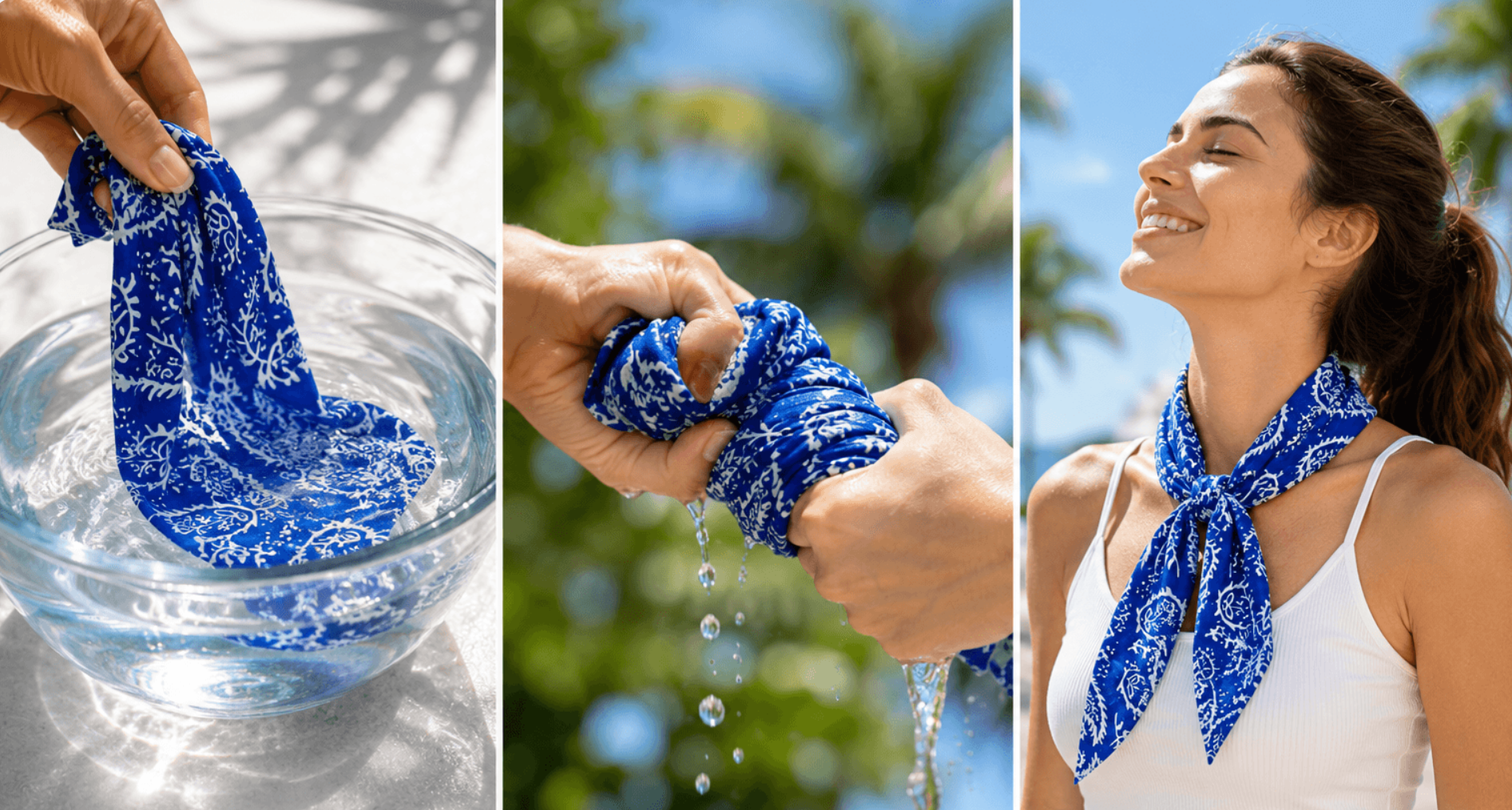
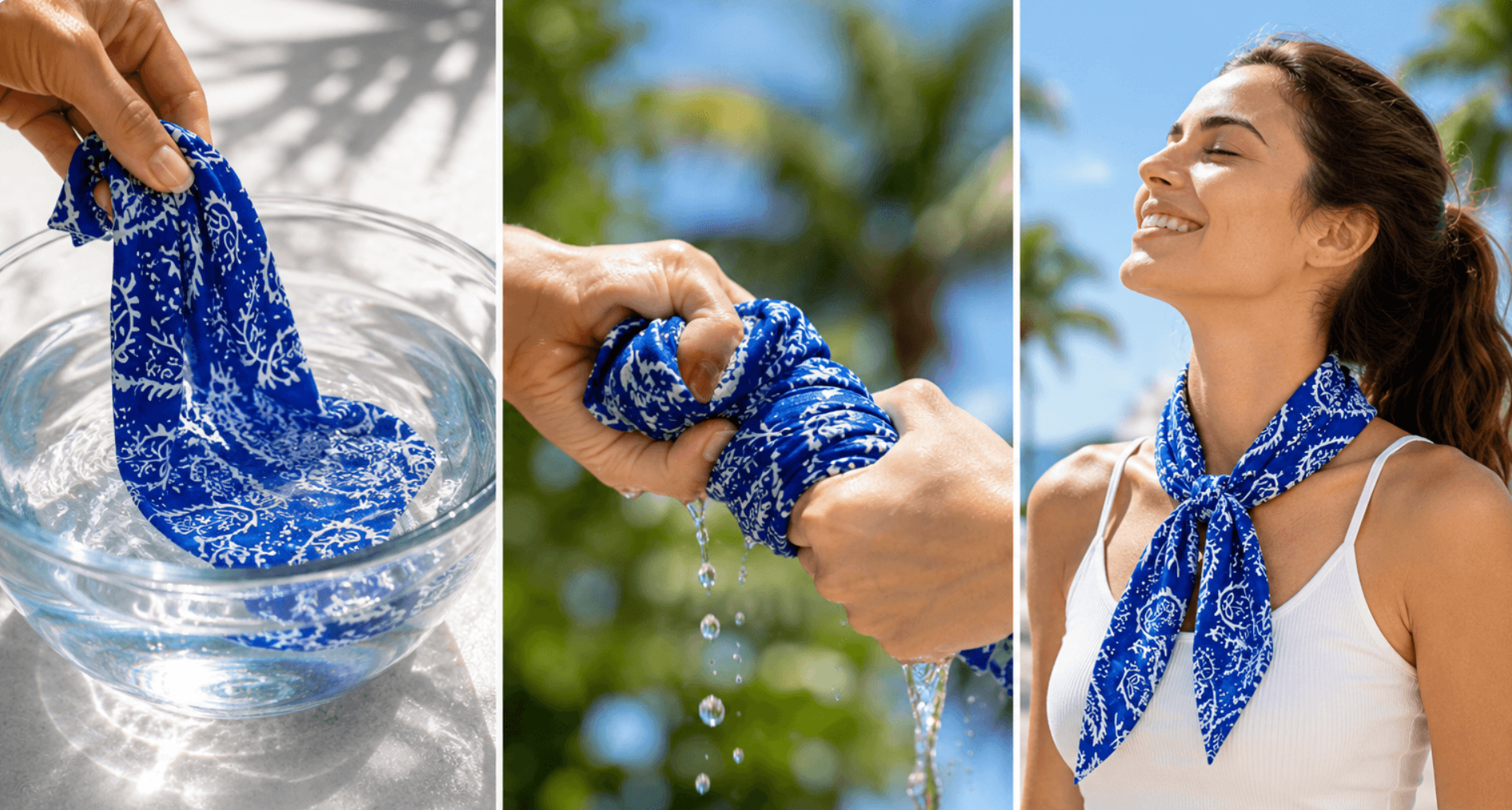
Activation methods vary depending on the material. Pure evaporative fabrics only need to be soaked in cool water (20-25°C, no ice required) for 30 seconds to 3 minutes, then gently wring out until “slightly damp, but not dripping.” Shake or shake vigorously for 3-10 seconds to allow air to enter the fibers—this initiates evaporation.
Cooling scarves made of polymer crystals require a longer soaking time: soak for 2-5 minutes initially, then for 15-20 minutes, until the center feels “full and elastic,” not stiff.
Cooling scarves made of PCM gel need to be refrigerated or frozen for 20-40 minutes, until they harden but not become rock-hard.
Ice pack-style cooling scarves need to be frozen in a freezer for 2-3 hours, with a target temperature of 0-4°C.
Place the cooling scarf correctly. The carotid artery (the pulse point between the jaw and collarbone) and the base of the skull are two of the most effective cooling areas. Place the thickest cooling part behind the neck, letting the ends hang down over these two arterial points, avoiding direct pressure on the trachea. To enhance the cooling effect, you can also use cooling products on the wrists, forehead, or ankles. Choose light-colored, breathable fabrics to avoid hindering airflow (and moisture evaporation).
Reactivate to maintain the cooling effect. Evaporative cooling scarves lose their effectiveness after 20-60 minutes of outdoor use—simply re-wet, wring, and shake dry. Crystal cooling scarves can maintain their cooling effect for several hours, but need to be quickly soaked for 2-3 minutes after the surface dries. Phase change material (PCM) and ice packs need to be re-frozen before reuse.
How to Choose the Perfect Cooling Scarf for Your Needs
When choosing a scarf, consider its intended use.
By Usage Scenarios:
– Daily/Light Wear (Commuting, Office, Short Trips): According to G-Heat testing, a standard 53-gram scarf can meet 80% of usage scenarios.
– Outdoor Work/Sports (Running, Construction Sites, Prolonged Sun Exposure): Choose PVA material. In comparative tests, PVA material’s cooling effect lasts longer than ordinary microfiber.
– High Humidity Environments: Lower your expectations for evaporative cooling. Humid environments slow evaporation, but contact cooling is still effective.
Five Things to Check Before Buying:
-
Material: PVA material is highly absorbent and retains its coolness for longer after absorbing water. Microfiber material dries faster and is lighter.
-
Duration: Actual testing shows that PVA material cools for 30 minutes to 2 hours; under ideal conditions, some PVA materials can cool for 2-4 hours.
-
Size: Compact size is suitable for areas with arteries close to the skin, such as the neck and wrists. Large (XL) is needed for shoulders or thighs.
-
Reusability: Choose scarves that can be quickly soaked to restore their cooling effect, rather than disposable products.
-
Testing Data: Check if the fabric meets ASTM F1868 or ISO 11092 standards. If no standard is listed, understand the test duration, temperature/humidity conditions, and number of cycles.
Quick Shopping Checklist: Determine your usage scenario, choose the material (PVA is more durable, microfiber is more comfortable), choose the size suitable for your body parts, verify the duration claim, and check how quickly the cooling effect is restored.
Brands that publish actual testing conditions (rather than just promising “lasting coolness for several hours”) are more trustworthy than those that don’t.
In summary,
evaporative cooling technology is genuinely effective and has been widely applied in outdoor sports, high-temperature work, and everyday cooling products.
A well-designed cooling scarf can indeed help lower skin surface temperature and alleviate discomfort caused by heat in a short time. However, its actual effectiveness depends on several factors, including material selection, proper activation methods, and suitability for the usage environment.
For example, an evaporative cooling scarf suitable for dry outdoor activities and a neck cooling product for everyday heat relief have different needs. Choosing a product suitable for your specific use case is more important than simply pursuing the “lowest temperature.”
High-quality absorbent materials such as PVA and SAP provide stable water retention and release capabilities, while some low-quality products often lead users to believe that “cooling scarves are ineffective” due to insufficient material performance or incorrect usage.
For brands, retailers, and bulk purchasing customers, product materials, structural design, and manufacturing processes determine the final market performance.
ICEBEAR specializes in the research and development and manufacturing of cooling products, providing OEM/ODM customization solutions for a variety of cooling products, including Cooling Scarf, PCM Neck Cooler, and Cooling Towel. We help our partners develop more stable cooling products that are better suited to different application scenarios and market demands.