
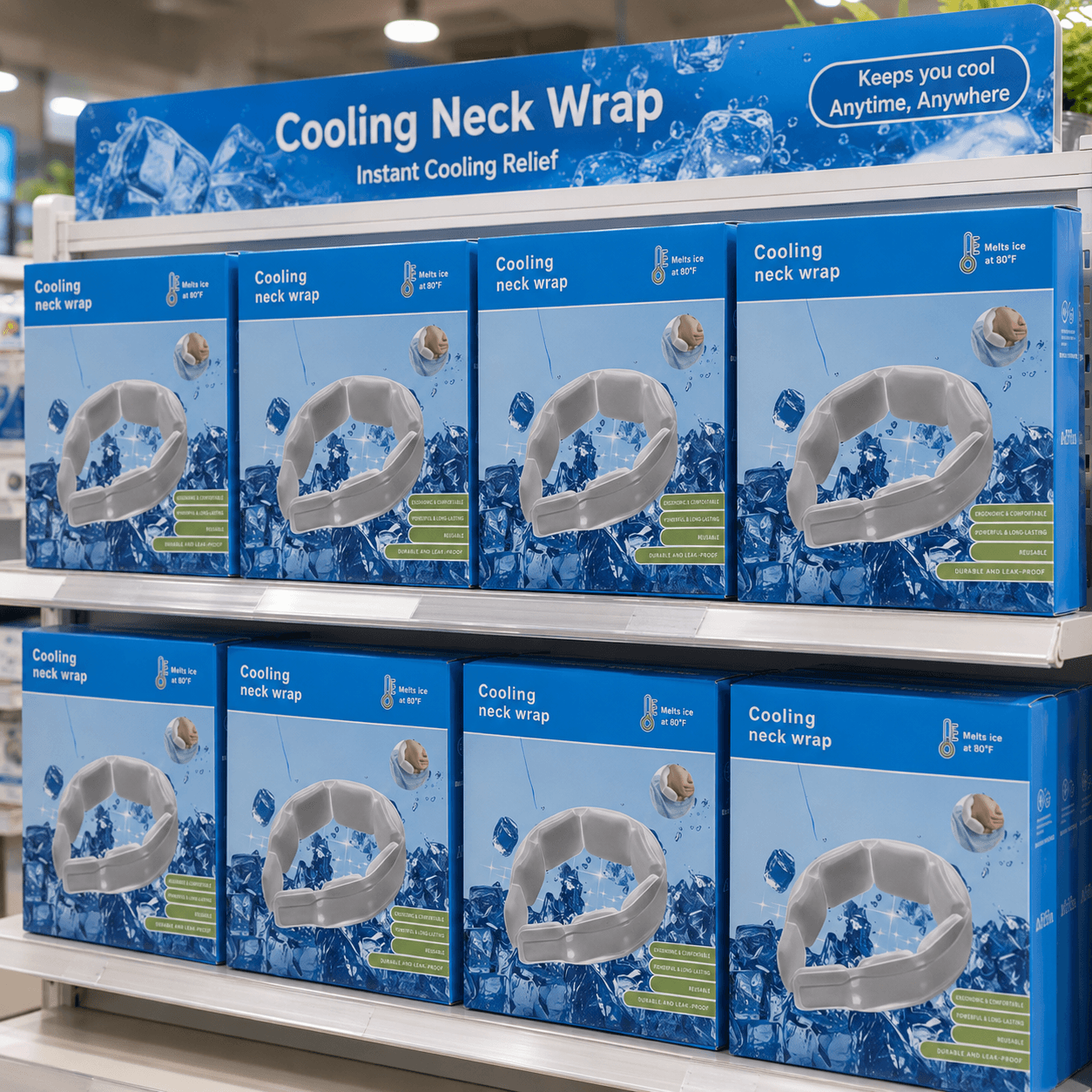
I bought a cooling neck wrap, expecting it to provide a continuous cooling sensation, but it started to warm up after about half an hour? This is actually quite common and doesn’t necessarily mean there’s a problem with the product quality.
There’s no fixed answer to how long a cooling neck wrap can maintain its cooling effect, applicable to all products. The internal cooling material, activation method, ambient temperature, humidity, and the intensity of activity while wearing it all affect the actual duration. Gel, Ice Pack, PCM, and Evaporative Cooling Wraps work on different principles, so their cooling times will naturally vary significantly.
This article will analyze the actual cooling time of different types of cooling neck wraps, what factors make them heat up faster, and share some simple methods to help you extend the effective cooling time with each use.
How long does a cooling neck wrap typically last?
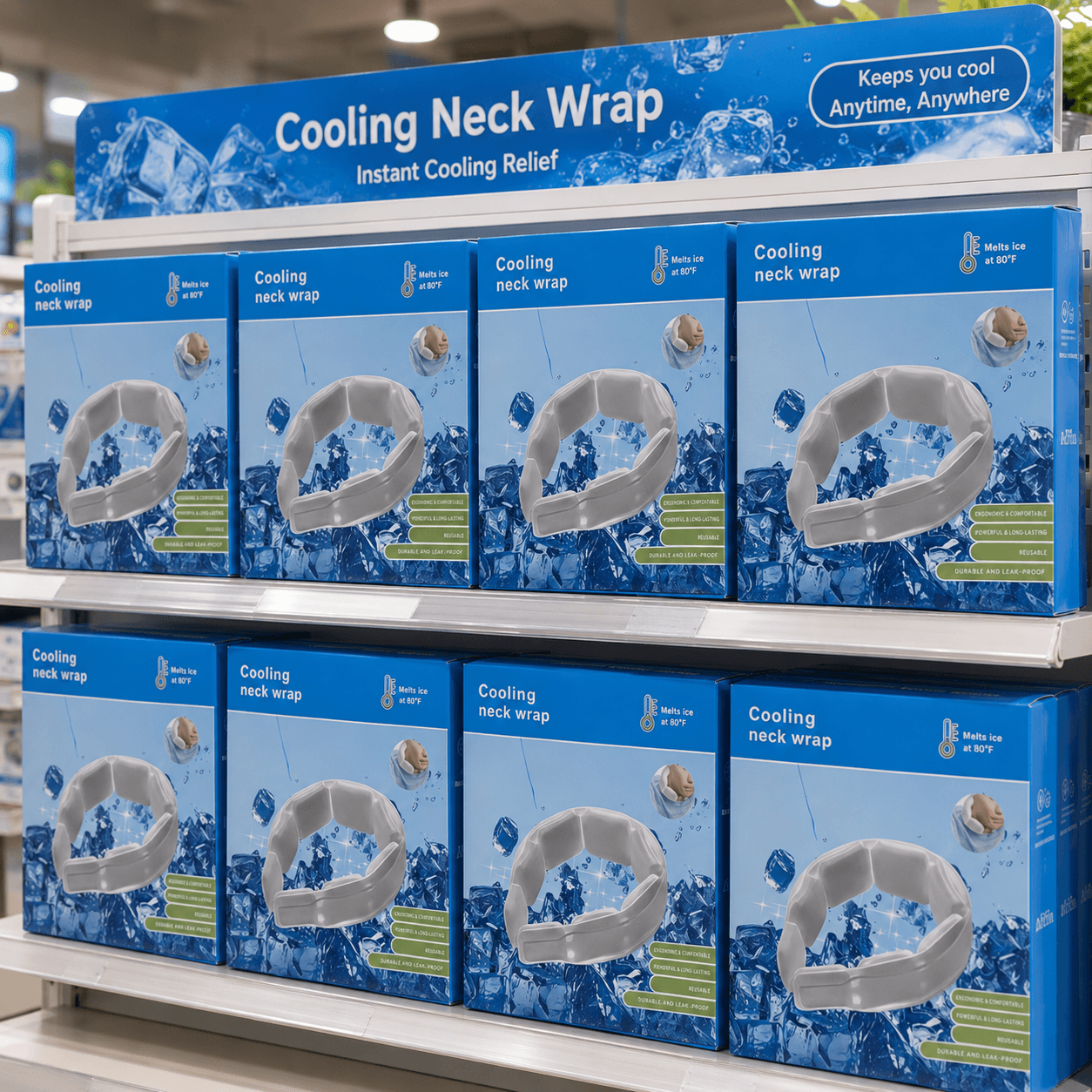
In short, most cooling neck wraps provide effective cooling for approximately 15 minutes to 5 hours, depending on the cooling technology used and the actual usage environment.
Gel or ice pack neck wraps typically provide a noticeable cooling sensation, but the duration is relatively short, generally around 15–30 minutes, with some larger packs lasting 30–90 minutes. PCM neck wraps don’t reach the same low temperature as ice packs, but their advantage is greater stability, usually providing a continuous cooling sensation for about 1–3 hours.
Evaporative cooling neck wraps are completely different. They remove heat through water evaporation, and in dry, well-ventilated environments, they can typically last about 2–5 hours. Furthermore, the cooling sensation can be reversed by re-soaking them in water.
It’s important to note that “no longer feeling cold” does not mean “completely losing its cooling effect.” For example, a gel wrap may lose its noticeable cooling sensation after ten minutes, but its surface temperature may still be lower than skin temperature; the same applies to PCM and evaporative products.
Therefore, rather than simply comparing “how many hours it cools,” it’s more important to first determine which type of cooling neck wrap you’re buying and whether it’s suitable for your specific usage scenario.
Cooling Duration by Material Type: Gel vs PCM vs Evaporative
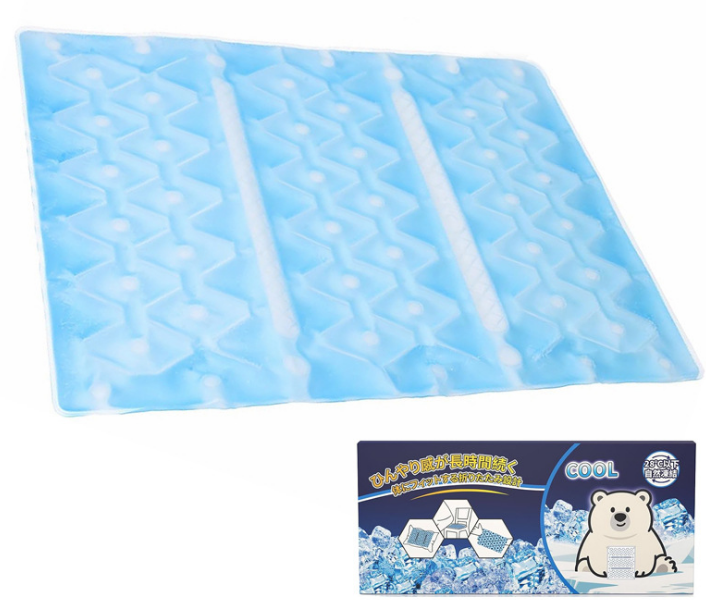
Three technologies, three completely different cooling curves. Here’s what’s happening inside each type.
Gel/frozen gel wraps hit hardest and fade fastest. After a full 2-hour freeze, expect roughly 20 minutes of genuinely cold sensation. The broader practical window sits at 15–30 minutes for peak chill. Premium gel packs with thicker fill can stretch that to 30–60 minutes. The tradeoff is intensity for duration—gel gives you the sharpest cold, but it melts fast. That’s why the standard use pattern is 10–20 minute wear sessions followed by a 40-minute rest before refreezing. Best fit: acute pain relief, sideline sports breaks, quick spot-cooling.
PCM (phase-change material) wraps work differently. Instead of melting from ice-cold to room temp, PCM holds at a fixed transition temperature while it changes state, so cooling feels steadier, less “shock cold,” but more sustained. Typical duration runs 60–180 minutes, with some extended-capacity designs pushing to 3.5 hours. This makes PCM the go-to for outdoor shifts, travel, and sports sessions where you need reliable cooling without babysitting a freezer.
Evaporative cooling towels depend entirely on water leaving the fabric, which means humidity and airflow control everything. In low-to-moderate humidity, expect 2–4 hours or more per soak. Push into high humidity (70%+) and that window shrinks to 1–2 hours, sometimes less, forcing more frequent re-wetting. Sturdier PVA towels can hit 4 hours under good conditions. Best fit: gardening, outdoor labor, extended exercise where re-soaking is easy.
Quick selection guide:
– Coldest short-term relief → gel
– Balanced cooling for 1–3+ hours → PCM
– Longest runtime with reuse → evaporative
Match the material to your actual use case, not just the marketing claim on the box.
What Affects How Long Your Cooling Neck Wrap Stays Cold
Lab numbers and living-room numbers rarely match. A cooling neck wrap rated for 3 hours can die in 40 minutes if you’re sweating through a workout in July. Here’s what moves the needle.
Temperature and Humidity
Heat and moisture in the air are the biggest wildcards. In controlled tests at 32°C and 75% relative humidity, evaporative wraps lasted just 12–18 minutes, pre-chilled gel ran 22–35 minutes, PCM held 30–42 minutes, and hybrid designs stretched to 35–48 minutes. Push humidity up to 85%, and evaporative cooling stops working—still stuck at 12–18 minutes—while gel and PCM wraps keep performing in the 90–120 minute range. If you live somewhere humid, skip evaporative cooling towels. Gel or PCM will treat you better. Under drier, controlled conditions (32°C, 40% humidity), a quality PCM cooling neck wrap can hold surface temps at 12–16°C for 3 to 3.5 hours—though real-world exercise knocks that down to 2.5–3 hours once sweat and movement enter the picture.
Activity Level and Movement
Sitting still gets you closer to the advertised duration. Moving, sweating, and friction cut it short—especially for evaporative wraps. If you’re doing short bursts of intense activity (tennis, circuit training), expect to re-wet an evaporative wrap every 10–15 minutes. Steadier activities with airflow, like cycling or hiking, are a better match for gel or PCM, which can run anywhere from 22–48 minutes up to several hours depending on the fill. This is why a cooling neck wrap for exercise needs a different material profile than one meant for sitting at a desk during hot flashes.
How You Activate and Store It
Activation method changes your starting point. Some cooling neck tube designs need a 10-minute ice water soak to hit working temperature, faster than a straight freezer activation. Freezer-based activation varies wildly by product: some brands say 20 minutes is enough, others recommend a full 2 hours for complete freezing. For PCM specifically, hitting the exact phase-change point (often around 15°C) before wearing it matters more than people realize. Undercool it and performance gets inconsistent.
Design and Fill Density
More fill means more stored cold, but also more weight and less flexibility around your neck. Hybrid wraps split the difference: longer runtime, heavier feel. Fabric breathability helps evaporative wraps but won’t rescue them in high humidity—physics wins there every time.
How Cooling Neck Wraps Work
Three different mechanisms are hiding under that stretchy fabric, and none of them are magic. Every cooling neck wrap moves heat away from your skin using one of three physics principles: conduction, latent heat of fusion, or evaporation. Understanding which one you’re wearing explains why some wraps feel icy and fade fast, while others stay mild but consistent for hours.
Gel cooling neck wraps use straight conduction. You freeze them at standard household freezer temps, around -18°C, and heat transfers from your warmer neck into the colder gel. Simple, but the tradeoff shows up fast. As the gel absorbs heat, it warms unevenly, which is why gel wraps often deliver that “cold-then-lukewarm” swing users complain about. Activation instructions vary a lot by brand too, ranging from a quick 20-minute freeze to a full 2–4 hours.
PCM (phase-change material) works on a different principle. It’s engineered to hold a fixed transition point, and common formulations target 17°C, 18°C, 22°C, 24°C, or even 28°C. As the material shifts from solid to liquid, it absorbs a large amount of energy as latent heat, which keeps the temperature from climbing. That’s why PCM feels steady instead of shocking, and it’s the reason manufacturers describe it as “consistent cooling” without needing power or a charge.
Evaporative wraps, usually made from PVA fiber, cool through evaporation. You soak the material, wring it out, and airflow pulls water vapor away, taking heat with it. That’s why these wraps perform best in dry air and struggle when humidity climbs. Standard PVA sizing runs roughly 26″ x 8.25″, built to wrap fully around the neck where blood vessels sit close to the skin. That’s one reason neck cooling feels more noticeable than cooling almost anywhere else on the body.
How to Extend the Cooling Time of Neck Cooling Bandages
Freezing time is more important than most people realize. A gel cooling bandage frozen for 20 minutes is far less effective than one frozen overnight.
Effective Recovery Time
Gels and ice packs need to be frozen for at least 2 hours. For optimal cooling, freezing for 4 hours or overnight is recommended. PCM cooling bandages need to be frozen for 30 to 60 minutes. Some products claim that freezing near the coil for only 15 minutes is sufficient, but for a more stable effect, freezing for 30 to 60 minutes is recommended. When time is tight, choose PCM and gel products, which only need to be soaked in ice water for 10 minutes or frozen for 20 minutes to restore their cooling effect.
Double Cooling Bandage Alternation Technique
Prepare two cooling bandages. After using one for 10 to 20 minutes each time, switch to the other, and put the first one back in the freezer or cooler. This way, the 20 to 60 minutes of warmth from a single dressing can be extended to several hours, which is especially useful outdoors in summer.
Rehydrating Evaporative Thermal Dressings
Evaporative thermal dressings need to be rehydrated after drying, every 30 to 60 minutes depending on wind and humidity. After rehydration, wring out until damp but not dripping. If complete drying is required before rehydration, complete rehydration is necessary to restore warmth.
Storage Misconceptions that Shorten Warmth
Sunlight exposure degrades the gel and phase change material, shortening the duration of future warmth. Folding or squeezing can cause gel displacement and shell cracking. Sealing evaporative thermal dressings while damp will reduce their future warmth. Over-freezing phase change materials can cause them to become brittle or hard.
In hot outdoor conditions, it is recommended to carry two gel or phase change material thermal dressings. Freeze each neck warmer for 30 to 60 minutes (PCM) or 2 to 4 hours (gel), rotating it every 10 to 20 minutes. This combination approach is more effective than a single layer of wrapping, so IceBearTech has added thicker PCM padding to its cooling neck sleeve for hours of continuous protection.
Which Cooling Neck Wrap Duration Fits Your Use Case?
When choosing a cooling neck wrap, longer duration isn’t always better. The requirements for temperature, weight, and duration are completely different for exercise, outdoor work, daily cooling, and rest. Rather than focusing on “continuous cooling for X hours” on the packaging, choosing a cooling technology suitable for your actual usage scenario is more important.
Exercise and Outdoor Activities
During running, cycling, or fitness, body heat production and sweating increase significantly, so the actual cooling time is usually shorter than when at rest.
PCM neck wraps are suitable for these scenarios because they don’t rely on moisture evaporation and provide a relatively stable cooling sensation. Depending on ambient temperature, direct sunlight, and exercise intensity, actual usage time can range from 45 minutes to several hours.
Evaporative neck wraps can also be used for exercise, especially in dry, windy environments. However, moisture evaporates faster during high-intensity exercise, requiring frequent re-wetting depending on the wrap’s dryness.
Hot Flashes and Daily Quick Cooling
If primarily used for hot flashes, summer commutes, or short-term cooling, extremely low temperatures are not necessary.
The advantage of PCM Neck Wraps lies in their relatively stable temperature, unlike gel packs freshly taken from the freezer that produce a strong chill. A single activation typically covers 1–2 hours of daily use, depending on the PCM phase change temperature and environmental conditions.
High-Temperature Outdoor Work
For construction, road maintenance, warehousing, or other high-temperature working environments, ease of reactivation or rotation is crucial.
In dry, well-ventilated environments, evaporative cooling neck wraps can last approximately 2–4 hours and can be reused simply by adding water. In high humidity environments, evaporation efficiency decreases, and PCMs are generally more stable, with a typical effective cooling time of 1–3 hours.
If covering a full work shift is required, it’s better to have multiple PCM products for rotation than to look for a single neck wrap claiming “8 hours of continuous cooling.”
For Rest and Bedtime Use
For short-term cooling before bed, a milder PCM Neck Wrap is more suitable, typically lasting 30–90 minutes.
It’s not recommended to wear extremely cold Gel or Ice Pack Wraps for extended periods simply to prolong the cooling time. For situations involving prolonged skin contact, comfort, fit, and temperature stability are often more important than how cold it is.
In short: For a noticeable cooling sensation for a short time, consider Gel/Ice Pack; for stable cooling, choose PCM; in dry, well-ventilated environments with easy hydration, Evaporative Cooling Neck Wraps are more suitable.
Choosing the Right Cooling Neck Wrap for Maximum Cold Duration
Not every wrap on the shelf deserves your money. If duration is your priority, three build types separate the winners from the warm noodles. PCM cores come first, then replaceable ice-stick designs, then soak-and-wear PVA fabric.
PCM neck wraps typically deliver 40–60 minutes in basic versions, stretching to 60–90 minutes in larger builds. Look for a stated freeze point around 18°C (64°F). That number matters because the material stays at a consistent transition temperature. Quick-activation models can pre-chill in 10–19 minutes using an ice bath or freezer, which is handy if you forgot to plan ahead.
Replaceable ice-stick wraps win on raw duration. You swap in fresh food-grade plastic ice sticks as needed, and a 40-minute wrap becomes an hours-long cooling session. Most use adjustable Velcro sized for 15″–24″ neck circumferences, so fit isn’t an issue.
PVA soak-type wraps activate fast (some need just 1 minute of wetting) but top out around 20–30 minutes per peak cooling cycle, with a 2–4 hour outer limit before performance drops off entirely.
What to Check Before Buying
-
Shell material: TPU or flexible high-frequency-welded seams resist cracking and leaking over repeated freeze cycles.
-
Fill type: PCM for steady temps; replaceable ice sticks for longest runtime.
-
Fit: Adjustable closures that sit against the neck’s blood vessels for better heat transfer.
IceBearTech builds its wraps with flexible TPU shells, low-temperature PCM fill, and durable welded seams. You get comfort and cooling time in one wrap.
Conclusion
How long your cooling neck wrap stays cold comes down to three things: the material (gel, PCM, or evaporative), how you activate and store it, and the conditions you’re using it in. PCM-based wraps typically hold their chill longest, often 2+ hours, making them the smarter pick if you’re battling hot flashes through a full workday or pushing through a long outdoor run.
Cooling duration is manageable. Pre-chill properly, avoid direct skin contact with extreme cold, and rotate a second wrap if you need all-day relief.
If you’re tired of guessing how long your current wrap will last, it might be time to upgrade. Check out IceBearTech’s PCM cooling neck wraps, engineered for consistent, longer-lasting cold when you need it.
