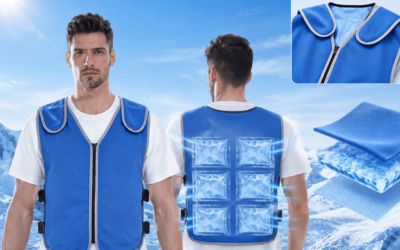
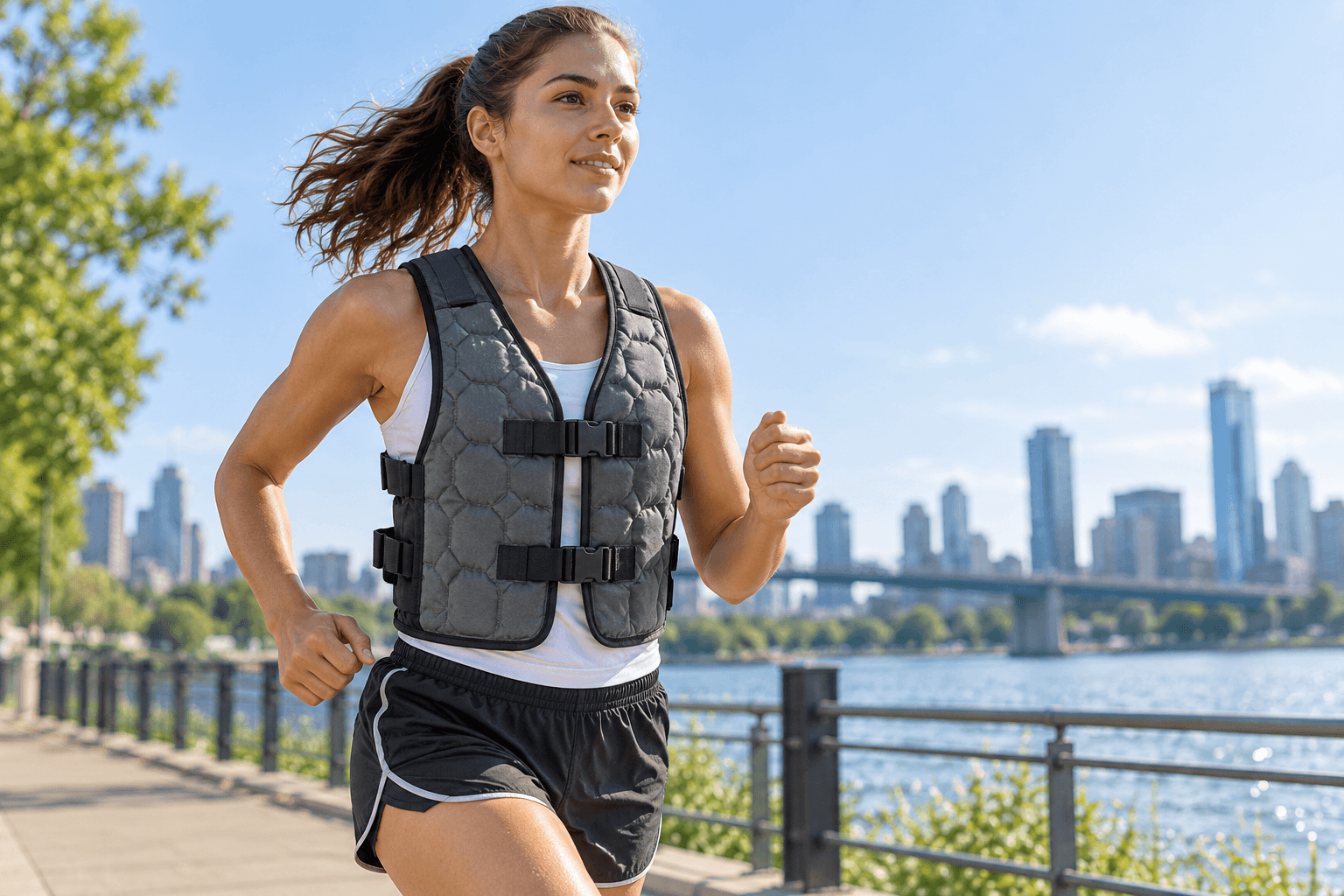
Ninety-degree heat, ten miles left, and your body temperature is climbing faster than your pace can compensate for. If you’ve trained through a brutal summer, you know that feeling of running against your own thermostat. A good cooling vest is gear that can keep you moving when the mercury says you shouldn’t be. But not all cooling vests work the same way, and picking the wrong one means wasted money and a sweaty, disappointed run. Some rely on evaporation, others on phase change material that locks in a steady chill, and a few pack actual ice. Below, we break down how each technology performs, which one fits your training schedule and race-day plans, and the specific features worth paying for.
Evaporative Cooling Vests: The Pick for Dry, Hot Weather on a Budget

Water evaporating off fabric pulls heat away from your skin. That’s how an evaporative cooling vest works. But the physics only favor you when the air is dry. Crank humidity from 20% to 40% at 35°C, and cooling performance drops by roughly 28%, according to lab testing. So if you’re training in Phoenix or Vegas, this cooling vest is your best friend. If you’re logging miles in humid Houston summers, it’s going to disappoint you.
Evaporative cooling vests are the budget-friendly option. The Ergodyne Chill-Its 6665 runs about $27.10 on Amazon and claims up to 4 hours of cooling. PIP’s 390-EZ150 comes in around $28.32. Walmart carries Ergodyne styles starting near $33. Phase change cooling vests run $114.27–$197.67, so evaporative styles remain the entry point for hot weather running gear.
You soak these vests before every use, wring them out, and let ambient evaporation do the rest. That means they’re better suited for training runs and outdoor commutes than all-day marathon coverage. Once they dry out mid-run, just rehydrate them with water from your bottle to reactivate cooling.
Phase change material works on a different principle: it absorbs heat through a chemical transition, not water evaporation, and holds your skin temperature in a steady 59°F–65°F (15°C–18°C) zone. You get a consistent, low-key chill that sticks around, with no cold spikes or sudden condensation soaking through your shirt mid-run.
That stability is why PCM cooling vests have become the go-to pick for distance runners. PCM doesn’t care about humidity. Evaporative vests lose steam when the air gets sticky, but PCM uses latent heat absorption instead of moisture evaporation. So if you’re grinding through a humid trail run or a low-wind summer half marathon, PCM keeps performing when evaporative gear taps out.
Runtime depends on the activity. High-heat interval sessions, the first half of a summer half marathon, and pre-race warmups give you 1.5–2 hours. Long training runs, aid station intervals during marathon prep, and post-race recovery wear give you 2–4 hours. The 4+ hour window is rare and usually comes from specialized high-capacity PCM builds, not standard training gear.
ActiveMSers, one of the more rigorous independent testers in this space, ran their Cooling Vest Guide through repeated trials and landed on PCM as their top pick. They cited a reliable 4-hour cooling window as “the best solution we’ve tested.” Their focus was staying comfortable for the long haul, which matches what marathon runners need.
Compared to ice pack cooling vests, PCM skips the meltwater mess and localized overcooling that ice packs can cause. Compared to evaporative vests, PCM doesn’t lose its edge as humidity climbs.
Ice-Pack Cooling Vests: A Pre-Race Pre-Cooling and Extreme Heat Emergency Solution
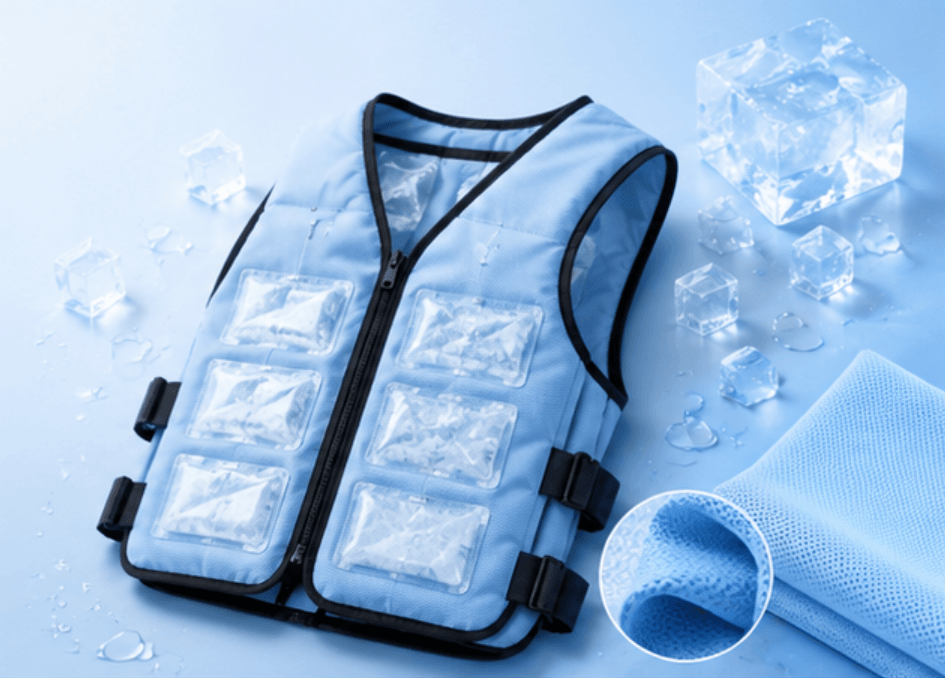
Raw ice against your skin cools faster than anything else on this list, but that cooling doesn’t last. An ice pack cooling vest works through direct conduction. Cold packs pressed against your torso pull heat out fast in the first stretch of wear. Then the temperature gap narrows as the vest warms and your skin cools, and the effect drops off. Most models give you 30–60 minutes of real cooling, with some athletic versions capping out at 30–45 minutes before you’re carrying dead weight.
A full ice-pack setup runs 2–5 kg, heavy enough to throw off your stride, your turnover, your warmup drills. Once the ice melts, the cooling stops and you’re hauling extra mass while risking heat retention.
Where this vest earns its place
-
Pre-race staging. Put it on 15–30 minutes before you start.
-
Bench time between heats or events.
-
Sideline use during breaks in training.
Runner’s World highlighted a design with insulated pockets that keep ice packs snug against the back and core, so you don’t need to re-ice every 20 minutes.
Cold water immersion and ice slurry both outperform ice-pack vests for raw pre-cooling power. But neither is practical trackside. If you need body temperature regulation running gear you can strap on and go, this is your emergency option.
Active/Fan & Solid-State Cooling Vests: The Choice for Heavy Users Chasing Ultra-Long Runtime
Battery life changes the math. Fan-powered and solid-state cooling vests trade the short bursts of evaporative and PCM gear for something closer to all-day coverage, which is exactly what ultra-distance runners and outdoor workers need.
Fan vests speed up evaporation with a built-in blower instead of relying on ambient air. That means they still lose effectiveness in humid conditions—same weakness as basic evaporative styles—but they push more air across your skin and last longer. Public runtime figures land in the 4–8 hour range per charge, with low-speed settings stretching to 8–10 hours. One industrial-grade fan pack pairs a 30V/20,000mAh battery with a 327g footprint. Run it at 25V and you get about 6 hours. Bump to 30V and you’re at 4 hours. Drop to 12V and you can squeeze out 28 hours on a single charge. Full recharge takes about 5 hours.
Solid-state (semiconductor) vests feel different on skin, more like a cold plate than moving air. They usually run 4–6 hours per battery, and swapping batteries extends that to 8–12 hours of continuous coverage. That’s the closest this category gets to true all-day cooling vest technology.
Weight is the tradeoff. Fan systems add about 1.5–2 pounds from the motor and battery alone, and full setups with fluid reservoirs can climb to 8–12 pounds. A Japanese cooling workwear example keeps things leaner: 563g total, with the battery at 363g and fan at 100g, built to stay wearable for a full shift.
Who Should Buy These
-
Outdoor workers — construction, logistics, agriculture, field inspection — where 4–12 hours of coverage matters more than shaving seconds off pace.
-
Ultra-distance trail runners and hot-weather endurance athletes who need to keep cooling after aid station stops, not just during the first two hours.
-
Not a fit for: daily training runs, tempo work, or interval sessions. The added weight and bulk work against you when speed and stride efficiency matter more than endurance-style cooling.
RunnerClick’s extreme-heat testing backs this up, noting one vest held comfortable cooling for 2–4 hours in punishing conditions, well within what a battery-powered system can sustain but far beyond what an ice pack or PCM insert manages once things heat up. If your race or shift runs long and hot, the swappable battery is what buys you time.
Matching the Best Cooling Vest to Your Running Scenario: Training Intensity and Weather Conditions
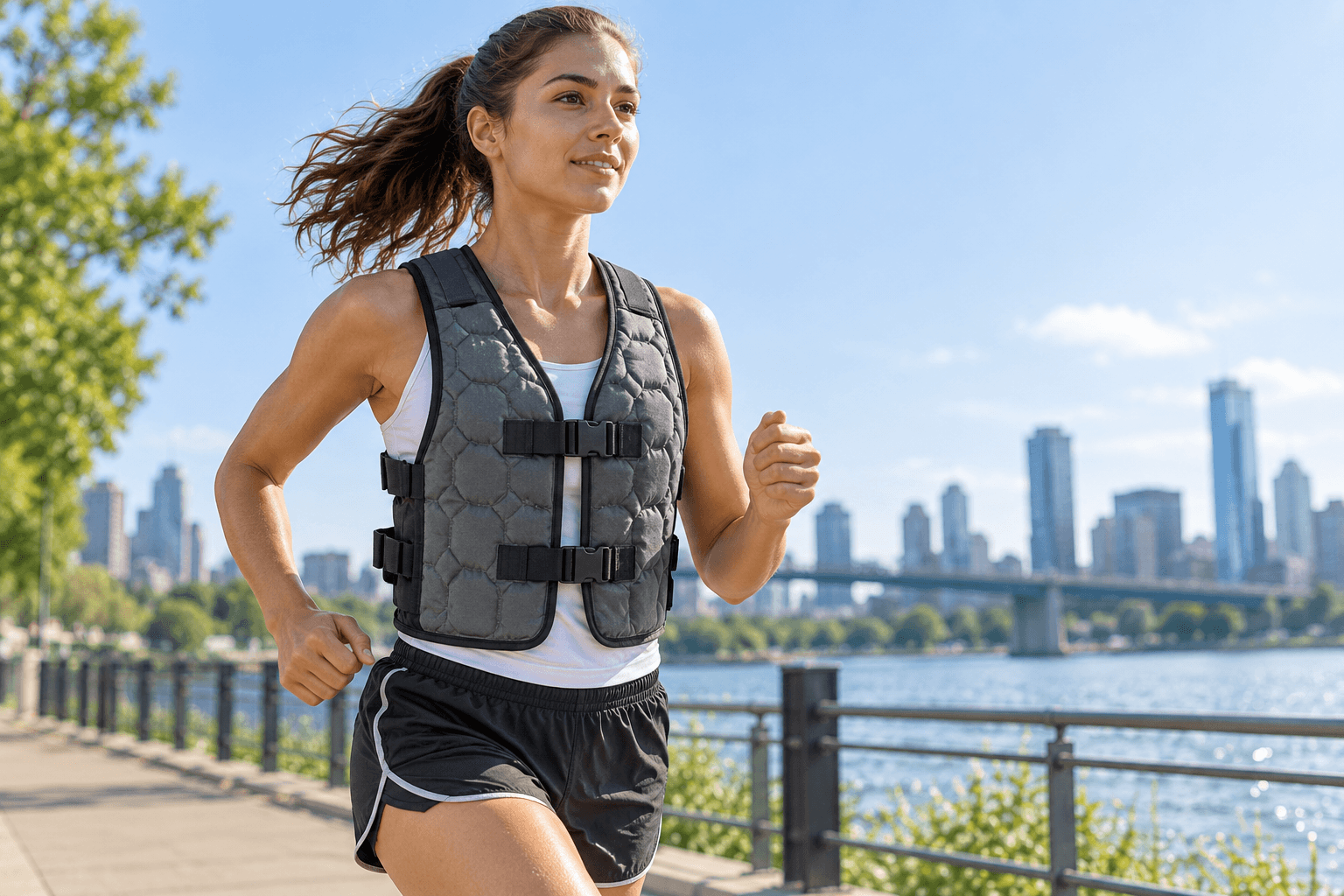
Humidity decides everything. Get it wrong and even a premium cooling vest turns into dead weight on your torso.
Short training runs (30–60 minutes, tempo or intervals)
Skip anything bulky. If you’re chasing speed work, wear a lightweight vest during warmup, then shed it before your main set. At 26–27°C and 50–75% RH, pre-cooling during warmup lowered starting and finishing core temperature and improved subsequent 5K performance. In hotter, stickier conditions (33°C, 75% RH), a hybrid cooling vest slowed the rise in physiological strain better than relying on sweat evaporation alone.
Marathon prep (60–180 minutes, steady aerobic effort)
You need staying power here, not a quick burst. Some cooling vests hold performance for 2–4 hours under moderate conditions, while pure evaporative models fade fast once things get hot and humid. If your training route has decent wind and airflow, evaporative gear still earns its keep. If not, prioritize duration over weight. That’s the real filter for anyone building a “best cooling vest for marathon training” shortlist.
Extreme heat race day
Don’t plan to wear a vest the entire race. Plan to pre-cool, then reapply cooling in short bursts. Ice vests worn before the gun drop your starting core temperature in hot, humid air. At 33°C and 75% RH, the goal shifts from comfort to delaying heat exhaustion.
The Humidity Threshold Cheat Sheet
-
RH < 40% → Evaporative cooling vest, with wind or forward movement.
-
RH 40–60% → Lightweight pre-cooling for short runs; longer-duration PCM for marathon prep.
-
RH > 60% → Skip evaporative entirely. Go PCM, hybrid, or ice.
Data backs the cutoff: cooling power averages 78W at 30% RH but drops to 42W at 60% RH. Your gear fails you mid-run.
When choosing a cooling vest for running, focus on these 4 factors:
Choosing a Cooling Vest for Running isn’t about the strongest cooling or the heaviest vest. For runners, the real focus should be on Cooling Runtime, Fit, Weight, and Reactivation. These four factors largely determine whether a cooling vest is truly effective for training.
Cooling Runtime: Covering Your Training Time is Enough
First, consider the duration of your runs. For commutes, interval training, or daily runs under an hour, a lightweight, quickly activated cooling vest is usually more convenient.
If your training lasts 1–2 hours, consider a PCM Cooling Vest, as PCM provides a relatively stable cooling experience. For runs longer than 2 hours, a design with replaceable cooling packs is more suitable, allowing you to switch packs mid-run rather than relying on a single cooling material for the entire workout.
The key isn’t whether the advertising says “Cooling for X Hours,” but whether the actual effective cooling time covers your training cycle.
Fit: Shouldn’t Impede Running Movement
During running, arm swings are frequent. If the vest is too tight at the shoulders, causes chafing under the armpits, or the cooling packs are poorly positioned, even with good cooling, it will be difficult to wear for extended periods.
When trying it on, do a few simple arm raises, arm swings, and slow jogging in place. If you experience noticeable pulling or chafing in your shoulders, chest, or underarms, the vest may not be suitable for running.
A good running cooling vest should fit the body well but not restrict movement.
Weight: Heavier Isn’t Always Better
More ice packs or PCM packs usually mean greater cooling capacity, but this also increases the running burden.
For daily training and tempo runs, lightweight designs are generally more comfortable; for 1–2 hour training sessions, choose a PCM vest with a better balance between weight and cooling time; for longer outdoor activities, consider a larger capacity, replaceable design.
Therefore, when choosing a vest, consider the balance between cooling output and weight, rather than simply pursuing cooler or heavier options.
Reactivation: Consider How to Re-cool Down Next Time
The last often overlooked question is: how do you restore the cooling ability of a vest after use?
Evaporative cooling vests usually only require re-soaking in water, making them convenient to use; ice pack-type products require a refrigerator or freezer; PCM Cooling Vests, depending on the phase transition temperature of PCM, need to be reactivated through cold water, a refrigerator, or other suitable environments.
If you run frequently, it’s best to choose a method that matches your daily conditions. Otherwise, even if the product itself has a good cooling effect, the complicated preparation process may reduce the actual frequency of use.
Ultimately, when choosing a Best Cooling Vest for Running, don’t just look at “how cold it is.” A truly suitable cooling vest for running should strike a balance between cooling time, freedom of movement, weight, and ease of reactivation, and match your actual training time and environment.
Wearing and Maintaining Your Cooling Vest the Right Way: Practical Tips to Extend Its Lifespan
Skin contact makes or breaks cooling efficiency. Wear your cooling vest against bare skin, or with only a thin, moisture-wicking base layer underneath. Every extra layer you add cuts into heat transfer. A thick cotton tee will noticeably dull the effect. If chafing or hygiene concerns push you toward a base layer, keep it snug and quick-drying, and never let an outer shell press the vest flat or seal it off from air. That kills evaporative and phase change performance alike.
Pre-cool 15–30 minutes before you start for most training and race scenarios. Some protocols push that to 20–40 minutes during warmup, and ice vests worn 45 minutes out can drop core temperature before the gun. Front-load your cooling before you start sweating. Research shows cooling delivers the most value at the start of activity.
Maintenance by Vest Type
-
Evaporative: Soak 1–2 minutes, wring out excess, and it’s ready. Hand wash with warm water and mild soap plus a soft brush — skip long soap-water soaks.
-
Ice-pack: Pre-freeze 15–20 minutes (or 45 for deeper cooling). Rotate spare frozen modules for extended use, and add a thin barrier layer if packs feel near-freezing.
-
PCM: Reset by chilling until solid again, typically in the 10–20°C range. Never leave PCM in a hot car. It’ll leak its cooling charge before you even put it on.
For longevity: dry evaporative vests fully before storing, avoid repeated hot-cold shocks on ice and PCM inserts, and never wring or over-compress the cooling layer.
FAQ: The Cooling Vest Questions Runners Care About Most
Price ranges alone won’t tell you which cooling vest fits your run. Here’s what matters.
Is a pricier cooling vest technology better?
Not automatically. The adidas Running CLIMACOOL Vest sits at $99, and DICK’S running vest lineup spans $79.99 to $399.99. Reviewers on the adidas vest keep repeating the same three words: “super light weight,” “breathable,” “good value.” That’s the real signal.
PCM or evaporative for my conditions?
Hot and humid, mid-to-high intensity: go PCM, look for a 59°F (15°C) melting point and roughly 2.5 hours of steady cooling, hot and dry, easy pace: go evaporative.
What’s worth the upgrade price?
Pay more for a replaceable PCM pack, running-specific cut, and breathable panels. Skip anything marketed as “thick ice pack, static-use only.” At $80–$100, you’re in entry territory. Above that, you get adjustable temperature and swappable cooling cores.
Conclusion
The best cooling vest depends on your run. Training on a budget in dry heat? An evaporative cooling vest gets the job done. Chasing a marathon PR in humidity? A phase change cooling vest gives you consistent, hands-off performance. Toeing the line at a summer race? An ice pack cooling vest is your pre-cooling secret weapon.
The gear only works as part of a body temperature regulation strategy. Match the technology to your conditions and fit it correctly, and heat stroke prevention stops being a worry.