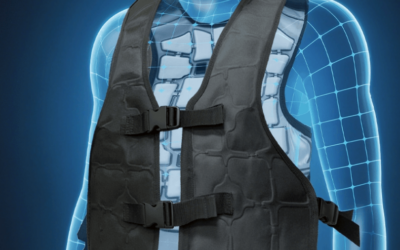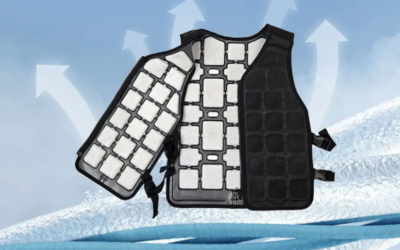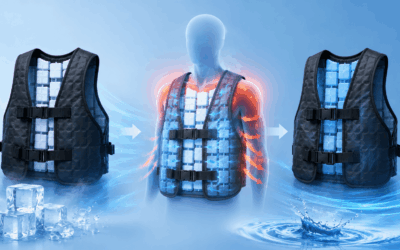
Not every factory offering “phase change material cooling technology” can deliver consistent quality at scale, and picking the wrong one can cost you months and your brand’s reputation.
That’s why we built this guide. Below, you’ll find the top 5 OEM PCM cooling vest manufacturers in China, vetted on production capacity, MOQs, pricing, and certifications, plus the criteria smart buyers use to separate legitimate suppliers from middlemen dressed up as factories.
Nanchang ICE BEAR (Icebeartech) — In-Depth Analysis of an Industry-Leading Manufacturer

Nanchang ICE BEAR Cooling and Warming Household Products Co., Ltd. has been operating since 2007, based in Nanchang, Jiangxi, the company manufactures directly out of its own 2,500–5,000㎡ facility.
Production Scale That Matters
Monthly output tops 50,000 units, with sewing, PCM filling, and fan assembly all handled under one roof. Handling these steps internally controls leak defects, keeps sizing uniform across production runs, and protects delivery schedules on industrial cooling vest orders.
Product Breadth
The catalog covers over 30 SKUs: cooling vests, fan jackets, air-conditioned clothing, cooling scarves, hats, towels, pet cooling mats, and hot/cold therapy packs. Most PCM products hold 4–6 hours of active cooling, depending on the chemical formula and ambient heat, meeting practical field benchmarks for heat stress safety workwear.
MOQs and Pricing
-
Standard and test orders: down to 500 units, with sample batches from 50 units/SKU
-
Fan vests: roughly 500-unit MOQ for first-time OEM testing
-
Logo-only customization: around 1,000 units
-
Full ODM (fabric, color, cooling system): 3,000–5,000 units
Sampling takes 1–3 days for stock items and 7–15 days for custom developments. Mass production takes 25–35 days. Pricing for fan and cooling vests runs from $15.50–$50 per unit, depending on the chosen PCM formulation and components.
The factory focuses on exports, supplying construction, logistics, manufacturing, and outdoor operations looking for cooling vest bulk order China suppliers.

Jiangsu Huibaicheng Group — Certification Credentials and Supply Chain Stability Analysis
Jiangsu Huibaicheng Group has operated in Nanjing’s industrial supply sector since 2014. The company built its business on basic safety gear, including reflective vests, hard hats, and protective gloves, before expanding into phase change material cooling technology.
What the Certifications Tell You
The company has held Diamond Member status on Made-in-China since 2021, alongside Audited Supplier and Verified Business License badges.
Diamond Member status is a commercial platform ranking, separate from government safety certification. The company claims most products meet CE standards, with select lines holding ANSI/AS/NZS certification, but listings for their PCM cooling vests do not specify which certificates cover each SKU. Any supplier evaluation for industrial cooling vests should flag that gap.
Pricing and MOQ Reality
Their PCM cooling vests run $32.99–$36.99 per unit with an MOQ of 500 pieces. That is roughly 3.7–4 times the price of their standard ice-pack safety vests ($8.56–$8.92). While this pricing puts the vest in the mid-to-high functional tier, the higher cost does not automatically verify product quality.
Before placing a cooling vest bulk order, China buyers should request PCM melting point data (ideally 28–32°C), pack weight, cooling duration test reports, and SKU-specific certification documents.
Glacier Coolant Technology (Beijing) — Reusable PCM Technology Route
Glacier Coolant Technology takes a different route from standard vest manufacturers. This Beijing supplier focuses on reusable PCM cooling technology, built around Medical-Grade TPU + PCM Gel neck coolers.
The Technical Specs
-
Phase change temperature: roughly 18°C
-
Contact temperature: below 28°C
-
Cooling duration: 3–4 hours per cycle
-
Reusable cycles: 10,000+
That cycle count matters if you want customers using the product for years rather than a single season.
The Gap Buyers Must Close
Some sourcing discussions mention an “Oxford fabric + PCM” vest design, but Glacier has not publicly confirmed it. Treat that combination as unverified. Ask for fabric weight, Oxford denier, coating type, and freeze-thaw brittleness data before committing to a cooling vest bulk order China deal based on this structure.
OEM Terms
Custom logos, custom branding, and PCM formula adjustments are confirmed options. Glacier does not publish an MOQ for the PCM neck cooler, though other thermal products from the supplier list 100-unit trial orders. Use that number as a starting reference point rather than a firm guarantee.
The company operates out of Chaoyang, Beijing, near Tianjin Port. That location works well for North China cold-chain and industrial buyers, but poses more friction if you are running untested US or EU logistics routes.
Andores New Energy — PVC vs. Fabric Dual-Line Product Comparison
Andores New Energy stands apart from single-material suppliers by offering two distinct product lines. Based in Suzhou, the manufacturer runs parallel production for PVC organic PCM vests and fabric PCM vests, giving buyers clear options based on the work environment.
PVC Organic Line
The PVC Organic Phase Change Cooling Vest comes in two published temperature models: 18°C/64°F and 14°C/58°F. For the 14°C version, specifications show a freeze time of about 30 minutes, a melt time near 120 minutes, and active cooling for 2–3 hours. That provides a specific, verifiable performance claim instead of vague marketing promises. The product page cites SGS certification, but buyers should confirm the report number to verify that it covers the current PVC formulation.
Fabric PCM Line
The “Fabric PCM Essential Phase Change Cooling Vest for Worker” targets industrial crews who need mobility without extra bulk. Andores does not list a fixed temperature model for this vest, meaning you should negotiate the PCM melting point with each order. The line sells under model ANDOR-MIC, with SDS and SGS references on the listing.
MOQ Reality Check
Andores does not publish a finished-vest MOQ for either line. The only hard figure available is 200 kg for Micro PCM raw material. That number helps benchmark raw material supply, but it does not tell you the order minimum for completed vests.
Matching Line to Job Type
-
Construction, roadwork, steel fabrication, roofing: Lean toward the PVC insert-pouch design. The outer shell handles friction, dust, and sweat, but ask for puncture resistance and heat-seal strength data before finalizing a cooling vest bulk order China contract.
-
Warehouse picking, logistics, outdoor inspection: The fabric version fits better during long shifts with regular bending. Ask for documentation covering at least 20 wash-and-wear cycles along with strap tensile tests, as Andores has not published fabric weight or breathability data.
Location and Sourcing Context
Andores operates out of 117 Hengtong Road, Qidu Town, Wujiang District, Suzhou, Jiangsu Province. Suzhou’s textile hub gives the company immediate access to fabric cutting, sewing, and functional PCM textile suppliers. Across the industry, functional PCM fabric runs $8.50–$15 per meter, with MOQs from 300 to 1,000 meters and lead times between 15 and 30 days. Use those figures to evaluate supplier quotes, though they do not represent confirmed pricing from Andores.
Xiamen Artborne Industrial — Dedicated Solution for Outdoor Worker Scenarios
Twenty PCM modules, one vest, and zero guesswork on temperature. That is the pitch behind Xiamen Artborne Industrial’s cooling vest line. Based in Maxiang in Xiamen’s Xiang’an District, the manufacturer builds a reusable 28°C PCM cooling vest for construction, road work, logistics, mining, and landscaping crews who need gear that survives daily field abuse.
Build and Materials
The vest shell uses a TPU+PCM construction that stays flexible through repeated freeze-and-wear cycles without cracking. Total weight runs 2,100g (±5%). Artborne has not published breathability or mesh-fabric specs. If you are sourcing for outdoor crews, write side-panel mesh, adjustable straps, and polyester 3D spacer fabric directly into your spec sheet before signing a cooling vest bulk order contract in China.
Cooling Duration — Ask Before You Buy
Artborne confirms the 28°C phase change point and the 20-module design, but does not list tested cooling runtimes under specific field conditions. The industry benchmark for industrial PCM vests sits at 2–4 hours per cycle, depending on ambient temperature, humidity, and physical work intensity. Ask for core-temperature test data at 35°C, 40°C, and 45°C before placing a deposit.
Pricing and MOQ
|
Item |
Detail |
|---|---|
|
MOQ |
500 units |
|
Price |
$24.98–27.58/unit |
|
500-unit order value |
$12,490–13,790 |
|
OEM/ODM |
Supported |
|
Experience |
~21–22 years on Alibaba |
|
Reorder rate |
~14–15% |
That price point sits 23–31% below a comparable $35.98 competitor vest with a 1,000-unit MOQ, which makes Artborne a solid middle-tier option for private label buyers. Target $24–25 per unit at the 500-unit mark, and push for tiered pricing or free logo customization once orders cross 1,000 units.
The 8 Core Criteria for Evaluating OEM PCM Cooling Vest Suppliers
If a supplier cannot hand over verified lab data, treat their product claims as marketing copy. These 8 criteria separate a genuine phase change material cooling technology manufacturer from a dropshipper posing with factory photos.
1. Phase Change Temperature and Tolerance
Ask for the exact PCM phase change temperature and allowable deviation. Most body-cooling vests operate between 15–28°C, while personal cooling systems frequently activate around 12.8–18.3°C (55–65°F). Firefighting, outdoor, and high-heat workwear demand PCM formulations matched to real job conditions rather than generic consumer specs.
2. Verified Cooling Duration Data
A claim like “lasts 8 hours” means nothing without context. Demand test reports that document ambient temperature, humidity, wind speed, body or mannequin load, starting charge state, and the exact cutoff point where cooling ended.
3. Third-Party Thermal Testing
Insist on ASTM F2371 or equivalent thermal manikin test reports. Standard evaluations run at 35.0±0.5°C, 40±5% RH, and a wind speed of 0.4±0.1 m/s for up to 2 hours, averaged across at least 3 independent trials.
4. Charging and Reset Cycle
Confirm how the PCM recharges: cold water, a refrigerator, a freezer, or ambient room temperature. Require the time-to-target-temperature, minimum and maximum safe charging temperatures, and documented supercooling risk data.
5. Seal and Leak Integrity
Request the heat-seal temperature, pressure, time window, and leak test results under filled-static, pressure, drop, flex, and hot/cold cycling conditions. Inspect shoulder and underarm seams closely, since those fail first under field use.
6. Wash Durability
Confirm maximum wash temperature, detergent restrictions, and dimensional stability after laundering. For reference, EN 343 benchmarks allow a ±3% size change after 5 wash cycles. Require leak tests and cooling duration measurements taken after 5, 10, 25, and 50 washes.
7. Certifications That Actually Check Out
Verify ISO 9001, REACH, RoHS, CPSIA, and CE directly in the issuing body’s database rather than trusting a supplied PDF. Watch for mismatched company names, missing addresses, or an audited scope that excludes cooling products.
8. Material Safety and Traceability
Require an SDS, CAS number, melting point, and flammability data for the PCM itself. On any China PCM vest wholesale order, insist on complete batch-to-finished-product traceability from raw chemistry to the final stitch.
OEM Partnership Commercial Terms Compared: MOQ, Pricing, Lead Time & Payment Methods
A $5.75 quote on 300 units beats $5.00 on 1,000 if you do not need 700 extra vests sitting in a warehouse. Buyers frequently overlook that difference when comparing cooling vest bulk orders from China, and the mistake drains working capital.
MOQ Benchmarks Across Comparable OEM Categories
|
Supplier Type |
Typical MOQ |
300–500 Unit Feasibility |
Negotiation Lever |
|---|---|---|---|
|
Small apparel OEM |
100–500/style-color |
High |
Accept higher unit price, cut colors/sizes |
|
Standard apparel OEM |
300–1,000/style-color |
Medium-high |
Merge colors, share fabric base |
|
Full custom OEM |
500–1,000 |
Medium |
Pay tooling/setup fee, run trial batch |
|
Electronics OEM |
1,000–5,000 |
Low |
Use off-shelf PCBA, housing, packaging |
If a 1,000-unit minimum comes from custom packaging rather than the PCM vest assembly line, ask for neutral cartons with branded stickers. Some factories can assemble 500 vests without issue but require 3,000 units for printed boxes. In many cases, the real bottleneck sits upstream with fabric mills, which routinely set minimum orders of 500 to 1,000 meters regardless of what the assembly floor can produce.
A Workable Negotiation Model
When a supplier quotes $5 per unit for 1,000 units, counter with 300 units at $5.75 to absorb their changeover costs and material scrap. Alternatively, commit in writing to a 300-unit initial run, a 2,000-unit reorder within 90 days, and 5,000 units over six months to secure the 1,000-unit price tier from day one.
Lead Time and Sampling Costs
-
Basic sample: $30–$120/piece; complex samples: $50–$200/piece (credited against mass production)
-
Simple-style mass production: 20–25 days
-
Multi-process, printed, embroidered, or finished vests: 30–45 days
-
Full first-time OEM cycle (sampling through delivery): 8–16 weeks
The Must-Do Sample Verification and Supplier Background Check Process Before Procurement
One leaked seam in a 5,000-unit shipment can wipe out your margin for the quarter. That’s the real cost of skipping verification before placing a cooling vest bulk order in China.
Sample Testing That Protects You
Never accept a factory-prepared “demo sample.” Pull at least one unit from active production or packaged stock, and record the batch number, production date, and serial number. High-risk orders warrant 3 samples from the same batch, tested for appearance, function, and destructive failure points. Photograph the sealed sample with signatures from the buyer, supplier, and a third party, then keep one unit aside for dispute resolution.
Check dimensions, weight, and material grade against the technical agreement. When evaluating PCM cooling pack suppliers, run continuous operation testing for at least 24–72 hours to check for leaks, discoloration, seam failure, and cooling decay. Once the sample passes, lock it in as your Golden Sample standard for all future incoming inspections.
Supplier Background Checks That Matter
Verify the business license through China’s National Enterprise Credit Information system. Confirm that the registered capital, legal representative, and registered scope match the quotation and contract stamp.
Request 12–24 months of export documentation (customs declarations, bills of lading) with pricing redacted, and cross-check HS codes and product descriptions against their claimed markets.
Demand at least 2 verifiable customer cases with country, volume, and contact details you can confirm yourself. For any thermal regulation workwear or industrial cooling vest supplier, verify third-party test reports through the issuing lab’s database. Never rely on a standalone PDF.
Conclusion
Choosing the wrong PCM cooling vest manufacturer costs money, wasted time, and the trust of customers who rely on those vests when the heat index spikes.
A dependable supplier provides documented certifications, transparent MOQ and pricing structures that scale with your business, and a proven record of export partnerships.
Among the five manufacturers reviewed, Icebeartech covers the key requirements for B2B buyers, offering solid production capacity, phase change material cooling expertise, and the OEM flexibility needed to build your own brand.
Don’t stop at reading reviews. Request samples, run your own quality checks, and ask direct questions about lead times before committing to a bulk order. Reach out to your top two picks this week, compare their responsiveness, and start the sample process.