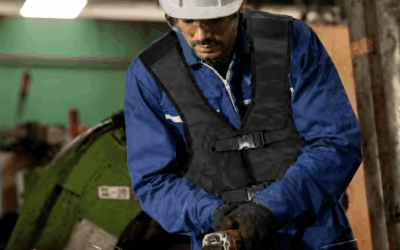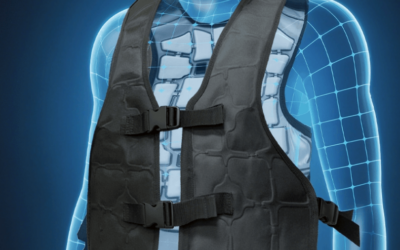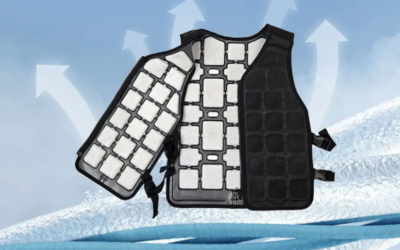
Not all PCM cooling vests are the same, and the temperature rating you pick is usually where things go wrong. Choose one rated for extreme heat and you’ll spend your whole office shift shivering. Pick one meant for mild afternoons and it won’t put a dent in the sweat running down your back on a July job site. Phase change material technology only works when the melting point matches your actual environment, whether that’s a construction site pushing 95°F, a humid half-marathon morning, or a warehouse that never cools off.
Here’s how PCM packs are rated, what those numbers mean in real conditions, and which specs actually suit industrial work, athletic training, or everyday relief from the heat. By the end you’ll know exactly which cooling vest for hot weather fits your situation, no guesswork and no money wasted on the wrong melt point.
How PCM Cooling Vests Work: The Science Behind Temperature Ratings

PCM absorbs heat as it transitions from solid to liquid at a specific melting point, pulling body heat away without ever feeling freezing-cold. That heat-absorbing process is called latent heat of fusion, and it’s the reason PCM stays effective without ice-level shock. One PCM vest study used hexadecane, with a melting point between 18–20°C, as its working example.
When you shop, the key number is the vest’s rated temperature, which is the PCM melt point. Lower melt points start absorbing heat faster and feel more intense, but they run out sooner. Higher melt points feel gentler but keep working longer. Product data shows these durations: a 6.5°C melt point lasts about 1.5–2 hours, 15°C lasts 2–2.5 hours, 21°C lasts 3 hours, 24°C lasts 3.5 hours, and 29°C lasts 4.5 hours.
A human trial found PCM packs at 0°C and 10°C produced measurable cooling, while 20°C and 30°C didn’t, under that specific test setup. A separate study picked 25°C on purpose, since that melt point could stay below its phase-change threshold even in a hot environment. On the higher end, a 2025 defense-clothing study recorded a 29°C PCM vest lowering torso microclimate temperature by 1.5°C over 120 minutes, showing that high-rated PCM packs are built for sustained, moderate cooling in extreme heat.
Compare that to ice vest setups. Ice sits at 0°C, delivering an intense but short-lived blast that can feel uncomfortable against skin. PCM packs trade that peak chill for a steadier, more wearable window, typically 2–4 hours. That’s why most industrial and reusable cooling vest designs land near 60°F (15.6°C).
59°F / 15°C PCM Vests: Best for Extreme Heat & High-Intensity Use
At 59°F / 15°C, you get the strongest practical cooling most brands offer before things get extreme. INUTEQ calls this setpoint “widely used by elite athletes and sports teams” and markets it for pre- and post-activity cooling — warming up before a race or bringing core temperature down fast after one. You grab this vest for short, intense windows.
Duration numbers vary by source. INUTEQ’s product page lists the standard CoolOver at up to 2.5 hours. Broader company claims stretch that to 1–4 hours depending on conditions, and the sports-specific page pushes comfort range to 2–8 hours in the right environment. EZCooldown sums it up bluntly: these packs deliver “maximum cooling for a short amount of time.” The tradeoff is intensity over runtime.
Best fit: 15°C suits athletes and workers needing strong cooling without frigid skin contact. 6.5°C fits extreme exertion where the coldest possible PCM temperature rating matters more than duration.
70°F / 21°C PCM Vests: The Balanced All-Day Work Choice
Most industrial buyers land here by process of elimination. 21°C sits dead center in the common PCM packs temperature rating lineup, colder than 24°C and warmer than 15°C, and that middle spot is exactly why it works for shifts that don’t stop for breaks.
The tradeoff is straightforward. Colder PCM hits harder but burns out fast. Warmer PCM lasts longer but barely registers. 21°C splits the difference. INUTEQ’s CoolOver-X holds a constant 70°F for up to 3 hours, built specifically for wear under protective clothing in extreme heat. Some vendor configurations with thicker inserts stretch that to 4 hours, depending on ambient conditions.
Where this tier makes sense:
– Industrial crews working full task blocks in PPE without time to swap packs mid-shift
– Warehouse workers who need a cooling vest for work that survives most of a shift, not just an hour of it
– Field techs and logistics operators who’d rather trade peak chill for fewer recharge cycles
– Clinical staff — a nursing study activated the vest in a fridge, wore it under PPE, worked up to 3 hours, then reactivated and reused
Skin-wise, 21°C feels cool without the bite of a 15°C pack. It’s the “enough, not too much” zone.
74°F / 24°C PCM Vests: Avoiding Cold Shock in Controlled Environments
Firefighters, surgical teams, chemical suit crews — none of them can afford a jolt of cold against bare skin mid-task. That’s the case for 24°C PCM packs. INUTEQ markets this setpoint for professionals working under protective clothing: chemical suits, operating rooms, mascot costumes, and other gear that traps heat with no ventilation.
The pitch is comfort without cold shock. Unlike ice or gel vests, 24°C PCM doesn’t feel jarring against skin, which matters for sensitive users or anyone wearing the vest directly with no base layer between.
One research finding favors 24°C over its warmer neighbor: it produced stronger torso and mean skin temperature cooling than a 28°C vest, so you’re not sacrificing performance to skip the shock.
Duration figures land in a wide range. Official specs claim up to 4 hours. Broader product-family data shows 1–4.5 hours depending on the exact PCM grade. Third-party comparisons put real-world use closer to 2–6 hours, with 2–4 hours being the common outcome for the 23–24°C class.
Best fit for this tier:
– Controlled indoor facilities with warm, stable ambient temps
– Occupational cooling where a moderate sensation beats an intense one
– Cold-sensitive workers who can’t tolerate ice-vest shock
– Protective-clothing jobs where predictable runtime outweighs peak cold
77°F–84°F / 25°C–29°C PCM Vests: Longest Wear for Mild Cooling Needs
Runtime wins the argument here. A 29°C PCM setup is rated for up to 4.5 hours, the longest window in the entire temperature lineup, edging out the 24°C tier’s 3.5 hours and the 21°C tier’s 3 hours. INUTEQ and similar brands describe this range with terms like “subtle cooling” and “minimal cold shock.” Translation: you’re not chasing a strong chill. You’re chasing hours.
That tradeoff makes sense once you see where this tier gets used. Think protective suits and enclosed gear in warm-but-not-extreme conditions, office environments, commutes, light physical work, or medical and rehab settings where comfort matters more than intensity. Nobody wearing this PCM cooling vest for hot weather is trying to shock their skin. They’re trying to stay tolerable for a full shift.
Where 29°C fits best:
-
Warm indoor spaces or mild outdoor heat, not peak summer job sites
-
Long stretches under enclosed protective layers
-
Comfort-first wear where “cooler, longer” beats “cold, briefly”
Industry data backs a general 2–4.5 hour effective window across PCM packs, with hotter environments and harder activity shortening that range. Some academic studies even peg real-world benefit closer to 45–120 minutes depending on conditions. The 29°C tier simply stretches that ceiling the furthest.
Matching PCM Vest Temperature to Your Specific Use Case
Forget the spec sheet for a second. Ask yourself two things: what are you doing, and how hot is it where you’re doing it? Answer those, and the temperature rating picks itself.
Run through this quick decision tree:
-
Activity intensity — Low/sedentary: 21°C–29°C. Moderate/standing work: 15°C–21°C. High-intensity/short exposure: 6.5°C–15°C.
-
Ambient temperature — Under 30°C: 21°C–29°C. 30–40°C: 15°C–21°C. Above 40°C: 15°C or lower, and consider a PCM-fan hybrid.
-
Humidity — High humidity: lean on PCM, since evaporative cooling loses ground fast. Low humidity: PCM alone or PCM-fan hybrids both work, with hybrids pulling ahead in extreme heat.
That last point matters more than most buyers realize. In a 55°C environment, 24°C and 28°C PCM lost effectiveness, while colder options near 10°C kept performing. At 40°C, studies favored double-cycling a 21°C PCM pack rather than a single warmer insert.
By use case:
-
Cooling vest for construction workers: 15°C/59°F is the default. Add a 6.5°C insert for peak-heat welding or roofing shifts.
-
Cooling vest for outdoor sports and athletic cooling vest needs: 6.5°C pre/post-race, 15°C for sustained training sessions.
-
MS patients and heat-sensitive users: 21°C or 24°C — stable, wearable all day, no cold shock.
-
Industrial cooling vest buyers at 35°C or below: PCM alone holds up. Past 40°C, pair it with active airflow.
INUTEQ’s five-tier lineup (6.5°C, 15°C, 21°C, 24°C, 29°C) covers most of this range. Most competing brands cluster around 14–20°C for the same reason — that’s where general-purpose demand sits.
How to Maximize Your PCM Vest’s Cooling Performance

If the cooling feels weak, the most common cause is that the vest never got fully charged. PCM packs need to reach a solid, evenly frozen state before you put them on. Skip that step and you lose real cooling time before your shift even starts.
Charging It Right
Refrigerate inserts at roughly 5°C for at least 3 hours before use; Lay packs flat, single‑layer — stacking slows down charging and extends recovery time; Don’t stack, don’t cut corners. A half‑charged insert fails fast
Common Mistakes That Ruin Performance
1.Wearing the vest before charging finishes
2.Pulling packs straight from the freezer and putting them on immediately causes cold shock. Let them sit about 5 minutes first to reach a wearable temperature
3.Leaving charged packs in a hot car or direct sun burns off cold capacity you haven’t even used yet
Activation Thresholds
PCM stays solid only below its melt point. A 15°C pack holds solid under roughly 10°C ambient. 21°C packs need under 19°C. 24°C packs need under 21–22°C. 29°C packs need under 26°C. Once ambient temps climb past those marks, the material starts transitioning on its own — even before you put the vest on.
Maintenance That Extends Vest Life
-
Washing: Remove PCM inserts first, always. Wash the shell at 40°C max. No tumble dry, no bleach
-
Storage: Keep inserts dry, between 10–22°C. Lay flat or hang — but skip long‑term hanging for soft‑pack PCM because it can warp
-
Lifespan: Manufacturers rate PCM inserts for 1,000+ charge cycles, though most recommend replacing them every 3 years to keep cooling consistent
Troubleshooting Common Complaints
-
“Not cold enough” — usually undercharging, wrong temperature tier, or an environment hotter than the pack’s rating
-
“Too cold, uncomfortable” — almost always skipping the post‑freezer rest period
-
“Wore off too fast” — usually a mismatched melt point, not a PCM design flaw
Conclusion
There’s no single best PCM cooling vest — just the right temperature match for your situation. If you’re grinding through a construction shift in 100°F heat, you need something different than a marathon runner or a nurse on a 12-hour floor rotation. That’s the whole point of choosing by melting point, not marketing hype.
Run through the scenarios we covered — your activity level, ambient temperature, and how long you need coverage — and you’ll land on the right PCM range fast. Whether you’re comparing a cooling vest for outdoor sports against an industrial cooling vest for the job site, the temperature rating is your real decision-making tool, not the price tag or brand name.
Next step: grab your actual working conditions (temp, duration, intensity), match them against the charts above, and order accordingly.