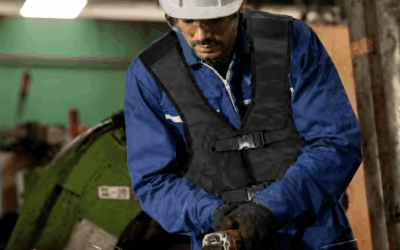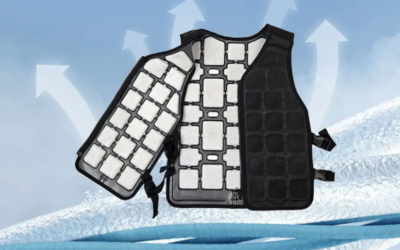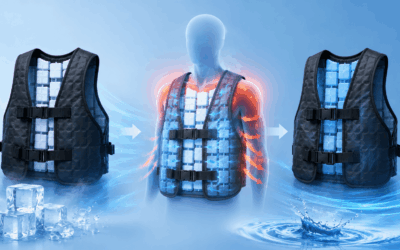
Heat stress sends thousands of industrial workers to the ER every year, and traditional ice packs melt faster than they cool, leaving crews sweating through the last few hours of their shift. Phase change material cooling technology changes that—it delivers consistent, controlled cooling for hours instead of minutes. We tested six of the top-performing PCM cooling vests on the market, comparing cooling duration, weight, PPE compatibility, and real-world durability so you don’t have to gamble on guesswork. Whether you’re outfitting a construction crew or shopping for yourself, here’s which vest earns its price tag and which ones to skip.
BERTSCHAT PRO C24 — Best for Heavy-Duty Construction & Industrial Work
BERTSCHAT built the PRO C24 for cyclists, hikers, and motorcyclists, not for foundry floors or rebar crews. The C24 elements, engineered to hold a felt temperature around 24°C, make it one of the more accessible entry points into occupational heat stress solutions for anyone doing intermittent heavy labor outdoors.
Core Specs:
– PCM temperature: ~24°C
– Cooling duration: 2–6 hours, depending on external conditions
– Price: €119.95–€139.95 (roughly £90–£150 equivalent)
– Care: One-size-adjustable, hand wash at 30°C
That 2–6 hour spread isn’t a marketing gimmick—it’s honest math. Ambient heat, direct sun, and body heat output all eat into runtime. Construction workers doing continuous heavy exertion in full sun should expect performance closer to the lower end, especially compared to lighter activity like hiking.
Pros:
– Passive cooling, no battery required
– Repeated daily use with hand-wash care
– Solid price-to-performance ratio (4.9/5 from 53 reviews on some retail listings)
– Lighter-than-expected feel, per user feedback
Cons:
– Not purpose-built for extreme industrial heat
– A BGW test report ranked it near the bottom on comfort/handling criteria
– Runtime drops significantly under sustained heavy labor
Verdict: If your crew needs cooling vest safety equipment for breaks between heavy tasks rather than nonstop extreme heat suppression, the PRO C24 delivers reasonable value. Just don’t expect it to outperform vests engineered specifically for industrial-grade PCM ice packs vest use—this one’s borrowed from the outdoor recreation world, and it shows.
INUTEQ PCM CoolOver 21°C — Best for Under-PPE Protective Wear

A German BGW comparative study put several cooling vests through the wringer for healthcare facilities. The INUTEQ PCM CoolOver came out the clear winner, and not because it ran the longest. It was the only vest that worked once you layered protective gear on top of it.
Made in the Netherlands with patented INUTEQ-PAC® technology, this vest holds a fixed 21°C / 70°F PCM temperature, close to the sweet spot for comfortable personal cooling without shocking the skin. Runtime tops out around 3 hours under strenuous activity, or 2 hours 6 minutes when tested under healthcare clothing.
Core Specs:
– PCM temperature: 21°C / 70°F (fixed)
– Cooling duration: Up to 3 hours; 2h 6min under protective clothing
– Weight: ~1.3 kg
– Price: €155–€181 (Europe); ~$201 (U.S.)
– Dermatological rating: 4.3/5
Why It Won the BGW Test
-
Non-porous, fabric-free build: wipe-clean and disinfectable. No other tested vest could claim that
-
Lowest usability friction: scored 1.8/5 (lower is better) for fitting into demanding daily workflows
-
Minimal cooling loss under PPE: only ~12% reduction when worn under a protective gown
-
Proven under real PPE: used under chemical suits, firefighter gear, and even mascot costumes
Pros:
– Only vest in comparative testing that met hygiene, usability, and practical requirements simultaneously
– Reliable cooling under PPE with minor performance loss
– Users report staying comfortable through long shifts, with a “natural” feel on skin
Cons:
– Premium pricing puts it above entry-level cooling vests
– Limited public consumer review volume outside institutional testing
– Shorter runtime than some competitors, though testers ranked hygiene above duration
Verdict: If your workers are stacking this under chemical suits or full PPE, this is the PCM ice packs vest built for that exact scenario, not a general-purpose warehouse pick.
INUTEQ Bodycool Pro PCM — Best for Extreme Heat & Airtight Clothing
Welders sealed inside flame-retardant suits face a different problem than warehouse pickers: there’s no airflow to speak of. INUTEQ built the Bodycool Pro PCM for workers layered under air-tight clothing, industrial protective gear, or fire-retardant suits who need cooling that works without ventilation.
Core Specs:
– PCM temperature options: 6.5°C, 15°C, 21°C, 24°C, 29°C (five interchangeable inserts)
– Cooling duration: 1–4 hours, scaling with temperature (6.5°C runs ~2h; 29°C stretches to ~4.5h)
– Best-fit scenario: Welding, chemical processing, sealed PPE environments
Why the Temperature Range Matters
Lower inserts feel colder but burn out fast. For prolonged work in extreme heat, the 21°C, 24°C, and 29°C options make more sense: less shock to the skin, longer runtime. That’s a meaningful advantage in the evaporative vs PCM vest debate, since evaporative designs struggle once air-tight suits enter the picture.
Pros:
– Versatile—same vest works across safety wear, motorcycle gear, uniforms, and fire-retardant suits
– Temperature flexibility lets crews match insert to shift intensity
– Recharges via ice water (~20 min), freezer (~40 min), or fridge (~60 min). No special equipment required.
Cons:
– Vest and PCM inserts sell separately, so first-time buyers need to budget for both
– Continuous shifts often require backup insert sets, pushing total cost higher
– Managing insert inventory and rotation adds an operational step
Verdict: For chemical plant crews and welders stuck in sealed protective clothing, this modular PCM ice packs vest earns its reputation for durability and versatility. Just plan for the insert investment upfront.
TechKewl Phase Change Vest — Best for Emergency Response & Humid Environments
Humidity is where evaporative cooling vests quietly die. Firefighters buried in bunker gear or HAZMAT crews sealed in impermeable suits don’t get airflow, so sweat has nowhere to go. TechKewl’s answer is a 14°C PCM insert that cools by direct heat absorption rather than sweat evaporation. It keeps working “regardless of outside temperature or humidity”—even at 90%+ humidity where evaporative designs fail outright.
Core Specs:
– PCM temperature: 14°C / 58°F (fixed)
– Cooling duration: 2–3 hours per insert set
– Weight: 2.7 kg total, inserts included
– Construction: 4 inner insert pockets, shoulder/torso adjustments, less-bulky fit
– Material options: 100% cotton, Nomex fire-resistant, ANSI Class II compliant version available
Why 14°C Works for Emergency Crews
The 14°C setpoint is cold enough for real heat-stress relief without the harsh shock of straight ice packs. The 2–3 hour window matches typical scene rotations and rehab cycles, and the manufacturer explicitly recommends swapping in backup inserts for continuous cooling during extended incidents. Recharge time runs 25–40 minutes in a fridge, freezer, or ice water. Any environment under 14°C works.
Pros:
– Performs under sealed PPE, military body armor, and hazmat suits where evaporative cooling vests can’t
– Fire-resistant fabric options for structural firefighting
– Doctors Without Borders has field-deployed it under protective suits
Cons:
– 2–3 hour runtime means long incidents need a rotation plan
– Heavier than mesh-based evaporative alternatives at 2.7 kg
Verdict: For crews stuck inside airtight protective layers, this is one of the more reliable cooling vest safety equipment picks, with stable output even at 90%+ humidity.
Glacier Tek Cool Vest: Best for Outdoor Industrial Work and Steady Cooling
Roofers and landscapers need cooling that lasts through a shift. Glacier Tek built the Cool Vest for exactly that situation, and it keeps showing up in roundups for outdoor workers.
Core Specs:
– PCM temperature: 59°F / 15°C (fixed)
– Cooling duration: Up to 2.5 hours in 100°F heat
– Weight: Under 5 lb loaded (4 lb 15 oz to 5 lb, depending on config)
– Price: $150–$249, with a common listing at $199
– Care: Hand wash, line dry (check SKU-specific label; some variants allow machine wash/tumble dry)
Why 59°F Beats Straight Ice
Loose ice or gel packs start near 32°F and warm up unevenly as they melt. Glacier Tek’s 8-pack system (4 large, 4 small) holds a fixed 59°F throughout its runtime instead. The packs absorb heat while staying near their transition point, so skin contact stays cool and dry. You won’t get condensation soaking through your shirt mid-shift.
Pros:
– Steady, predictable cooling with no cold-shock or drip
– Under 5 lb loaded, easy to wear through a full shift
– Some reviewers extend practical use up to 125°F, though that’s an editorial claim, not manufacturer spec
Cons:
– Packs require charging before every use: 30 min in ice water, about 1 hour in the freezer, or 2 hours in the fridge
– 2.5-hour runtime means longer shifts need a second charged set on hand
– Care instructions vary by SKU, creating some confusion
Verdict:
For heat stress prevention on roofing, landscaping, or construction sites, this vest hits a strong middle ground. It runs cooler and steadier than ice-pack vests, and lighter than circulating-liquid systems.
ICEBEAR TECH Cooling Vest — Best for OEM/ODM & Bulk Customization

Not every buyer is looking for an off-the-shelf cooling vest. Distributors, safety suppliers, outdoor brands, and private-label sellers often need control over cooling packs, vest materials, sizing, branding, and packaging. That’s where ICEBEAR TECH stands out.
Core Specs:
-
Cooling options: PCM packs or ice/cold packs, depending on model
-
Cooling duration: Typically 2–4 hours, depending on pack type and working conditions
-
Custom options: Cooling packs, fabric, color, size, logo, labels, and packaging
-
Applications: Construction, industrial work, outdoor activities, logistics, and heat-stress management
-
OEM/ODM: Available for private-label and bulk orders
Why It Works for B2B Buyers
Unlike retail-focused cooling vest brands, ICEBEAR TECH is a cooling-products manufacturer with OEM/ODM capabilities. Buyers can customize more than just the logo. Cooling-pack configuration, vest structure, materials, sizing, and packaging can all be adjusted for different markets and working environments.
Its broader product range also includes PCM Cooling Vests, Ice Pack Cooling Vests, Fan Cooling Vests, Water Cooling Vests, and other personal cooling products, making it particularly useful for distributors or brands planning to build a complete cooling-product line rather than source a single SKU.
Pros:
-
Multiple cooling technologies available from one supplier
-
Suitable for private-label and bulk B2B sourcing
-
Custom branding, sizing, materials, and packaging
-
Experience with industrial and outdoor cooling applications
Cons:
-
Primarily designed for B2B and bulk purchasing rather than single-piece retail orders
-
Cooling duration varies by cooling-pack configuration and environment
-
Custom projects require additional sampling and specification confirmation
Verdict: For distributors, safety-equipment suppliers, outdoor brands, and private-label sellers, ICEBEAR TECH is a strong option when customization and scalable production matter more than buying a fixed retail vest. Its advantage lies in combining multiple cooling technologies with OEM/ODM manufacturing, allowing buyers to develop a cooling vest around their target market instead of simply reselling an existing design.
How to Choose the Right PCM Cooling Vest for Your Work Environment
Match the vest to the shift, not the other way around. That’s the single biggest mistake buyers make with cooling vest safety equipment—they grab whatever’s cheapest or coldest without checking if it fits the job.
By Work Intensity
Heavy labor needs longer runtime. Construction, freight handling, mining, and loading docks all fall here. Look for 4–6 hour or 2–4 hour PCM vest options. For shifts stretching past that, keep two insert sets on rotation. Swap out a “spent” insert once it’s finished its phase change; a fully-melted PCM pack just adds dead weight. Rotating fresh inserts slows heat-stress buildup far better than sticking with a used one.
Lighter work like warehouse picking, kitchens, medical support, and maintenance usually gets by fine on 2–4 hours, especially with intermittent activity and breaks for recharging.
By PCM Temperature
Industrial PCM vests run at 59°F/15°C, 60°F/15.5°C, 65°F/18°C, 75°F/24°C, or 84°F/29°C. For steady, noticeable cooling, stick with 15–18°C. Higher setpoints (23–28°C) suit workers sensitive to cold or those doing lighter tasks who just want relief without the shock.
By Environment
Outdoor, direct-sun jobs benefit from longer-duration vests built for sustained heat. Sealed PPE environments like welding, hazmat, and chemical processing need PCM because it works without airflow or evaporation. That matters most above 90% humidity, where PCM consistently beats evaporative cooling vests.
PCM Cooling Vest Pros, Limitations & Who Should Avoid Them
No cooling technology is perfect for every job. Here’s the breakdown.
What PCM Gets Right
PCM cools “without airflow,” per Ergodyne, so it’s ideal for enclosed PPE and both dry and humid conditions. It holds a constant setpoint. Ergodyne’s 6210 stays at 64°F/18°C for 2 hours without the ice-burn risk of straight cold packs. The 6230 reactivates in as little as 10 minutes in ice water, a fridge, or a freezer. At under 3 lb, the 6210 layers fine under bulky gear and carries a 3-year shelf life.
Where It Falls Short
Runtime tops out around 2–4 hours per charge, shorter than battery-powered systems. Techniche explicitly recommends using extra inserts for continuous cooling, since one set won’t cover a full shift. Insert compatibility is model-specific, too. The 6626 uses 6665V/7065V inserts, so mixing vest brands complicates procurement. Weight climbs to 2.7–3 kg on some fire-resistant versions.
Who Should Skip PCM
Skip it for 8–12+ hour shifts with no swap window, jobs without refrigeration access, or heavy-exertion roles where extra weight adds fatigue. Battery-powered cooling garments fit those scenarios better.
Common Questions About PCM Cooling Vests for Industrial Use
Six vests, one recurring set of questions from buyers on the floor. Industrial workers and safety managers keep asking the same things before they commit.
How often do PCM vests need to be re-chilled?
Most industrial PCM vests run 1.5–2 hours of wear time before they need a reset. Fast-chill systems bounce back in 30–60 minutes with a freezer or ice bath. Plan for a recharge point on-site. Without one, PCM stops being practical for long shifts.
Can PCM vests be reused?
Yes, indefinitely. Wear the vest, remove the packs, re-freeze them, and repeat. That reusable cooling vest cycle is the whole point. No disposable ice packs, no per-use replacement cost.
Are PCM vests waterproof?
No. These are splash- and sweat-tolerant PPE accessories, not submersible gear. They’re built for humid, still-air environments, so don’t wear them in a downpour.
Can you wash them?
Remove the PCM inserts first. The shell can usually be spot-cleaned or hand-washed; the inserts themselves shouldn’t go near a machine.
Conclusion
Across these six picks, one thing is clear: phase-change material cooling technology consistently beats ice-based alternatives, delivering steadier temperatures without the bulk, the leaks, or the mid-shift meltdown—literally. Whether you’re outfitting a warehouse crew on 95°F floors or a construction team under direct sun, the right cooling vest for warehouse workers or outdoor site comes down to three things: your PCM’s melting point, your shift length, and whether you need it under PPE or over it.
Don’t gamble on generic cooling gear when heat exhaustion, lost productivity, and OSHA compliance are on the line. Match the vest to your actual work environment—not just the price tag—and test it during your next high-heat shift before scaling across your team.
Your workers’ safety shouldn’t be seasonal. Choose smart, cool consistently, and keep production running when the mercury climbs.