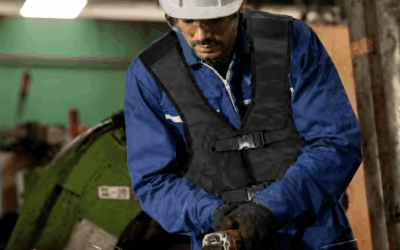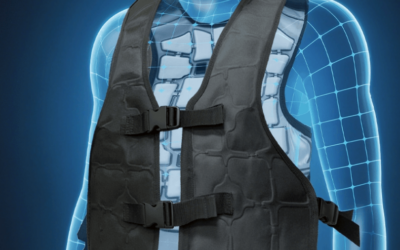
A PCM cooling vest keeps you cool in ninety-degree heat during an eight-hour shift without a single ice cube. Most cooling vest marketing throws around “phase change material” without explaining what it does against your skin. That gap in understanding is costing people money on the wrong product or keeping them in gear that isn’t protecting them from heat stress.
This guide explains what a PCM cooling vest is, walks through the melt-freeze cycle that makes it work, and shows how it stacks up against ice packs and evaporative options. By the end, you’ll know whether this technology fits your workday, your workout, or your specific heat-sensitivity needs.
What Is A PCM Cooling Vest? Core Definition & Working Principle

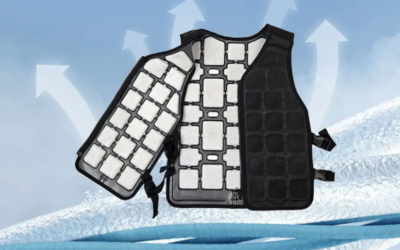
Strip away the marketing language, and a PCM cooling vest is just a garment with phase change material inserts sewn into pocket compartments that absorb your body heat and hold it, keeping your skin temperature more stable than any regular vest could.
That’s the product. Here’s the science that makes it work.
PCM (Phase Change Material) is a substance that stores or releases huge amounts of latent heat during a solid-to-liquid transition, and it does this while staying at a nearly constant temperature the entire time.
The Melt-Freeze Cycle, Step by Step
-
The PCM insert gets pre-conditioned to its target temperature, usually in a fridge or freezer depending on the melt point
-
You slide it into the vest’s sewn pocket
-
Your body heat starts pushing the material toward its melting point
-
The PCM absorbs that heat as latent energy instead of spiking in temperature, which is why the cooling feels steady rather than icy
Manufacturers engineer these packs around specific melt points, commonly 6.5°C, 15°C, 21°C, 24°C, and 29°C, so buyers can match the cooling intensity to their environment instead of getting a one-size-fits-all cold shock.
That’s the real difference from a bag of ice packs in a cooling vest. Ice starts near 0°C and drops fast, hitting your skin with a sharp temperature swing. PCM holds its set point longer, so you get cool and comfortable, not cold and shivering. Some formulations use bio-based, biodegradable material; others use paraffins, salts, or long-chain alkanes. The mechanism is identical across all of them.
Wear time varies by product. One spec sheet lists 2-3 hours at full phase-change temperature; a hybrid design claims up to 4.5 hours depending on which PCM temperature you choose. Either way, the vest keeps working until the material fully melts.
How Does A PCM Cooling Vest Work? Step-by-Step

Recharging speed depends entirely on where you dunk the pack. Ice water gets you back to working temperature fastest — typically 8 to 20 minutes, with some commercial guides citing as little as 5 minutes. A standard freezer takes 15 to 60 minutes, and product manuals often list 30 or 40 minutes as the benchmark recharge window. The refrigerator is the slowest route, anywhere from 25 minutes to 3 hours. An 8°C fridge might finish in about 30 minutes, while a 22°C room-temp fridge stretches closer to 2-3 hours. That flexibility is why phase change material beats a bag of ice packs — you pick the recharge method based on how much time you have.
Why The Temperature Doesn’t Spike
The physics here is about latent heat absorption. As PCM melts, it pulls in a large amount of heat while barely changing its own temperature. Plotted on a graph, this creates a flat plateau: temperature drops during charging, holds steady while melting under body heat, then rises sharply after full liquefaction. That plateau is your actual cooling window.
Matching PCM Pack Temperature Range To The Job
6.5°C and 15°C packs deliver the strongest cooling, best for high-intensity short exposures, with roughly 2 to 2.5 hours of runtime. 18°C to 21°C packs balance comfort and duration — common for cooling vests worn by outdoor workers doing longer shifts, around 3 hours. 24°C and 29°C packs give the mildest sensation and longest duration, up to 4.5 hours, and 24°C packs can even recharge below room temperature without a freezer.
For occupational heat illness prevention, matching melt point to task intensity matters more than picking the coldest option available.
PCM Cooling Vest Duration & Performance Data

Real-world testing shows most PCM cooling vests deliver a genuine cooling window of 2 to 4 hours, and that number shrinks fast once you factor in heat and activity level.
One study measured skin temperature drops of 1.35°C to 1.78°C over 20-30 minutes with high-capacity, fast-acting PCM. A separate review of protective clothing recorded PCM vests cutting skin temperature by 3-4°C over about 120 minutes. A vest with a 29°C melt point produced a 1.5°C drop across two hours. In field tests at 35°C and 38°C, the same vest lasted 4 hours and 3 hours. Ambient heat directly eats into your cooling budget.
The Cooling Curve Isn’t Flat
PCM cooling fades in three stages, not a steady line.
-
Early stage — material is solid, heat absorption is strongest, you feel it immediately
-
Mid stage — the plateau narrows as more material liquefies, cooling softens
-
Late stage — once fully melted, cooling drops off fast; you’ll notice warmth returning and sweat that isn’t being offset anymore
Watch for that shift. When the vest feels closer to room temperature than “cool,” or sweat stops triggering any relief, that’s your recharge signal. Don’t wait for total failure, especially during heavy labor.
What Shortens Your Cooling Window
-
Higher ambient temp — packs start melting above 28°C, and 35-38°C environments cut duration noticeably
-
Higher activity level — one hybrid PCM-fan vest study saw duration drop from 283 minutes to 170 minutes (about 40%) once the fan kicked on and body heat output rose
-
Larger PCM mass helps duration; smaller pockets run out faster
-
Melt point selection — lower melt points (6.5°C, 15°C) hit harder but burn through faster than 24°C or 29°C options
Real Shift Scenarios
A single PCM vest doesn’t cover an 8-hour shift. Industry practice is rotation: swap or recharge every 2 to 4 hours. Light-duty, cooler environments can stretch to 4-4.5 hours on high melt-point packs. Heavy labor in high heat compresses that window to 45-120 minutes, sometimes closer to 50 minutes under intense exertion.
Why Choose PCM Cooling Technology
Comfort science backs up what PCM users feel on the job. Human comfort research places the ideal ambient range at roughly 20–27°C, with skin comfort targeted around 33±2°C and the hypothalamus staying content between 36.1°C and 37.1°C. PCM cooling vests work inside that window and deliver steady relief.
The numbers back it up. Human-subject testing on torso cooling recorded a maximum local skin temperature drop of 5.45±1°C and a 64‑watt reduction in body heat storage at 35°C. Separate review data puts typical skin‑temperature reduction from PCM at 1.78–3°C, all with zero energy consumption and minimal upkeep. The tradeoff is duration.
No Power, No Water, No Downtime
For occupational heat illness prevention, PCM cooling vests run on latent heat absorption alone — no batteries, no electricity, no water refills. They are practical for outdoor workers in mining, logistics, field service, and emergency response, anywhere plugging in isn’t an option.
Humidity Is Where PCM Wins the Comparison
Evaporative vests depend on moisture evaporating off the fabric. Below 40% relative humidity they perform well. Push past 60% RH, and most lose the bulk of their cooling power. One benchmark found a 28% drop in evaporative cooling capacity when humidity rose from 20% to 40% RH at 35°C.
PCM doesn’t care about ambient moisture. PCM vests deliver effective torso cooling in hot, humid conditions; in hot, dry testing, evaporative cooling showed negative benefit. That humidity independence makes PCM vests a strong choice on humid job sites and swampy summer shifts.
Limitations & What Users Should Know Before Buying
No cooling vest works forever on one charge, and PCM is no exception. Before you buy, know what you’re signing up for.
Continuous shifts need backup packs. A single set of PCM inserts won’t carry you through an 8-hour day. If you’re running multi-shift operations without a break, you’ll need spare pack sets and a rotation schedule.
Remote job sites are a problem. Recharging requires ice water, a freezer, or a refrigerator. No power, no cooler, no recharge. PCM is a weaker fit for wildland crews or remote field teams unless you’re hauling ice or pre-staging replacement packs.
The Thickness Trade-Off
More PCM mass means longer cooling, but it costs you mobility. Thick 4-cell packs hold roughly 30% more PCM than thin 8-cell versions — you get longer runtime but more bulk. Thin packs stay concealable and lightweight but burn through faster. You’re choosing between endurance and range of motion. No version gives you both.
Packs Wear Out
Premium PCM packs typically hold up for 1,000 to 3,000 reliable cycles, roughly 3 to 5 years of daily professional use. Cooling capacity fades gradually after that. Budget for eventual replacement, not indefinite reuse.
Bottom line: PCM cooling vests work best for planned, intermittent heat exposure with recharge access between shifts. They are not for all-day continuous work in the field.
PCM Cooling Vest vs Ice Vest vs Evaporative Vest: Technology Comparison
Three cooling technologies exist. Each trades something for something else, and the right pick depends on what you’re doing outside.
|
Technology |
Starting Point |
Comfort |
Duration |
Humidity Tolerance |
Maintenance |
Price Range |
|---|---|---|---|---|---|---|
|
Ice Vest |
Frozen/near 0°C; ice’s latent heat runs ~334 J/g, roughly 2.4x some paraffin PCM |
Strongest cold shock, harsh on the skin |
45 min–5 hrs; industrial reset cycles often near 1 hr |
Not humidity-dependent |
Freeze or ice-bath refills |
~$15–80 |
|
PCM Cooling Vest |
Common melt points 58–65°F (14–18°C) |
Gradual, steady, dry feel |
1.5–4 hrs typical; some designs claim 8–12 hrs |
Stable in high humidity |
Freeze/fridge recharge, reusable |
~$80–400 |
|
Evaporative Vest |
Wet-first, cools as water evaporates |
Soft but damp; drops fast in humid air |
0.5–3 hrs; drier climates stretch to 4 hrs |
Needs low humidity + airflow |
Soak and wring, easiest upkeep |
~$15–80 |
Ice wins on raw cold, loses on comfort. That 334 J/g of latent heat delivers the sharpest initial drop of any option here, but it also causes the overcooling and pinching sensation that makes ice vests hard to wear for long stretches. Industrial users often reset ice packs roughly every hour.
PCM trades peak cold for a steadier ride. Melt points clustered around 58–65°F mean a flatter, more tolerable cooling curve. In protective‑clothing use cases, that gives you a fixed 1.5–2 hour dose of stable relief instead of one hard blast of cold.
Where Evaporative Vests Fall Apart
Humidity is the deciding factor. Research at 35°C and 0.4 m/s airflow found evaporative cooling capacity dropped 28% from raising relative humidity from 20% to 40%. Performance slips visibly at 50–60% RH, becomes near‑failure at 70%+ RH, and stalls near 100% RH.
For coastal cities, monsoon seasons, or sealed PPE environments, that makes PCM the more reliable substitute because it holds its cooling regardless of ambient moisture.
Who needs a PCM cooling vest
Some jobs and bodies need this technology more than others.
Outdoor Construction Workers Face the Highest Risk
Construction is deadly work. One review showed construction workers are 13x more likely to die from heat illness than workers in other fields. Within the trade, specialty contractors — roofers, exterior finishers, framers, rebar crews — accounted for 55.2% of severe heat injuries reported to OSHA between 2015 and 2023.
A PCM cooling vest for construction workers fits best at shift starts, break cycles, and midday heat peaks. Wear it as a pre-cooling or maintenance layer during roofing, roadwork, concrete, and utility work where shade and breaks are scarce.
Athletes and Endurance Outdoor Activity
A cooling vest for athletes works best during moderate-intensity, long-duration heat exposure: cycling, running, hiking, motorcycle commuting, multi-hour training camps. Pre-ride use delays fatigue onset; recovery-break use speeds the reset between efforts.
Heat-Sensitive Medical Users
People with MS, autonomic dysfunction, or impaired thermoregulation are strong candidates. Clinical trials found cooling vests improved walking time, distance, gait, and cadence in heat-sensitive MS patients. This is symptom-management comfort, not treatment.
FAQ: Common Questions About PCM Cooling Vests
Does a PCM cooling vest need batteries or electricity? No. It’s passive — no pumps, no charging cords, no wires. The cooling comes from latent heat absorption while you wear it.
How do you clean and maintain one? Pull the PCM packs out before washing the shell. Skip harsh heat and strong detergents — both degrade the material and seams over time. Let packs re-solidify and store them flat before their next charge cycle. With that routine, some manufacturers say packs survive thousands of reuse cycles without performance loss.
Why pick PCM over a cheap ice pack? Comfort. PCM holds a fixed, moderate temperature instead of shocking your skin cold, then fading fast.
Conclusion
A PCM cooling vest works because the phase change material absorbs your body heat as it melts, then recharges and repeats the cycle. It needs no batteries, adds no bulk, and involves no guesswork. You get consistent, science-backed cooling you can rely on shift after shift.
For heat stress on a job site, brutal summer training, or managing a heat-sensitive health condition, this is a practical tool for occupational heat illness prevention. Compare your options, check your PCM pack’s temperature range against your environment, and pick a vest built for how you’ll use it.
Browse IceBearTech’s PCM cooling vest lineup and find the one that fits your grind.