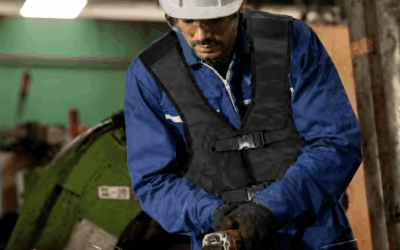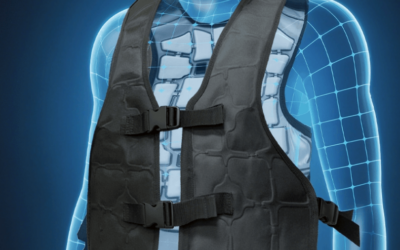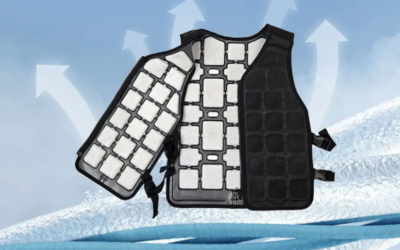
A phase change material cooling vest needs the right freezing time, the right temperature, and the right wear technique to deliver hours of steady, skin-safe cooling. Most people get maybe 70% of the benefit because they skip a step or two. We’re going to walk through exactly how to activate your PCM packs, wear the vest so it fits snugly without restricting movement, and stretch that cooling window through a full shift or workout. Stick around, and you’ll get more out of every wear.
Before You Start: Inspect Your PCM Cooling Vest

Skipping the inspection step is how people end up with a cooling vest for work that barely takes the edge off a hot shift. Before your PCM ice packs vest goes anywhere near the freezer, run through a quick check.
Count and inspect every pack
– All PCM elements are present in their pockets, none missing.
– No cracks, punctures, bulges, or soft/mushy spots.
– No grainy or crystallized texture inside the pack.
– No leaking, no white residue, and no film on the surface. That indicates damage.
A slight oily feel on the surface isn’t automatically a problem. Some PCM materials naturally “sweat” a bit. But pair that oiliness with a leak, a crack, or a change in shape, and it’s time to replace the pack.
Check the temperature rating. PCM vests ship at fixed phase-change temperatures: commonly 6.5°C, 15°C, 21°C, 24°C, or 29°C. This number tells you how the vest will perform and how to activate it. Confirm it on the label or manual before freezing anything.
Make sure the manual includes the temperature grade, activation/freezing time, and damage-replacement rules. Different brands structure vests differently. Some use standalone insert panels, others use standardized multi-temperature packs. Match your checklist to your specific model before moving forward.
How to Activate/Charge Your PCM Cooling Packs Correctly
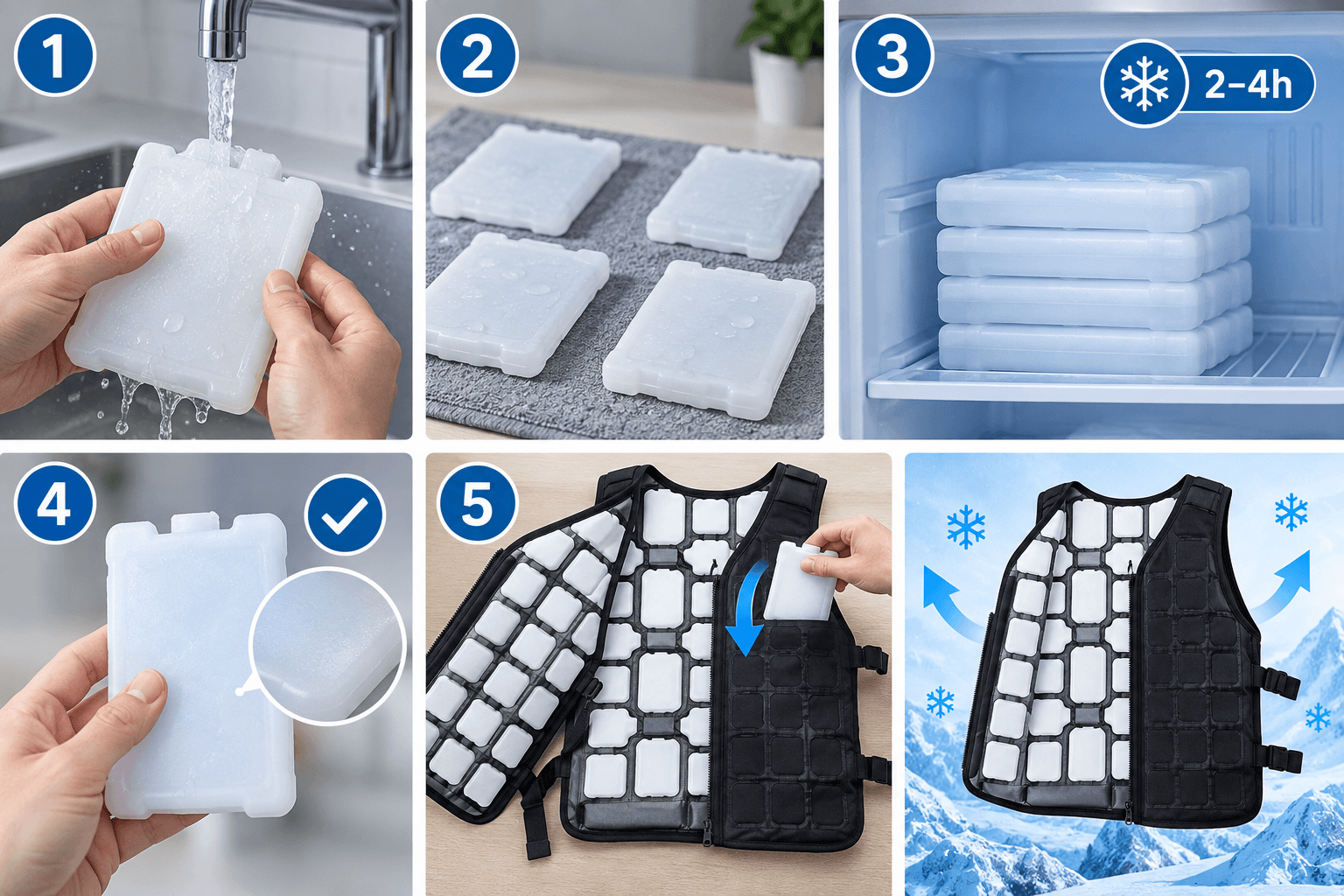
Three methods freeze PCM cooling vest packs, and each trades speed for convenience.
Ice water bath gets you there fastest, about 20 minutes. Grab it when you’re short on time or need the vest ready for immediate use on-site.
Freezer or freezer compartment is the standard move, taking roughly 40 minutes. Most people use this for daily prep because it’s predictable and you don’t have to watch the clock too closely.
Refrigerator (regular fridge section) is the gentlest option, about 60 minutes. Good if you’re prepping ahead and don’t want the packs overly cold when you pull them out.
Some PCM vest models also support natural charging at room temperature, no ice or fridge needed. If the ambient temp stays below 70°F (21°C), the packs solidify on their own—though it takes 10 to 12 hours at that threshold. Drop the room to 8°C, and charging speeds up to around 30 minutes. At 22°C, expect 2 to 3 hours. Check your product label; thresholds vary by formula. Some packs need under 20°C (68°F) to fully solidify, while higher-temp elements stay solid up to 28°C (82°F).
Always Charge Flat, No Exceptions
Whichever method you use, keep the packs flat the entire time. Product instructions say you must always charge the elements flat. Bending or stacking packs while they’re still liquid causes uneven freezing and warped shapes that won’t sit right against your body later.
If a pack comes out twisted or lumpy, don’t force it into the vest. Let it fully melt, then lay it flat and recharge. That resets it to the correct shape.
If Your PCM Vest Isn’t Cold Enough
Incomplete solidification is usually the problem. If the pack still feels soft or squishy instead of firm, it hasn’t finished charging. Give it more time using the method above, and check that your room or fridge is actually below the pack’s phase-change threshold. A fridge running at 22°C won’t fully charge a pack rated for 20°C.
How to Wear the PCM Cooling Vest Properly

A cooling vest for work or sports only earns its keep when it’s actually touching your body the right way. Skip the layering and fit steps below, and you’re basically wearing a cold brick that slides around and does nothing.
Layer it right: base layer, vest, outer layer. Don’t put the cooling vest for work directly on bare skin. Manufacturers consistently recommend a thin, moisture-wicking base layer or lightweight T-shirt underneath. Here’s why that matters:
-
Skin protection: The PCM packs and vest fabric can chafe against bare skin over long shifts.
-
Sweat management: A wicking base layer pulls moisture away instead of letting it pool between your skin and the cold packs.
-
Cooling efficiency: Every added layer cuts heat transfer somewhat, so keep that base layer thin and snug. Skip anything bulky.
Get the fit snug, not tight. The whole point of a reusable cooling vest is maximum skin contact so heat actually transfers into the PCM ice packs vest material. Here’s the sequence:
-
Load all activated PCM packs into their designated pockets first.
-
Put the vest on.
-
Zip the front closure up to your upper chest, or fasten side straps/Velcro panels snug against your torso.
-
Tighten shoulder straps last.
You’ll know it’s right when the vest doesn’t bounce or shift while you walk, and breathing still feels normal. If it slides during movement, tighten it more.
Layering under PPE? Unlike evaporative vests, which need open air to work, a phase change material cooling vest doesn’t rely on airflow. That means you can wear it under coveralls, scrubs, or full PPE, and it’ll still pull heat efficiently. Healthcare workers do this constantly: base layer, activated PCM vest, then PPE on top.
Pre-Cooling Techniques to Maximize Comfort
Wearing your vest helps, but it’s not your only option. Add a pre-cooling routine and you buy yourself extra minutes before the heat catches up.
Cold water immersion works best. Soak in 20–25°C water for 45–60 minutes, submerged to your chest or neck if you can manage it. Going colder than 15°C doesn’t add much benefit – it just gets you there faster. No tub available? Dunk your hands and feet instead. You get a smaller version of the same effect.
Cold towels and cold showers are the field-friendly options. Press a cold towel to your neck or chest for 10–15 minutes, or take a quick cold shower before your shift. Surveys of tennis players show cold showers beat immersion and towels in sheer popularity, probably because they’re fast and require zero equipment.
Layering with your PCM cooling vest: pre-cool first, then put the vest on 15–20 minutes before activity starts. This drops your skin and core temperature before the vest even kicks in, extending your comfort window for both cooling vest for work and cooling vest for sports use.
Extending Cooling Duration During All-Day Use
One PCM pack, however well-charged, isn’t going to carry you through an 8-hour shift. That’s just physics. Here is what drives your cooling window and how to make it last longer.
The variables that matter most:
-
Lower phase-change temperature = stronger cooling that fades faster. A 6.5°C pack hits harder than a 21°C pack but doesn’t last as long.
-
More PCM mass = longer runtime. Bigger, heavier packs hold more latent cooling capacity.
-
Temperature gradient drives release speed. The bigger the gap between your skin or environment and the PCM’s melting point, the faster it burns through.
-
Coverage area affects perceived cooling. More panels touching your body means the effect feels stronger and lasts longer.
-
Insulating layers stretch duration but blunt peak cooling power. That’s the trade-off.
-
Heat, exertion, and PPE layering shrink your window fast. In industrial settings, a 2–3 hour cycle can collapse to about 50 minutes under heavy load.
The Rotation System That Works
Don’t rely on a single pack to get through the day. Run a two-pack rotation: one in use, one recharged and waiting. Swap when the active pack starts trending warm, before it dies.
For long shifts of 8 to 12 hours, keep 2 to 4 packs cycling – one cooling, one recharging, one on standby. Recharge cycles need at least 30 to 45 minutes in a fridge or freezer, but go by “fully solid,” not the clock.
Realistic duration by scenario:
-
Industrial work: 1.5 to 3 hours per pack (compressed to around 45 to 60 minutes in extreme heat)
-
Sports or outdoor: 45 minutes to 3 hours, depending on coverage and intensity
-
Light daily use: 2 to 4 hours, sometimes longer
Plan for 2 to 3 hours per pack and build your rotation around that number.
Post-Use Care: Cleaning and Storing Your PCM Vest
A reusable cooling vest stays reusable only if you treat the packs right between wears. Neglect this part, and you’ll shorten the life of your PCM ice packs vest fast.
Cleaning: keep it gentle. Check the care label first, since fabric and PCM packs usually have different rules. Most vest fabric handles a mild hand wash or gentle machine cycle fine. The PCM packs themselves are pickier: hand wash only, using warm water and a mild detergent, then pat dry with a towel. Skip the washing machine and dryer entirely for the packs. No wringing, no scrubbing hard, no twisting. That kind of force can crack the shell or mess up what’s inside. If your vest has removable packs, pull them out before washing the vest body. Easier, and safer for both pieces.
Storage: flat, dry, cool, done. Dry the packs completely before putting them away. Lay them flat, not stacked, not folded, not rolled tight. Bending a hardened PCM pack is asking for a crack. Store everything somewhere cool and dark, ideally between 10–22°C. Skip garages, attics, and anywhere near heaters. For long-term storage, slip the packs into individual bags away from anything sharp, and toss in a desiccant packet if your space runs humid.
Frequently Asked Questions About PCM Cooling Vest Usage
Got a question that’s still nagging at you? These are the ones that come up again and again.
How long does the cooling actually last?
It depends entirely on the phase-change temperature of your pack. Here’s a rough breakdown:
-
6.5°C PCM: about 2 hours
-
15°C PCM: about 2.5 hours
-
21°C PCM: about 3 hours
-
24°C PCM: about 3.5 hours
-
29°C PCM: about 4.5 hours
These numbers assume normal conditions. Crank up the heat or the workload, and real-world duration can drop to 1–2 hours, even with the same pack. Always check your model’s manual for the exact rating.
Can I wear the vest directly on my skin?
No. Manufacturers are clear on this one: don’t wear the PCM vest directly against bare skin. That thin base layer protects your skin and manages sweat.
How many times can I reuse the packs?
A lot more than you’d think. One PCM supplier tested its material through 12,000 activation cycles with no measurable drop in performance. A reusable cooling vest earns its name.
Where do I keep activated packs if I’m not wearing the vest yet?
Lay them flat, don’t stack them, and keep them dry. An insulated bag or cooler keeps them cold for up to 12 hours on standby. Freezer or fridge works too, just make sure the packs are dry first, otherwise you’ll get frost buildup.
Does it work under PPE?
Yes. PCM and hybrid cooling vests cut heat stress under protective clothing in construction and industrial settings. Effective cooling windows range from 60 minutes to 120–150 minutes depending on setup.
Conclusion
Freeze the packs at the right temperature and time, wear the vest snug against your body for maximum skin contact, and clean it properly after every use so the material keeps performing. Skip any of these steps and you’ll end up with a vest that feels lukewarm, or worse, wears out early.
Put it to the test. Freeze your packs tonight, and tomorrow you’ll feel the difference on a job site, at the gym, or during a summer commute. Bookmark this guide, come back when your packs need a refresh, and keep your cool when you need it most.