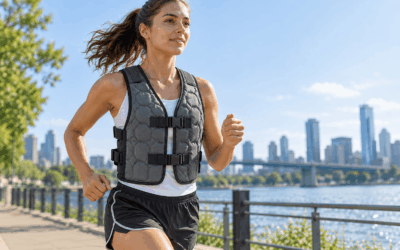
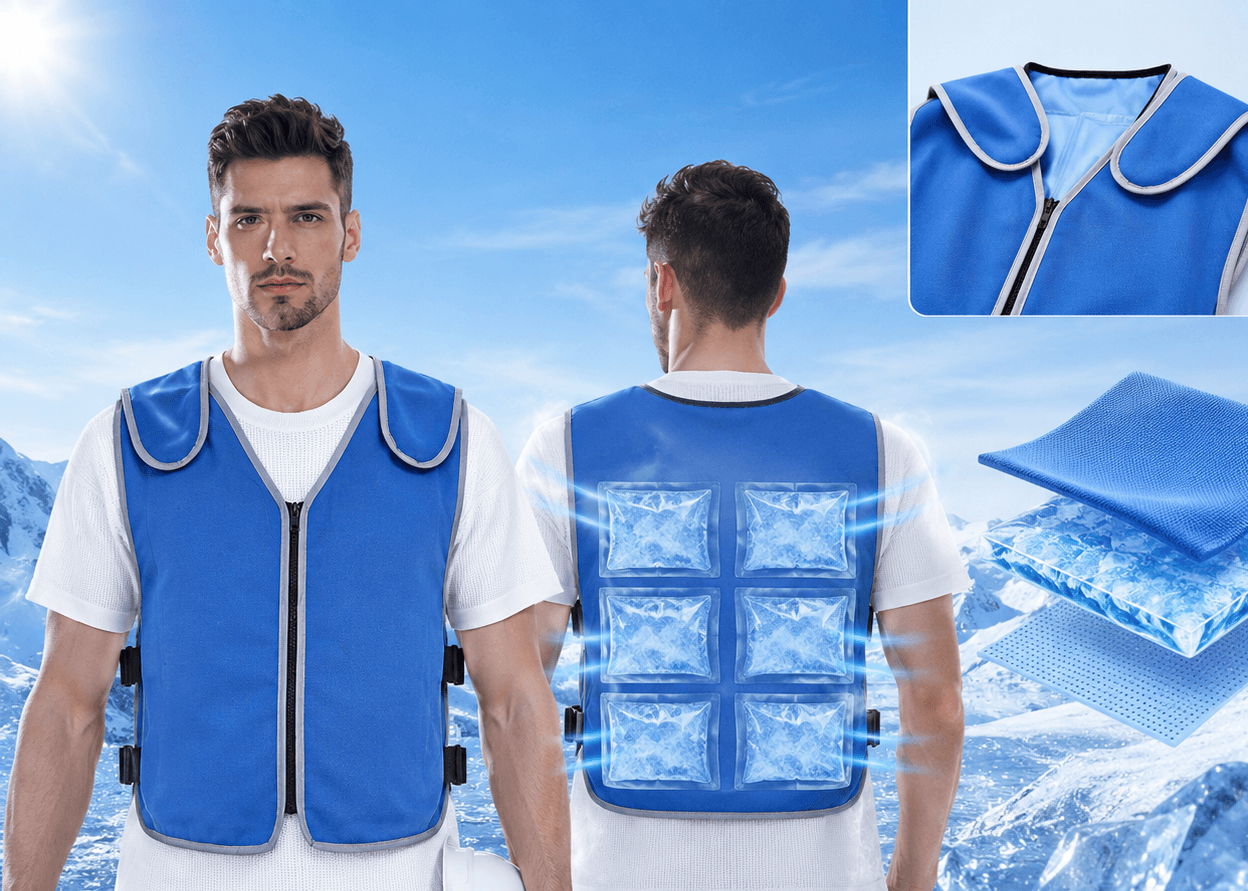
Your body hits 104°F during peak exertion, and by the time you feel dizzy or your performance tanks, the damage is already underway. Heat stress doesn’t announce itself politely—it creeps in through dropped power output, foggy decision-making, and a trip to the medical tent. That’s why elite programs, from Premier League clubs to Olympic training centers, have made the cooling vest a non-negotiable piece of kit.
Many athletes buy a cooling vest without understanding which technology fits their sport, climate, or budget. Evaporative, phase change, and ice pack vests each work on different science, with different performance windows and price tags.
This guide breaks down what works, backed by research data, so you can pre-cool smarter, train harder, and stop guessing which vest deserves your money.
Why Athletes Overheat: The Science Behind Heat Stress Risks
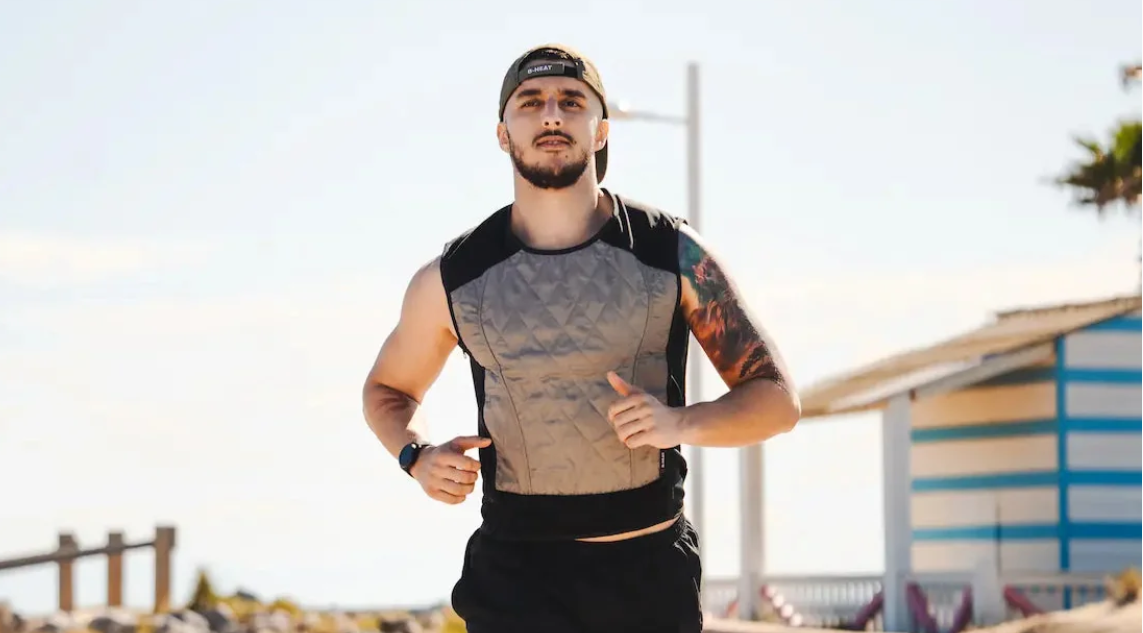
Every 1°C rise in core body temperature cuts endurance by 2-3%. It’s why a runner who felt strong at mile 3 suddenly can’t hold pace at mile 8. Heat stress directly sabotages aerobic output. At 30°C, athletes working at 80% VO₂max show measurable performance decline. If core temperature was already high before competition, mental fatigue compounds that drop.
Three Phases Where Body Temperature Regulation Fails
-
Warm-up: Overdoing drills in humid conditions or wearing heavy gear pushes core temp up before the game starts. Football, soccer, distance running, tennis, and basketball athletes are most exposed here.
-
Competition: High-intensity contact sports and endurance events (marathons, triathlons, football with pads) create the classic “sweating heavily but not cooling” trap—no airflow, heavy gear, brutal humidity.
-
Recovery: Standing around post-game without cooling down, waiting for a second match, or under-hydrating slows heart rate and temperature recovery. Tournament schedules with back-to-back games are prime danger zones.
Heat Exhaustion vs. Heat Cramps: Know the Difference
Heat cramps show up first: muscle twitches, painful spasms in calves or quads, tight thirst and heavy sweating. This is your early warning system.
Heat exhaustion is more serious. Watch for headache, dizziness, nausea, rapid heart rate, low blood pressure, poor coordination, core temps between 38.3°C-40°C. Clumsy movement or confusion signals risk has escalated toward heat stroke territory. Recognizing these signs before they progress is the start of effective hyperthermia prevention for athletes.
Pre-Cooling vs Per-Cooling vs Recovery Cooling
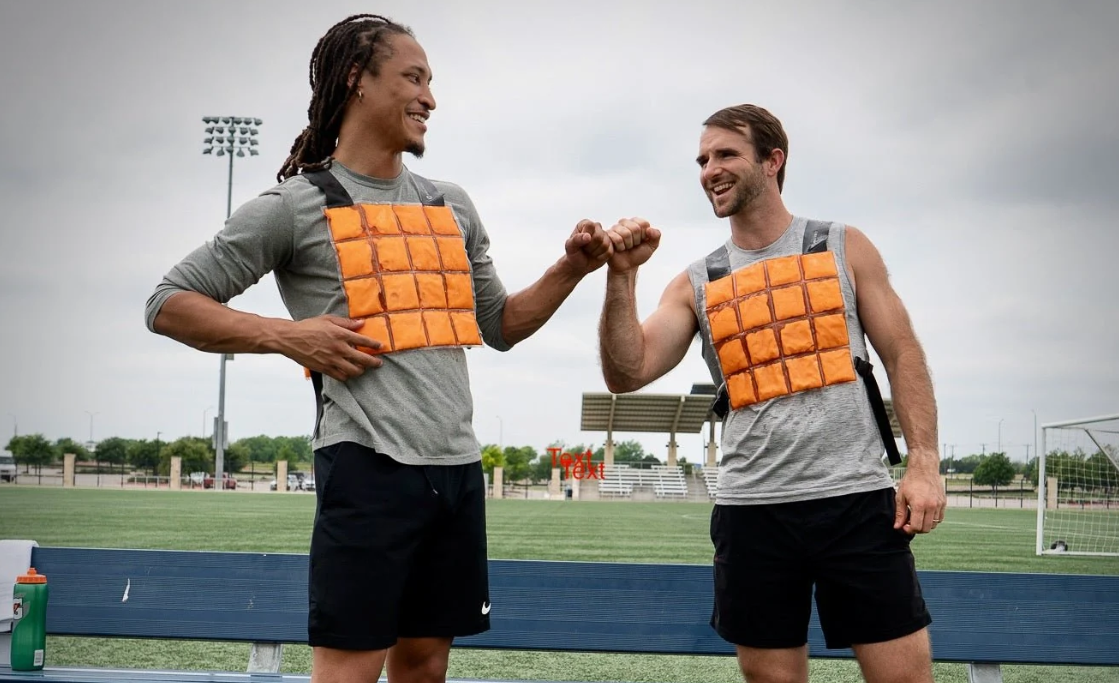
Timing matters more than intensity for cooling. Wear a vest at the wrong moment and you waste both the gear and your effort.
Pre-Cooling: Your Pre-Event Buffer
Pre-cooling happens 20-30 minutes before exercise. Most cooling-vest studies use a 15-20 minute window, though mixed pre-cooling protocols sometimes stretch to 30 minutes total. This is the most common cooling-vest scenario because vests fit naturally into sport-specific warm-ups with no rule violations or logistics headaches.
Cold water immersion protocols target 20-25°C for 45-60 minutes. Going below 15°C is not necessary; it only shortens immersion time without adding much benefit.
Cold-fluid pre-cooling drops core temperature by roughly 0.5°C, and reviews show average performance gains around 5.7% in endurance and intermittent events under heat stress. That benefit fades after 20-25 minutes of exercise, which is exactly why per-cooling matters.
Per-Cooling: Extending Protection Mid-Event
Per-cooling works during natural breaks like halftime, quarter breaks, time-outs, and set changes. One soccer study using a cooling vest at halftime delivered 14 minutes of actual cooling after accounting for the 1-minute clothing change. Earlier protocols combined 15 minutes pre-exercise cooling with 10 minutes at halftime.
The sweet spot is 10-15 minute cooling bursts during stoppages, ideal for events long enough that core temperature keeps climbing past the pre-cooling window.
Recovery Cooling: The Post-Exercise Reset
Recovery cooling starts immediately after exercise, 10-15 minutes with a vest, though some consumer products claim 30-60 minutes of cooling duration.
Real data backs this up. In one recovery study, rectal temperature dropped from 37.8±0.2°C to 37.6±0.2°C while heart rate fell from 135±13 bpm to 97±9 bpm. A 2026 athlete study found cooling rates of 0.02-0.04°C/min, with gastrointestinal temperature returning to safe levels within 60 minutes in a thermoneutral room when starting temps hit 38.3°C or higher.
Pre-cool for hot starts, per-cool during breaks, and recovery-cool after exercise. Stacking these outperforms using just one.
Cooling Vest for Athletes: 4 Technology Types Compared
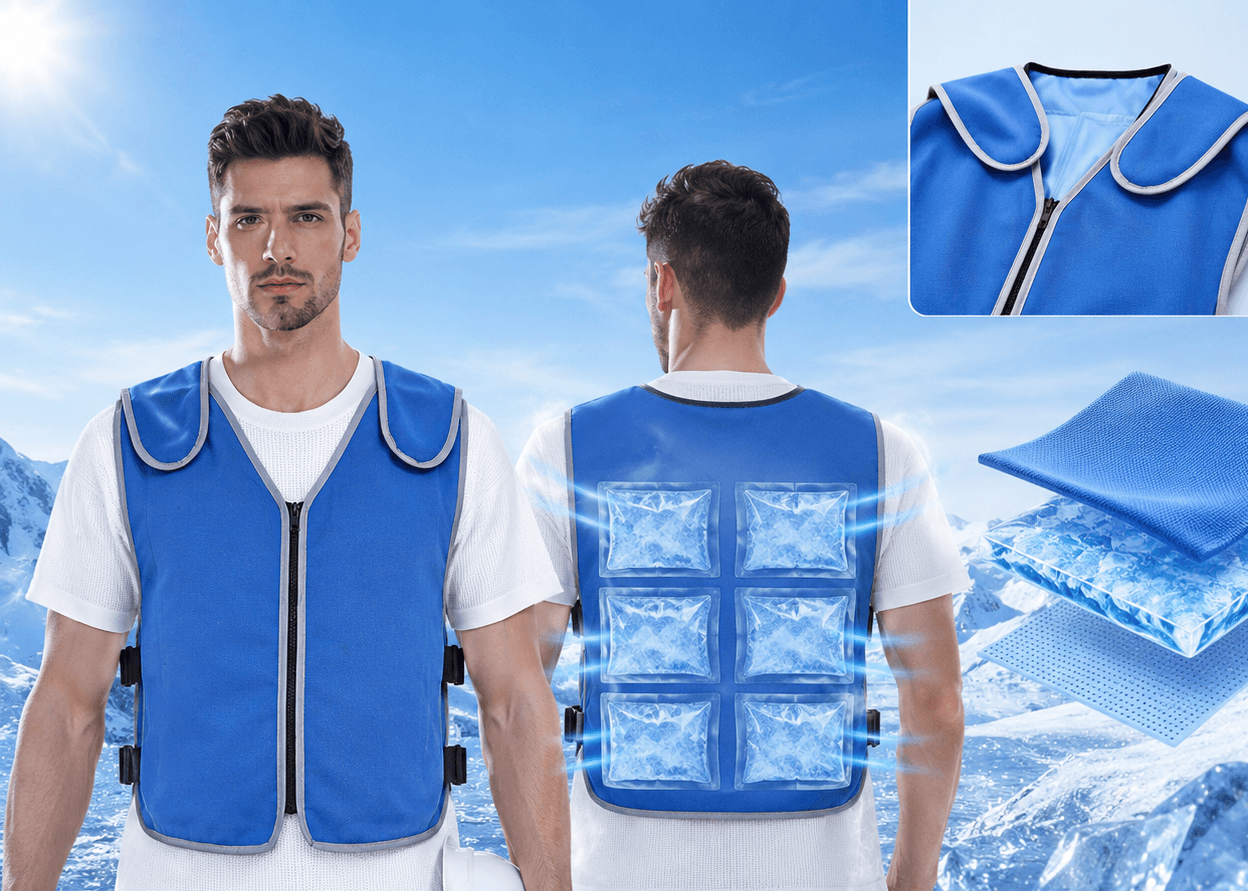
Four cooling technologies dominate the market, and they don’t perform the same way. Pick the wrong one for your sport or climate, and you’re paying for cooling gear that underdelivers when you need it most.
Evaporative Cooling Vest: Best for Dry Heat
Evaporative cooling vests work through airflow and evaporation. That means they perform best in low to medium humidity and ventilated spaces below 104°F (40°C). Take one into a humid gym or a swampy summer match, and the cooling effect stalls fast.
The upside is cost and weight. A basic sport model starts around $19.95, with market examples running up to $72 for more durable builds. You get a lightweight, portable vest that works well for training in dry outdoor conditions. Think desert 10Ks or high-altitude cycling camps.
Phase Change Cooling Vest: Best for Humidity and Steady Output
A phase change cooling vest doesn’t care about humidity. It delivers stable, predefined cooling temperatures using PCM setpoints like 6.5°C, 15°C, 21°C, 24°C, or 29°C. One cited study found the 24°C PCM vest outperformed the 28°C version on torso and mean skin temperature.
Neither PCM vest significantly slowed core-temperature rise during exercise. But both blunted peak core temperature during recovery. The real value of PCM shows up after the whistle blows, not during the sprint.
Runtime varies widely. Some single-charge units last 2-4 hours; broader product data shows ranges of 8 to 72 hours depending on airflow and ambient humidity. Best fit: longer training blocks, indoor sports, humid climates.
Ice/Gel Pack Vest: Strongest Short-Burst Cooling
Ice vests for sports deliver the strongest initial cooling of any wearable option, but they’re the least steady. As packs warm and melt, cooling output drops mid-session, creating inconsistent performance for longer events. The added pack weight also cuts mobility, which matters for contact sports and sprinters. Best fit: short-duration heat exposure, sideline recovery, or pre-cooling protocols where a strong cold dose beats comfort.
Circulating Cold-Water Systems: Highest Cost, Highest Control
These sit in different territory entirely. A fitted Cool Flow system starts around $795 and climbs to $1,545 for an Arctic Chiller setup. A comparable immersion system runs $424. That’s 10x to 75x the price of an evaporative vest, but you get the most controllable cooling on the market. Best fit: elite programs, rehab clinics, occupational heat stress management.
|
Technology |
Cost |
Cooling Style |
Best Fit |
|---|---|---|---|
|
Evaporative |
$19.95–$72 |
Airflow-dependent |
Dry outdoor training |
|
PCM |
Varies by setpoint |
Stable, predefined |
Humid/indoor, longer sessions |
|
Ice/Gel Pack |
Low-moderate |
Strong but inconsistent |
Short bursts, recovery |
|
Circulating Cold-Water |
$424–$1,545+ |
Fully controlled |
Elite/professional use |
Does a Cooling Vest Work? Evidence From Research Data
The research is split. A cooling vest can lower your core temperature and cut sweat loss—or it can do almost nothing. It depends on the study, the sport, and how you use it.
The strongest evidence in favor of cooling vests:
-
A lightweight vest reduced rectal temperature by ~0.5°C and abdominal skin temperature by 0.1–1.4°C, with sweat rates dropping 10–23% during exercise.
-
In hot, humid conditions, core temperature rose more slowly with a vest: 0.03°C/min vs 0.04°C/min for the control group. Heart rate followed the same pattern (3 bpm/min vs 4 bpm/min). The core-temp difference just missed statistical significance at p = 0.054.
-
Pre-race warm-up cooling before a 5K dropped esophageal temp by 0.3°C, rectal temp by 0.2°C, mean skin temp by 1.8°C, and heart rate by 11 bpm. Athletes felt cooler too—thermal discomfort dropped 0.6 points. None of that translated into faster race times.
Now the studies that push back:
-
One trial in trained athletes found no significant core-temperature effect at all.
-
A liquid cooling vest paired with body armor failed to move the needle on core temperature, heart rate, sweat loss, oxygen consumption, or perceived effort.
-
A 10K warm-up cooling protocol showed zero performance improvement.
A clearer pattern emerges when you look at intensity and duration. Endurance events and prolonged heat exposure show the most consistent benefit—slower heat gain, lower sweat rate, better pre-exercise temps. Short, explosive efforts show weaker or null results. PPE and heavy-clothing cases help skin temperature and perceived strain more than core temperature, with changes hovering around 0.10–0.14°C.
The realistic benchmark: expect 0.3–0.5°C lower core temperature and 10–23% less sweat loss.
Best Cooling Vest by Sport: Running, Football, Cycling & More
Not every cooling vest belongs in every sport bag. A marathoner and a center-back need completely different cooling profiles, and picking the wrong one wastes both money and marginal gains.
Running & Marathon: Lightweight, Fast-Removal Vests
Runners get the clearest performance payoff. One trial found a cooling vest worn during warm-up improved simulated 5K performance in the heat. Another protocol—30 minutes resting plus 30 minutes warm-up in an ice vest—dropped core temp by 0.37°C before the first interval, and the reduction held through the sixth interval.
A meta-analysis backs this up with a large effect size of 0.81 (95% CI 0.27–1.35) for pre-cooling vests specifically. What matters for runners: low mass, torso-only coverage, and fast don/doff. You wear it through warm-up, then strip it before the gun goes off. One caveat: mixed pre-cooling studies on 10K distances found lower thermal strain but no direct time gain, so vest-only cooling may fall short for longer road races without pairing it with cold fluids or ice slurry.
Football, Soccer & Basketball: Halftime Torso Cooling
Bench time is your cooling window. A 15-minute halftime break is the realistic target, and field protocols typically layer in about 20 minutes of pre-cooling during warm-up too. The operational win here is hands-free cooling. Players can hydrate, get taped, or sit through a tactical briefing while the vest works. Target the same 0.3–0.5°C core-temp benchmark, and prioritize squads with heavy substitution rotation or long bench exposure in hot fixtures.
Cycling & Long Outdoor Sessions: PCM Over Ice
Ice melts. Long rides don’t stop for a freezer. Phase change cooling vest tech wins here instead. One study documented cooling lasting at least 2 hours, with chest skin temp running about 3°C lower and mean skin temp about 1°C lower during hot-weather cycling. Rule of thumb: switch from ice to PCM once your session crosses 60–120 minutes or you’re training somewhere with zero re-chill access.
How to Choose the Right Cooling Vest: 5 Buying Criteria
Five factors separate a smart cooling vest purchase from a wasted one. Skip any of these, and you risk buying gear that fights your climate, your sport, or your own body instead of helping it.
1. Match the vest to your climate. Dry heat calls for evaporative vests, which are cheap, light, and effective as long as humidity stays low. Step into humid air or an enclosed gym, and evaporation stalls. That’s when PCM or ice/gel vests take over, since they cool by conduction and don’t care about moisture in the air. In humid climates, PCM vests are the safer default; they typically deliver 2-4 hours of steady cooling.
2. Match the vest to your workload. High-mobility sports like running, field sports, and climbing demand lower weight and a slimmer profile. Heavier ice/gel packs add bulk fast. Moderate movement fits PCM well because it gives steadier cooling, less bulk than ice, and more humidity tolerance than evaporative designs. Stationary or low-mobility use tolerates heavier systems better, especially when longer runtime matters more than comfort.
3. Weigh cooling duration against recharge hassle. Ice/gel vests run 1-2 hours but need freezer access and spare packs. PCM vests stretch to 1.5-3 hours, recharging in a fridge or ice water. Evaporative vests claim up to 8 hours depending on airflow and humidity, and they reset with nothing more than water.
4. Decide on skin contact. Direct skin contact maximizes cooling, but a thin base layer adds comfort. Evaporative vests lose effectiveness fastest under restrictive layers; PCM systems hold up better in workwear or protective gear.
5. Match the vest to your full use case, including climate, sport, and layering, before you buy.
Cooling Vest FAQ: Duration, Care & Common Athlete Questions
Most athletes ask the same five questions before buying. Here are straight answers, backed by real numbers.
How long does a cooling vest actually last?
Depends entirely on the tech. Evaporative vests run 5-10 hours per water activation under moderate conditions—just soak them 1-2 minutes and go. But hot air and direct sun speed up evaporation, cutting that window fast. PCM vests hold 2-4 hours at a cooling plate temp of roughly 58-65°F (14-18°C). Push hard enough, and that number drops. One benchmark shows PCM cooling falling to just 50 minutes at 25°C ambient temperature under active exertion. Ice/gel systems run 30 minutes to 2 hours in real training conditions. Heat and effort level drive most of the variance.
Do I need to re-chill it, and how fast?
Yes, for PCM and ice vests. Most PCM packs recharge in under an hour once refrozen or re-chilled. Evaporative vests need more water.
How do I wash a cooling vest without ruining it?
Separate the fabric carrier from the inserts first. Never wash them together. Manufacturer guidance splits. Some say the carrier is machine washable with mild soap, then line dry. Others recommend hand-washing with warm water and mild detergent, followed by drying with a paper towel or cloth. PCM inserts stay out of the washer and freezer unless the product label explicitly says otherwise. Reinsert once the carrier is fully dry.
Does a cooling vest replace drinking water?
No. A cooling vest lowers heat load. It doesn’t rehydrate you. Keep your normal fluid plan before, during, and after training, vest or no vest.
Which vest fits my training schedule?
Short sessions or pre-cooling: grab PCM or evaporative. Long outdoor days or tournaments with water access: evaporative wins on duration. Humid or static settings: PCM holds steadier temps over its 2-4 hour window.
Conclusion
During training or competition in high-temperature environments, heat stress not only affects comfort but can also accelerate fatigue and reduce athletic performance. The appropriate use of Cooling Vest for Athletes can serve as part of pre-exercise cooling, interval cooling, or post-exercise recovery, helping athletes better manage the heat load from high temperatures.
However, there is no single “best Cooling Vest” suitable for all sports. Evaporative Cooling Vests are better suited for dry, well-ventilated environments; Ice Pack Cooling Vests provide more noticeable, short-duration cooling; and PCM Cooling Vests offer more stable temperatures and are better suited for sports requiring a controlled cooling experience. When choosing a cooling vest, factors such as the type of sport, ambient temperature and humidity, training time, weight, and ease of reactivation of the cooling pack should be considered.
For running, cycling, outdoor training, or endurance sports, it is more important to establish a sports cooling strategy beforehand, rather than using cooling equipment for the first time on competition day. It is recommended to test the fit, weight, and actual duration of the Cooling Vest during regular training before deciding whether to use it for official competition.
If you are looking for more cooling vests, PCM cooling products, or other personal cooling gear for sports and outdoor use, you can also visit ICEBEARTECH to learn about different cooling technologies and product solutions, and choose a more suitable cooling method for your specific sports scenarios.