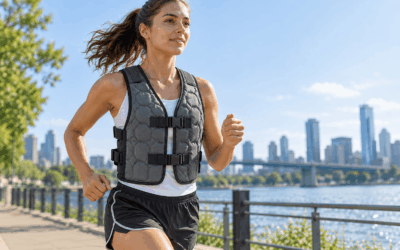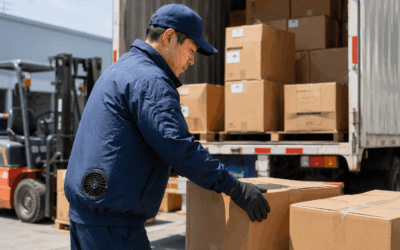
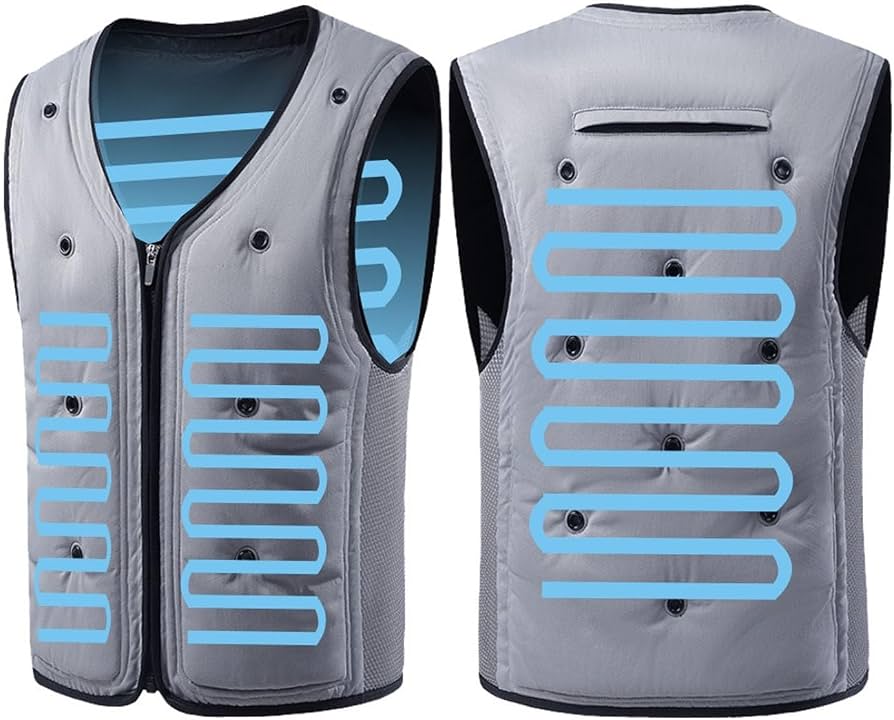
When temperatures exceed 95 degrees Fahrenheit (approximately 35 degrees Celsius), you’ll feel drenched in sweat, have a splitting headache, and even feel dizzy. If you’ve ever experienced this, you’ll understand how important a good cooling vest is. However, if you search for “cooling vest,” you’ll find a deluge of technical terms such as evaporative, phase change material (PCM), gel packs, and water circulation systems. So, which cooling vest will keep you cool for eight hours on a construction site or in other environments? There isn’t actually a single “best” cooling vest; it depends on the specific high-temperature situation you’re facing. This article will detail how each cooling vest technology works, its advantages and disadvantages, and guide you on how to choose a truly effective cooling system based on the environment and the duration of wear.
How Cooling Vests Work: The Science Behind Body Temperature Regulation
Your body produces heat, dumps it, and stays level. A cooling vest tips the balance by pulling heat away from your skin faster than your body can generate it — mainly through evaporation, conduction, or convection, depending on the tech inside.
|
Technology |
Cooling Mechanism |
Key Data |
Best For |
|
Evaporative |
Water evaporates, absorbing heat off skin |
Needs soaking or built-in water channels; airflow drives ongoing evaporation |
Low-to-moderate humidity, breezy conditions |
|
PCM (phase change material) |
Absorbs latent heat during phase change |
An endothermic cooling vest holds steadier temps than ice |
Long wear, consistent cooling |
|
Water circulation |
Chilled water loops through tubing, continuously removing body heat |
Lowers core body temperature in hot-environment exertion |
High heat, extended, active wear |
|
Gel/ice pack |
Melting ice/gel absorbs heat via conduction |
Strong initial cooling, fades fast — front-loaded relief |
Short bursts, targeted spots |
The principle behind evaporative cooling vests is quite simple, requiring only three steps: soaking, wringing, and wearing. First, soak the vest for 1-2 minutes, gently wring out excess water, and then put it on. As air flows over the vest, the water evaporates, carrying away heat from the body surface and creating a cooling effect.
However, the effectiveness of evaporative cooling largely depends on the environment. Stronger winds accelerate evaporation, resulting in a more pronounced cooling effect; higher humidity slows evaporation and weakens the cooling effect. This is why evaporative cooling vests typically perform better in dry, hot environments than in humid, stuffy ones.
Studies show that under suitable conditions, evaporative cooling equipment can lower skin surface temperature by approximately 13°C and core body temperature by approximately 0.5°C during exercise. If the vest remains moist, it can provide up to 8 hours of continuous cooling. However, the actual duration will be affected by factors such as air temperature, humidity, wind speed, and activity intensity.
In contrast, PCM (phase change material) and ice packs work on different principles. PCM (Polymerized Thermal Mass) maintains a relatively stable cooling temperature for an extended period when absorbing heat, making people feel more comfortable. In contrast, while ice cubes or ice packs cool down quickly at first, their cooling capacity decreases rapidly as they melt, exhibiting a characteristic of “very cold at first, then increasingly less so.” Therefore, both technologies have their advantages and are suitable for different application scenarios.
Evaporative Cooling Vest: How Does It Work?

Evaporative cooling vests are arguably the easiest type of cooling gear to use. It only requires three steps: soaking, wringing, and putting it on.
Soak the vest in clean water for about 3-5 minutes until the fabric is fully absorbed. Then gently wring out the excess water, leaving it damp but not dripping. When worn, the heat emitted by the body causes the moisture to evaporate, and the heat carried away during evaporation is what makes you feel cool.
Different brands use different materials. Some use ordinary absorbent fabrics, while others use special materials such as highly absorbent fibers, PVA, or water-absorbing crystals, which can store more moisture and release it slowly, thus prolonging the cooling effect.
Why is it effective in some areas but not in others?
The biggest feature of evaporative cooling vests, and also their limitation, lies in the “evaporation” process.
If the air is dry and well-ventilated, the moisture will evaporate quickly, so the cooling effect is usually more noticeable. This is why evaporative cooling vests are popular on construction sites, in desert areas, in agricultural work, and during outdoor activities like cycling and hiking.
However, if the air humidity is high, such as in southern summers, tropical regions, or in indoor environments with little air circulation, where the air is near saturation, moisture evaporates less effectively, naturally reducing the cooling effect.
Simply put, the drier the weather and the stronger the wind, the more effective evaporative cooling is; the hotter and more humid the weather, the more limited its performance.
How much cooling effect does it actually provide?
Different brands and designs produce products with varying cooling effects, making it difficult to provide a fixed figure.
For example, some dry evaporative cooling vests claim that only about 500 mL of water is needed to provide cooling for up to 3 days; others state that they reach an optimal cooling level of about 15°C (59°F) within about 5 minutes of activation. In addition, some researchers have developed evaporative cooling systems with a dual-channel structure of wet and dry zones, hoping to further improve wearing comfort while maintaining cooling effectiveness.
These data indicate that evaporative cooling technology has evolved into various implementation methods, and performance differences between different products can be significant.
Is an evaporative cooling vest worth buying?
For many, the answer is yes, especially in hot, dry outdoor environments.
Its biggest advantage is its ease of use. No batteries, no charging, and no pre-freezing are required; as long as there is clean water, the cooling effect can be reactivated at any time. Compared to some active cooling devices, it is usually lighter and more affordable, making it ideal for users who need to work outdoors for extended periods.
Of course, it is not suitable for all scenarios.
Since cooling relies entirely on water evaporation, the higher the ambient humidity, the more pronounced the decrease in effectiveness. Furthermore, it primarily helps dissipate heat from the body surface, especially the torso area, and cannot rapidly lower the core body temperature like professional medical cooling devices. If the vest absorbs too much water and isn’t wrung out thoroughly, it may feel damp and heavy when first worn. It will become more comfortable after some of the moisture evaporates.
Who is an evaporative cooling vest more suitable for?
If you work in hot, dry outdoor environments for extended periods, such as construction, landscaping, logistics, or agriculture, or enjoy outdoor activities like cycling, hiking, camping, or trail running, then an evaporative cooling vest is usually a simple, economical, and worthwhile cooling solution.
However, if your work environment is consistently in a high-humidity area, or if you desire a more stable, continuous, and weather-independent cooling experience, then a PCM cooling vest or a water-circulating cooling vest is often a better choice.
PCM Cooling Vest: How Do Phase Change Materials (PCMs) Work?
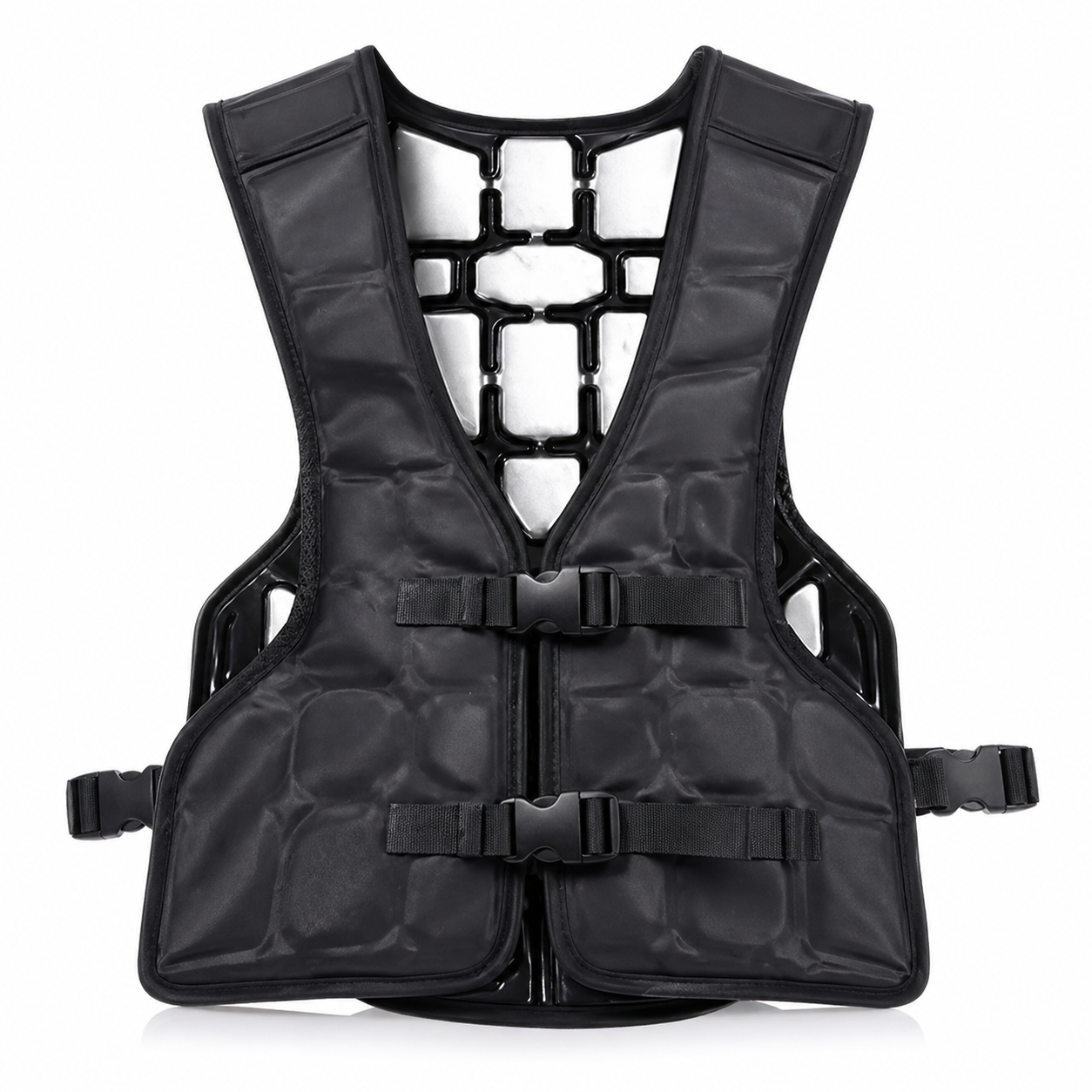
The core principle of a PCM (phase change material) cooling vest is the absorption of heat during the phase change of the material between a solid and liquid state. Throughout the phase change process, the PCM remains near its set melting point, thus providing a sustained and relatively stable cooling effect, unlike ice, which is initially very cold but then rapidly warms up.
The phase change temperature of a PCM determines its cooling intensity and duration, and a trade-off often needs to be made.
If the phase change temperature is between 13–16°C (55–60°F), the cooling rate is fastest, with skin temperature dropping by about 3–4°C within minutes. However, under high-intensity operation, this typically only lasts for 90–150 minutes. Currently, PCMs with a phase change temperature of 14–18°C (58–64°F) are more common in industrial applications, achieving a better balance between cooling effect and endurance, generally lasting 1.5–4 hours. While PCM with a higher phase change temperature of 21–29°C (70–84°F) doesn’t provide the same intense cooling, its battery life can be extended to 8–12 hours, making it more suitable for work scenarios requiring all-day PPE (personal protective equipment).
However, PCM cooling vests are not without limitations.
According to a 2025 industry assessment, the first limitation is breathability. Because PCM packs are typically sealed and filled with saline, paraffin, or bio-based phase change materials, airflow can be affected to some extent, leading to sweat buildup after prolonged wear. Secondly, there’s the weight. A single PCM vest usually requires more than 20 PCM packs, weighing approximately 1.5–3 kg, which can increase physical strain after several hours of continuous wear. Additionally, PCM packs need to be recooled after use, generally requiring 30–60 minutes or even longer in a refrigerator or freezer before reuse. Therefore, many outdoor workers carry multiple PCM packs for rotation.
Compared to evaporative cooling vests, PCMs are more suitable for environments with high humidity and poor air circulation. For example, in high-temperature work environments such as foundries, tunnel construction sites, and chemical workshops, or when wearing sealed protective gear such as fire suits, bulletproof vests, or chemical protective suits, PCMs often provide a more stable cooling effect. Furthermore, because PCMs remain near a fixed phase transition temperature and are not as excessively cold as ice packs, they are also frequently used to help manage heat sensitivity in patients with multiple sclerosis (MS).
Water Cooling Vest: The Most Effective Cooling Solution
If evaporative cooling relies on water evaporation and PCM utilizes phase change to absorb heat, then the Liquid Cooling Vest actively delivers cooling to the body.
Through built-in conduits, it continuously circulates cold water or water-based coolant within the vest, driven by a micro-pump. This, combined with a cooling system, continuously lowers the water temperature before evenly distributing the coolness to the body. This active circulation method provides a consistently stable and efficient cooling effect.
In actual testing, the Liquid Cooling Vest performs best among several cooling solutions currently available. Some studies have found that in an 8-hour continuous test, its heat dissipation capacity is approximately three times that of an evaporative cooling vest and twice that of a PCM cooling vest. Tests by the US CDC also indicate that the liquid cooling system can reduce body heat buildup by approximately 65%, outperforming air cooling and ice pack/PCM cooling methods. Even when working continuously in heavy protective suits, users can maintain low levels of core body temperature, heart rate, and subjective heat stress.
However, this powerful cooling capability also means a higher barrier to entry. The water circulation system requires a power source, water pump, and refrigeration equipment to operate continuously; once the power is cut off, the active cooling function stops. Furthermore, the battery, conduits, and liquid storage system add to the overall weight and require regular maintenance and cleaning.
Therefore, water-circulating cooling vests are more suitable for fixed work environments such as construction sites, steel mills, and smelters, especially for personnel working continuously for 8–10 hours in high-temperature environments of 30–45°C. If continuous, stable, and high-intensity cooling is required, it is usually the best-performing option currently available.
Gel/Ice Pack Cooling Vest: Short-Lasting, Powerful Cooling
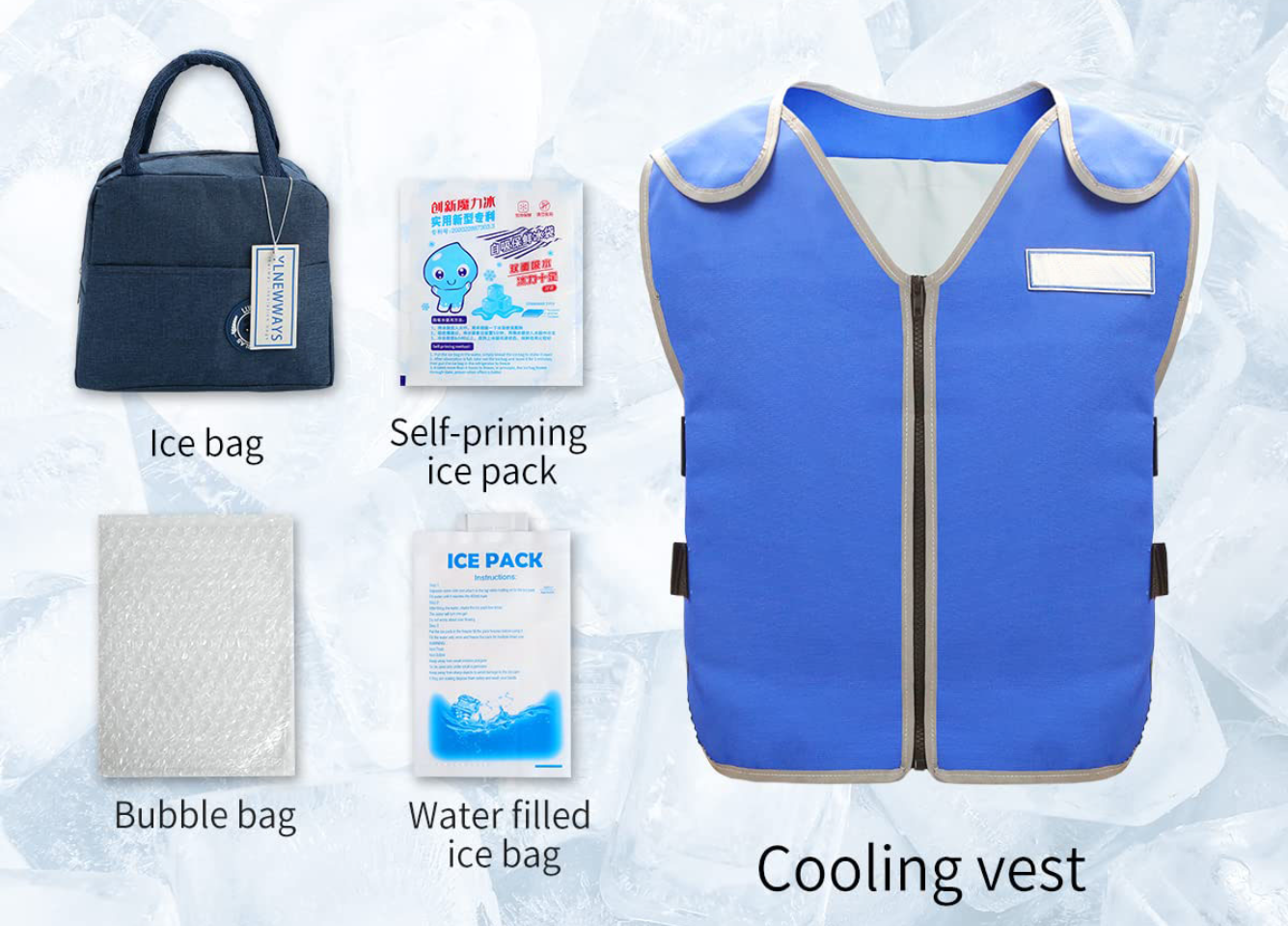
Putting on an ice pack vest provides an instant, unparalleled cooling sensation. The temperature difference between the cooling gel and the skin can reach 20–30°C, with each degree difference clearly perceptible. This ice pack cooling vest offers the fastest and most direct cooling effect of all cooling vest technologies, but the duration is relatively short.
Data confirms your experience. Research cited by the Hong Kong Occupational Safety and Health Commission found that a cooling vest can maintain a “significantly cool” feeling for approximately 65 minutes. Field tests on two ice pack vests showed that the subjective effective cooling time was 1.28±0.54 hours and 1.34±0.58 hours, respectively, with no significant difference between the two. During this period, the rate of increase in core body temperature and heart rate was approximately 6.69% slower than when not wearing a vest, while the rate of decrease was approximately 6.82% faster during rest.
Environmental factors can rapidly alter the cooling effect. In outdoor temperatures of 40–45°C, the cooling vest can maintain its coolness for approximately 4 hours. In a steel mill environment at 70°C, the cooling time will shorten to about 2 hours, with the coolest period concentrated in the first hour, after which the gel will gradually warm to ambient temperature.
The disadvantages are weight and humidity. Each ice pack weighs 200–400 grams, and a vest containing 4–8 ice packs will add 1–3 kilograms to its weight. When the surface temperature of the ice packs is below the dew point, condensation will form, wetting the lining. Therefore, this type of vest is best suited for short periods of high-intensity activity and not for all-day wear to regulate body temperature.
Side-by-Side Comparison: Cooling Strength, Duration & Best Use Cases
Comparing these four cooling technologies reveals significant differences in their cooling performance. Active water circulation cooling is the most effective, followed by PCM phase change cooling, with hybrid cooling solutions falling in between. Evaporative cooling is more suitable for everyday scenarios where high cooling intensity is not required.
Research data shows that active cooling systems can lower the core body temperature by about 1°F (approximately 0.56°C) within about 8 minutes, while passive cooling typically takes about 13 minutes to achieve the same effect, representing a 38%–40% increase in cooling efficiency. This is why active cooling devices are significantly more expensive, typically starting at $150 and reaching thousands of dollars for high-end products. In contrast, passive cooling products such as evaporative cooling and PCM are simpler in structure and more affordable.
|
Technology |
Cooling Rank |
Runtime |
Best Use Case |
|
Active |
1st |
Full 8-hour shift |
Protective suits, 30–45°C shops, fixed power |
|
PCM |
2nd |
2–6 hrs (60–120 min peak) |
MS patients, chemical/hazmat gear, medical use |
|
Hybrid (PCM + fan) |
3rd |
2–6 hrs, strongest first 3–4 |
High humidity, outdoor construction, patrol work |
|
Evaporative |
4th |
1–4 hrs per soak |
Casual outdoor activity, pets, mild heat |
Hybrid vests combine the best of both worlds—integrating a phase change material (PCM) pack with a small fan—but this adds to the battery and maintenance, which most casual users don’t need. They perform exceptionally well in wet conditions, where regular evaporative fabrics struggle.
How to Choose the Right Cooling Vest for Your Needs
Match the vest to your environment first, then your body. That’s the whole system.
Quick decision logic:
|
Your Situation |
Pick This |
Why |
|
Dry outdoors (RH <50%), moderate activity |
Evaporative |
Surface temp runs 5–15°C below ambient; 2–4 hrs per soak |
|
Humid (RH >60%) or indoor/heavy PPE |
PCM |
Steady “dry cold,” 2–4 hrs, up to 6 hrs on medical/industrial lines |
|
8–12 hr shift, heavy exertion |
Water circulation |
Pump-fed, covers full shift in 120°F+ conditions |
|
Need cooling now, ≤1–2 hrs |
Ice pack |
0–4°C skin contact, sharpest initial drop |
By person:
· Construction/outdoor crews: Evaporative (0.7–1.2 kg) for dry sites; PCM or solid-state under FR/hi-vis gear, keep it under 2 lb with ANSI reflective strips.
· Athletes: Sub-1kg evaporative or PCM for training; pre-cool with PCM/ice 10–20 minutes before competition.
· MS patients: PCM only, 2–4 hrs stable cooling, ≤2 kg, machine-washable cover — avoid ice against skin.
· Menopausal women: Micro-PCM or evaporative shawl, <1 kg, women’s cut with adjustable side straps.
· Firefighters/hazmat: Skip evaporative entirely. PCM or hot-swappable battery cooling, 2–3 hrs per battery.
Three quick checks: humidity/location → activity duration → power/ice access. That sequence alone eliminates 75% of wrong picks.
Key Buying Factors to Evaluate Before Purchase
There are many types of cooling vests on the market, but higher price and more features don’t necessarily mean they’re right for you. Before buying, ask yourself the following questions:
How long do your work or activities usually last?
The first thing to consider is how long you need continuous cooling.
If each use is only 3-4 hours, evaporative cooling vests or ordinary PCM cooling vests are usually sufficient. However, if you need to work continuously for 8-12 hours, such as in construction, steel mills, or long-term outdoor inspections, it’s best to choose a product with replaceable PCM modules or consider a water circulation cooling system.
Instead of choosing based on “average working time,” configure your cooling solution based on your longest possible working time for better results.
Is the operating environment dry or humid?
Ambient humidity directly affects cooling performance, especially for evaporative cooling products.
Generally, evaporative cooling vests are most effective when the relative humidity is below 60%. However, if the humidity exceeds 80%, evaporation slows significantly, the fabric remains damp, and the cooling capacity decreases considerably. In such cases, PCM (Polymerized Concentration Mover) or water circulation cooling solutions are usually more suitable.
Is wearing protective gear necessary?
If you need to wear fire-fighting suits, chemical protective suits, bulletproof vests, or other PPE (personal protective equipment) over the cooling vest, in addition to the cooling effect, overall comfort should also be considered.
It is generally recommended that the vest thickness be kept within 2-3 cm, and the total weight (including protective equipment) should ideally not exceed 3-4 kg. Actual wear testing, such as whether continuous human wear for more than 2 hours has been conducted, is more valuable than product specifications.
Is the weight and coverage area appropriate?
A larger cooling coverage area is not necessarily better.
Generally, covering approximately 0.2–0.3 m² of the torso area is sufficient to balance cooling effectiveness and wearing comfort. While excessive coverage increases weight and volume, the actual cooling benefit doesn’t increase proportionally.
Is it convenient for daily use?
Many people focus solely on cooling performance when purchasing, neglecting the convenience of subsequent use.
For example, PCM modules typically require 2–4 hours in a freezer before reuse; battery-powered active cooling devices generally require 2–4 hours of charging to provide approximately 4–6 hours of battery life. If there’s no stable freezing equipment or charging facilities at the work site, the user experience of these products can be significantly impacted.
Is maintenance troublesome?
Finally, don’t overlook maintenance costs.
Understand the PCM module’s cycle life, the battery’s charge/discharge cycles, and the daily maintenance required. For example, PCM modules can typically be reused 100–300 times, and batteries have a lifespan of approximately 300–500 cycles. If a cooling vest requires complex disassembly, cleaning, and maintenance every day, the long-term usage and management costs will increase for teams that need to use it frequently.
Conclusion
Choosing the right cooling vest requires considering not only the product itself but also the specific usage scenario. If you are looking for professional cooling solutions for industries such as construction, steel smelting, logistics warehousing, outdoor sports, or medical care, please learn more about ICEBEAR’s full range of cooling products. We offer a variety of products including PCM cooling vests, fan-cooled vests, evaporative cooling vests, water-circulating cooling vests, and ice pack cooling vests, and support OEM/ODM customization services. You can browse more product information or contact us for a product catalog, samples, and professional selection advice. We will help you find a cooling solution that best suits your needs.