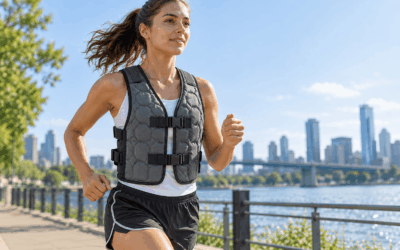
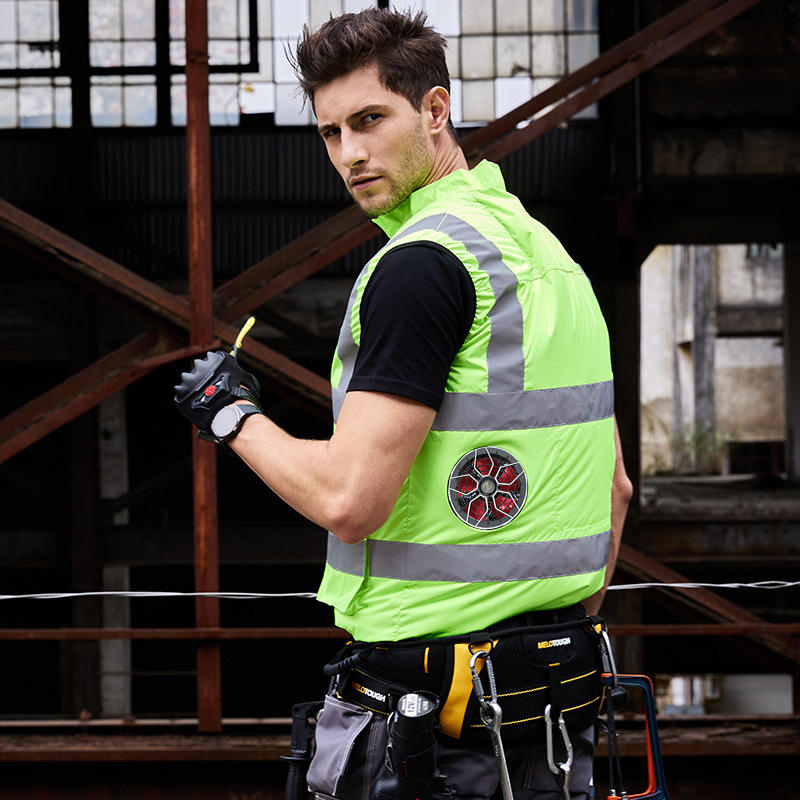
Every summer, heatstroke, fatigue, and safety accidents caused by high temperatures are among the most common problems on construction sites. Therefore, more and more construction teams are beginning to include cooling vests as part of their personal protective equipment (PPE), rather than just temporary items for hot weather.
However, not all cooling vests are created equal. Some rely on moisture evaporation for cooling, some use PCM phase change materials, and others use ice packs or water circulation technology. Choosing the wrong product can not only have limited cooling effects but may also affect work efficiency. This article will guide you through the working principles of several mainstream cooling technologies, the suitable working environments for each, and how to choose the most suitable cooling vest based on your actual needs, helping workers stay comfortable, safe, and efficient throughout the summer.
Why is heat stress more prevalent on construction sites?
According to OSHA (Occupational Safety and Health Administration), construction workers are 13 times more likely to die from heat-related illnesses than workers in other industries. In the United States alone, 285 construction workers died from heat stress between 1992 and 2017, and this problem has not significantly improved in recent years.
Approximately 73% of construction workers perform strenuous physical labor outdoors, exposed to intense sunlight for extended periods with little to no shade or air conditioning. The incidence of workplace injuries rises significantly, especially during the hot summer months, with studies showing an increase of about 17.4%. Roofing and road construction workers face the highest risk of heat exposure.
Further complicates matters, construction workers typically wear personal protective equipment (PPE) such as helmets, protective clothing, and gloves. While this equipment reduces operational risks, it also hinders heat dissipation, making it harder for sweat to evaporate and further exacerbating heat stress in hot weather.
If cooling measures are not taken in time, heat stress often worsens gradually. Therefore, for the construction industry, effective high-temperature protection and prevention of heatstroke are not only related to work efficiency, but also crucial measures to ensure the safety and health of workers.
How Does a Cooling Vest Work: 4 Core Technologies Compared
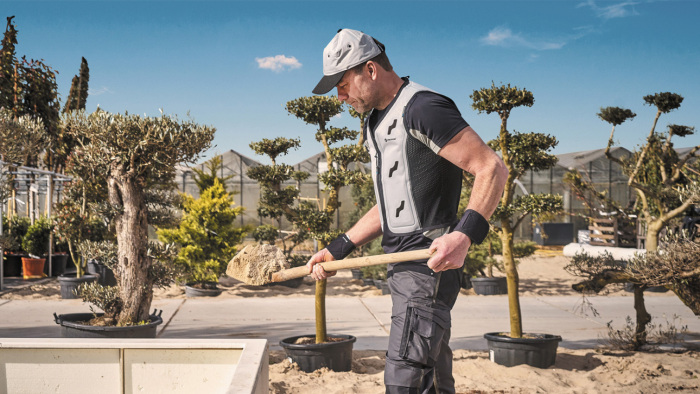
Currently, cooling vests on the market mainly fall into four technological categories, each with different cooling principles, applicable environments, and user experiences. Choosing the wrong vest without considering your actual work environment may not only fail to achieve the desired cooling effect but also increase purchase costs.
1. Evaporative Cooling Vest
Evaporative cooling vests utilize water evaporation to remove body heat and achieve cooling. Simply immerse the vest in water for about 1 minute, wring it out gently, and it’s ready to wear. No batteries or pre-freezing are required.
In dry, well-ventilated environments, a single immersion typically provides 1-4 hours of cooling; products using high-performance fabrics like HyperKewl can even provide 5-10 hours under suitable conditions. During use, the skin surface temperature is generally 3-10°C lower than the ambient temperature, providing a consistently cool but not excessively cold wearing experience.
However, it is relatively sensitive to ambient humidity. When air humidity exceeds 80%, the evaporation rate decreases significantly, affecting the cooling effect. Therefore, these products are more suitable for work environments with relative humidity below 60% and good air circulation.
2. PCM Phase Change Cooling Vest
PCM cooling vests absorb body heat through phase change materials, maintaining a relatively stable cooling experience near a fixed phase change temperature, thus providing a more consistent cooling experience that is virtually unaffected by air humidity.
Currently, the common phase change temperature of PCM is 13–18°C (55–65°F). A single PCM module typically operates continuously for 2–3 hours, with some high-capacity products exceeding 4 hours. After use, it needs to be placed in a freezer for 2–4 hours before reuse.
To ensure cooling duration, a PCM vest typically contains 8–24 phase change modules, with a total weight of approximately 1–2 kg. Therefore, it is more suitable for work scenarios requiring prolonged wear and high comfort levels.
3. Ice & Gel Pack Cooling Vest
Ice pack cooling vests utilize ice packs or gel packs to directly absorb body heat, offering the fastest cooling effect among various options.
A single freezing application typically lasts 2-4 hours, requiring 8-12 hours of freezing before reuse. Because ice packs are usually close to 0°C or lower, they provide strong cooling in a short time, but also increase overall weight, typically weighing 1.5-3 kg per vest. Prolonged direct contact with the body may cause localized overcooling or condensation.
Therefore, this type of product is more suitable for scenarios requiring rapid cooling, such as firefighter recovery areas, chemical protective operations, and high-temperature emergency rescue.
4. Fan Cooling Vest
Fan cooling vests use a built-in fan to continuously deliver air into the vest, accelerating sweat evaporation and airflow to help dissipate heat. Some products also incorporate a ducting structure to distribute cool air more evenly around the torso.
When fully charged, most products can operate continuously for 4-8 hours, with a charging time of approximately 2-4 hours, and support 3-5 fan speed settings. Unlike PCM or ice packs, it provides continuous cooling as long as the battery powers it, without gradually losing its cooling effect over time.
How to choose the right cooling technology for you?
No single cooling vest is suitable for everyone; the key is to consider the actual usage environment.
For example, in hot, dry areas like Arizona, evaporative cooling vests often perform well; while in hot, humid environments like Florida, the same product may not be as effective, in which case PCM or fan-cooled vests are usually better choices.
When choosing a cooling vest, don’t just focus on product claims; you need to first consider your working environment, climate conditions, and continuous operating time, and then choose the cooling technology that is truly suitable.
Which Cooling Vest is Suitable for Different Work Environments?

No single cooling vest is suitable for all work environments. Compared to product specifications, the work location, climate conditions, and work methods often determine the true effectiveness of any cooling technology.
Dry and Hot Outdoor Environments: Roofing Construction, Road Construction
For outdoor work such as roofing construction and road maintenance, where workers are exposed to sunlight for extended periods, evaporative cooling vests are typically a more economical and practical choice.
These work environments generally have good air circulation and low humidity, allowing evaporative cooling technology to fully realize its advantages. Under normal use, a single immersion can provide cooling for several hours; when needed, it only requires re-immersion for 1-3 minutes for continued use, resulting in very low long-term operating costs.
High Humidity or Enclosed Spaces: Tunnels, Basements, Foundry Workshops
In environments with high humidity and almost no natural wind, PCM phase change cooling vests are generally more stable than evaporative cooling vests.
Because PCM relies on phase change heat absorption, it is not affected by humidity or airflow. It can maintain a comfortable cooling temperature of approximately 18–24°C, without the excessive cold discomfort of ice packs.
A single PCM module typically lasts for 2–3 hours. However, this time may be shorter if there are high-temperature heat sources nearby, such as furnaces. After use, it can be reused simply by recooling it in a refrigeration unit.
For workers in tunnel construction, foundries, chemical workshops, and those who need to wear cooling equipment under fire-fighting or flame-retardant clothing, PCM is generally a more reliable choice.
Short-duration high-temperature work: Welding, asphalt paving
If the working environment is extremely hot, but the work session only lasts for a few tens of minutes, an ice pack cooling vest can provide the fastest cooling effect.
For example, in jobs such as welding and asphalt paving, the ambient temperature may reach 45–60°C. Rather than wearing it continuously for extended periods, it is recommended to prepare multiple ice packs for rotation. This maintains a good cooling effect while avoiding localized skin discomfort caused by sustained low temperatures. To prevent frostbite, ice packs should not be in direct contact with the skin; it’s best to have a layer of clothing in between as a barrier.
Indoor environments with a stable power supply: warehouses, factories
For workplaces like warehouses and factories where charging or battery replacement is convenient, fan-cooled vests are often more advantageous.
Built-in fans continuously promote airflow, helping sweat evaporate and maintaining good heat dissipation even in environments with 40%–60% relative humidity. Generally, one battery can provide 4–8 hours of continuous operation, meeting the needs of most shifts.
Therefore, in high-temperature indoor environments such as injection molding workshops, logistics sorting centers, and assembly workshops, fan-cooled vests typically balance comfort and battery life.
Construction Cooling Vest Selection Criteria: 5 Key Factors
Five key factors determine the success or failure of your cooling vest purchase. Please read the following carefully before buying.
Climate and Construction Environment
First, check the humidity. When relative humidity is above 60%, evaporative cooling performance decreases by approximately 45%. Enclosed spaces, basements, and concrete interiors require cooling vests powered by phase change materials (PCM), ice packs, or fans. Dry, directly sunny locations, such as rooftops and metal structures, are better suited for evaporative or ice pack cooling vests. For locations with prolonged exposure to sunlight, choose a model with a rated continuous cooling time of 3-4 hours.
Job Content and Physical Exertion
Heavy physical labor (such as rebar work, demolition, and material handling) requires lightweight equipment. To avoid additional fatigue, keep the total system weight (vest plus cooling liner) below 2 kg. For frequent bending, climbing, or working in confined spaces, choose lightweight, discreet cooling vests without a hard shell. For lighter, intermittent work, slightly larger cooling vests with longer operating times are acceptable.
High Visibility and Safety Compliance
Verify that the label complies with ANSI/ISEA 107-2015, 107-2020, or 207-2011 standards. Avoid using generic “high visibility” labels. For Canadian or cross-border projects, also verify compliance with CSA high visibility standards. Wear a safety harness during testing.
Cooling Duration and Charging Method
Cooling duration should match shift length. Some vests only last 30 minutes, high-quality products can last 3-4 hours, and some PCM/ice cooling systems can last 8-12 hours. If workers only have lunch breaks to recharge, choose replaceable PCMs or ice packs. If power is available, battery-powered fans are more effective.
Comfort and Personal Protective Equipment Compatibility
During testing, wear a helmet, safety belt, tool belt, and high-visibility jacket, and perform actions such as raising your arms, bending over, and squatting. If your shoulders feel constricted or the belt does not fit smoothly, it is not recommended to purchase this product. Durable fabrics like 600D polyester, PEVA, and TPU are more resistant to dust and abrasion.
Ice Cooling Vest vs PCM vs Evaporative: Side-by-Side Comparison
Lab data settles the debate faster than marketing copy ever could.
|
Metric |
Ice Pack Vest |
PCM Vest |
Evaporative Vest |
|---|---|---|---|
|
Cooling duration |
60–90 min per freeze |
1.5–4 hr (avg. 2–3 hr) |
1–4 hr per soak |
|
Peak cooling power |
Strongest short-burst |
~65 W/m² |
37–43 W/m² |
|
8-hr cooling capacity |
Not standardized |
164 W·h/m² |
97–113 W·h/m² |
|
Skin temp reduction (120 min) |
High, but uneven |
1.5°C average |
~0.2°C average |
|
Initial cost |
Lowest |
Highest |
Lowest to low |
|
Humidity sensitivity |
None |
None |
Severe drop above 60% RH |
During an 8-hour shift, PCM vests provide approximately 45% more cooling than evaporative cooling fabrics. In defense clothing trials, this translates to a 1.5°C reduction in core skin temperature compared to water-based vests, which only reduced it by 0.2°C—in temperatures of 100°F (approximately 38°C).
In terms of cost, ice is the cheapest option, and evaporative cooling systems have the lowest operating costs, with PCM offering an advantage in both. For small teams with access to cooling equipment and short, high-intensity workdays, ice packs offer a better return on investment—each worker requires 2-3 ice packs for an 8-hour shift. For large facilities without cold chain infrastructure, evaporative vests can save 30-40% in capital expenditure compared to PCM vests.
High-Visibility Cooling Vests: Why is ANSI/CSA Certification Important?
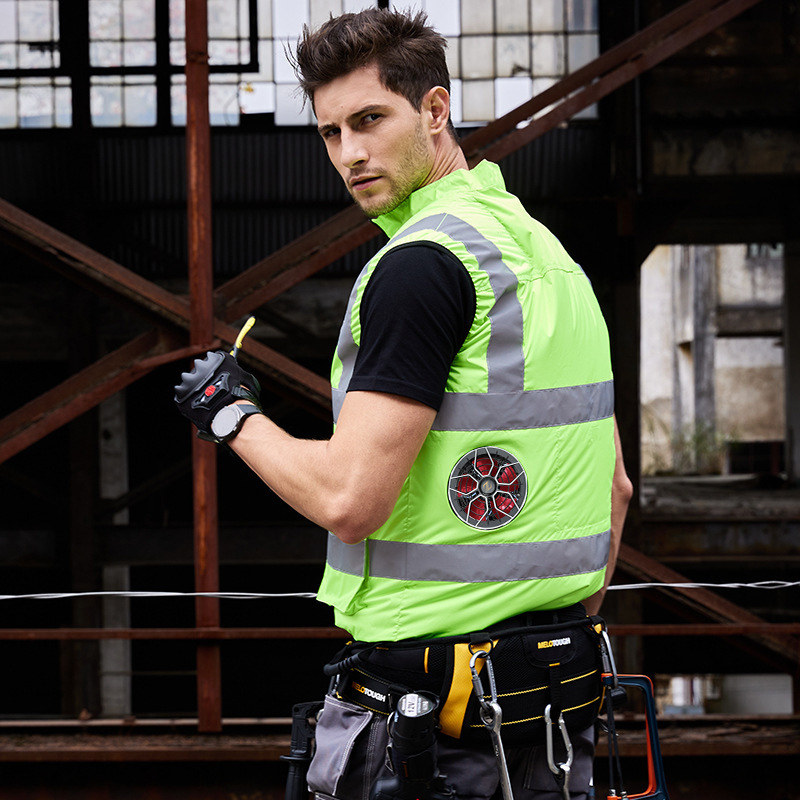
For many construction sites, cooling performance is just the basic requirement; meeting safety standards is a prerequisite for entering the construction site.
In the United States, most road construction and building sites require workers to wear high-visibility clothing that meets ANSI/ISEA 107 Type R Class 2 standards. This standard primarily applies to construction environments where vehicles travel at speeds exceeding 25 mph (approximately 40 km/h), and it has specific requirements regarding the area of fluorescent fabric, reflective strips, and 360° visibility. Common compliant colors include fluorescent yellow-green, fluorescent orange-red, and fluorescent red; ordinary cotton vests do not meet these requirements.
If the project is located in Canada, it is also necessary to check whether the product meets CSA Z96-22 Class 2 Level 2 standards. Many products that meet ANSI standards also meet CSA requirements, but when purchasing for cross-border projects, it is best to confirm that the product label indicates both certifications.
Besides cooling performance, what else should you consider when purchasing? For engineering procurement personnel, it’s more important to focus on whether products truly meet construction requirements than simply comparing prices.
For example, reflective strips should meet the relevant performance requirements of ASTM E810, and it’s crucial to ensure that seams, zippers, and other structural elements do not affect the overall reflective effect. Cooling systems should not obstruct reflective areas or reduce visibility by adding ducts, PCM modules, or fans.
For OEM/ODM customized projects, it’s also advisable to confirm in advance whether the product can provide the corresponding certifications, test reports, and high-visibility color schemes required by the target market’s regulations. This not only meets project acceptance requirements but also reduces subsequent compliance risks.
How to Properly Use and Maintain a Cooling Vest?
Choosing the right cooling vest is only the first step; proper use and maintenance also affect the actual cooling effect and product lifespan.
Different types of cooling vests require different preparation methods before use. For evaporative cooling vests, soak them in water for about 15 minutes for the first time to allow the internal absorbent material to fully absorb water, then gently wring out the excess water. If the internal gel hardens or crystallizes after a period of use, soak them again for 5-10 minutes; if they are completely dry, soak them again to reactivate them.
PCM cooling vests require pre-cooling. Generally, freeze the PCM module for about 30-40 minutes or refrigerate it for at least 60 minutes, ensuring it is completely solidified before inserting it into the vest. When the PCM gradually melts into a liquid state, it means it needs to be re-cooled.
Wearing time also affects the experience. It is best to put on the vest 10-20 minutes before entering a high-temperature environment to allow the body to enter a cooling state in advance. Regarding size, it should fit snugly around the chest and back, but not too tightly, to avoid restricting movement and heat dissipation.
For daily cleaning, the outer layer of the vest can be hand-washed in cold water with a mild detergent. However, cooling modules such as PCM and gel are generally not recommended for machine washing or tumble drying; simply wipe them with a damp cloth. When not in use for extended periods, thoroughly air dry and store in a cool, shaded place, avoiding direct sunlight, mold, or material aging.
Finally, it’s important to note that a cooling vest is only one part of high-temperature protection and not a replacement for other heatstroke prevention measures. Even while wearing cooling gear, it’s still essential to stay hydrated, take adequate rest, and utilize shaded areas to minimize heat exposure when working in high-temperature environments.
Recommended Cooling Vests for Construction Workers in 2026
No single cooling vest is suitable for all construction environments. Different job duties, climate conditions, and working hours require different cooling methods. Below are recommended solutions for several common construction scenarios.
Daily Outdoor Construction: ICEBEAR Evaporative Cooling Vest
For daily outdoor work such as construction, road maintenance, and landscaping, evaporative cooling vests are usually the most cost-effective choice.
High-Temperature Heavy-Duty Operations: ICEBEAR PCM Cooling Vest
For high-temperature operations such as rebar tying, concrete pouring, steel structure installation, and welding, PCM cooling vests provide a more stable cooling experience.
ICEBEAR PCM modules typically operate continuously for approximately 2-4 hours, and by replacing with spare modules, they can meet the needs of 6-8 hours of continuous operation. Because the cooling effect is not affected by air humidity, it is particularly suitable for high-temperature, high-humidity working environments or where PPE is worn.
Road Construction and Municipal Engineering: ICEBEAR High-Visibility Cooling Vest
In scenarios such as road construction and municipal maintenance where both cooling and safety warnings are crucial, a high-visibility cooling vest is a superior choice.
The ICEBEAR high-visibility series features fluorescent fabric and reflective strips, enhancing worker visibility in vehicular environments while maintaining effective cooling. OEM/ODM customization options compliant with standards such as ANSI/ISEA 107 or EN ISO 20471 are available to meet project requirements.
Construction Environments Requiring Frequent Movement: ICEBEAR Lightweight Cooling Vest
For jobs requiring frequent climbing and movement, such as scaffolding work, working at heights, and equipment installation, comfort is equally important.
The ICEBEAR lightweight evaporative cooling vest uses lightweight fabric, reducing overall weight while maintaining effective cooling. It is more suitable for extended wear without significantly hindering movement or range of motion.
Prolonged High-Temperature Operations: ICEBEAR Hybrid Cooling Vest
For continuous exposure to summer heat and a desire for both rapid cooling and extended operating time, the ICEBEAR hybrid cooling solution is the ideal choice.
This product combines PCM phase change technology with evaporative cooling technology. For the first 1-2 hours of operation, the PCM module rapidly absorbs body heat, effectively handling the hottest part of the day. As the PCM completes its phase change, the evaporative cooling system continues to function, extending the overall cooling time to 8-10 hours.
For convenient continuous operation, the PCM module allows for quick replacement, typically taking only 30-60 seconds without removing the vest. ICEBEAR has also optimized the module layout for key heat dissipation areas such as the chest and upper back. In high-temperature environments of 35-40°C, compared to a uniformly distributed design, this further improves overall cooling efficiency, making extended outdoor work more comfortable.
Summary
High temperatures won’t stop because of construction progress; therefore, high-temperature protection should not be neglected.
This article should have helped you understand the working principles of several mainstream cooling technologies, such as evaporative cooling vests, PCM phase change cooling vests, and ice pack cooling vests, as well as their suitable application scenarios. For the construction industry, no single product is suitable for all environments. The key is to choose the most appropriate cooling solution based on climate conditions, job content, continuous working time, and personal protective needs.
If you are looking for professional cooling solutions for industries such as construction, road maintenance, steel smelting, and logistics warehousing, please learn more about ICEBEAR’s building cooling product series. We offer a variety of products including evaporative cooling, PCM phase change cooling, fan cooling, and ice pack cooling, and support OEM/ODM customization, providing personalized solutions based on different national and project requirements.
Whether you are a brand owner, distributor, or engineering project procurement team, please contact us for product catalogs, samples, or professional selection advice. We will help you find the cooling solution best suited to your specific application scenarios.