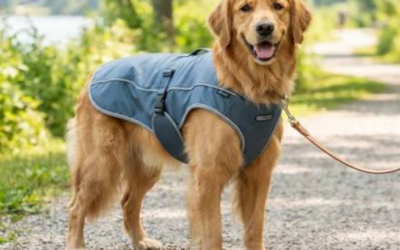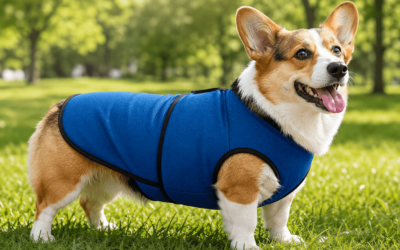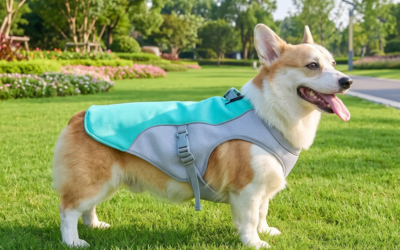
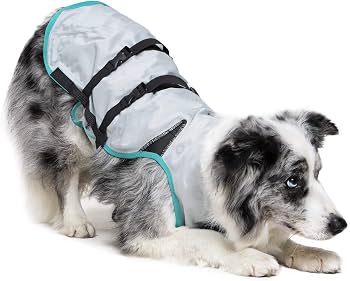
Your dog lies panting on the cool floor, while you hold a cooling vest costing tens of dollars. You might be thinking: Does this thing really work? Or is it just a marketing gimmick?
In fact, this is a common question many pet owners face in the summer. The answer is: cooling vests for dogs can indeed help lower their body temperature, but their effectiveness depends on the environment and how the product works.
Most cooling vests for dogs use the principle of evaporative cooling, where the evaporation of moisture carries away heat, helping to lower the dog’s surface temperature. In dry, well-ventilated environments, it can be an effective aid for outdoor activities in summer; however, if the environment is humid and stuffy, its cooling effect may be significantly reduced.
Simply put, choosing the right environment and method of use can help your dog stay more comfortable in hot weather; but if used in the wrong setting, it might just become a wet and heavy garment.
Do dog cooling vests really lower a dog’s temperature?
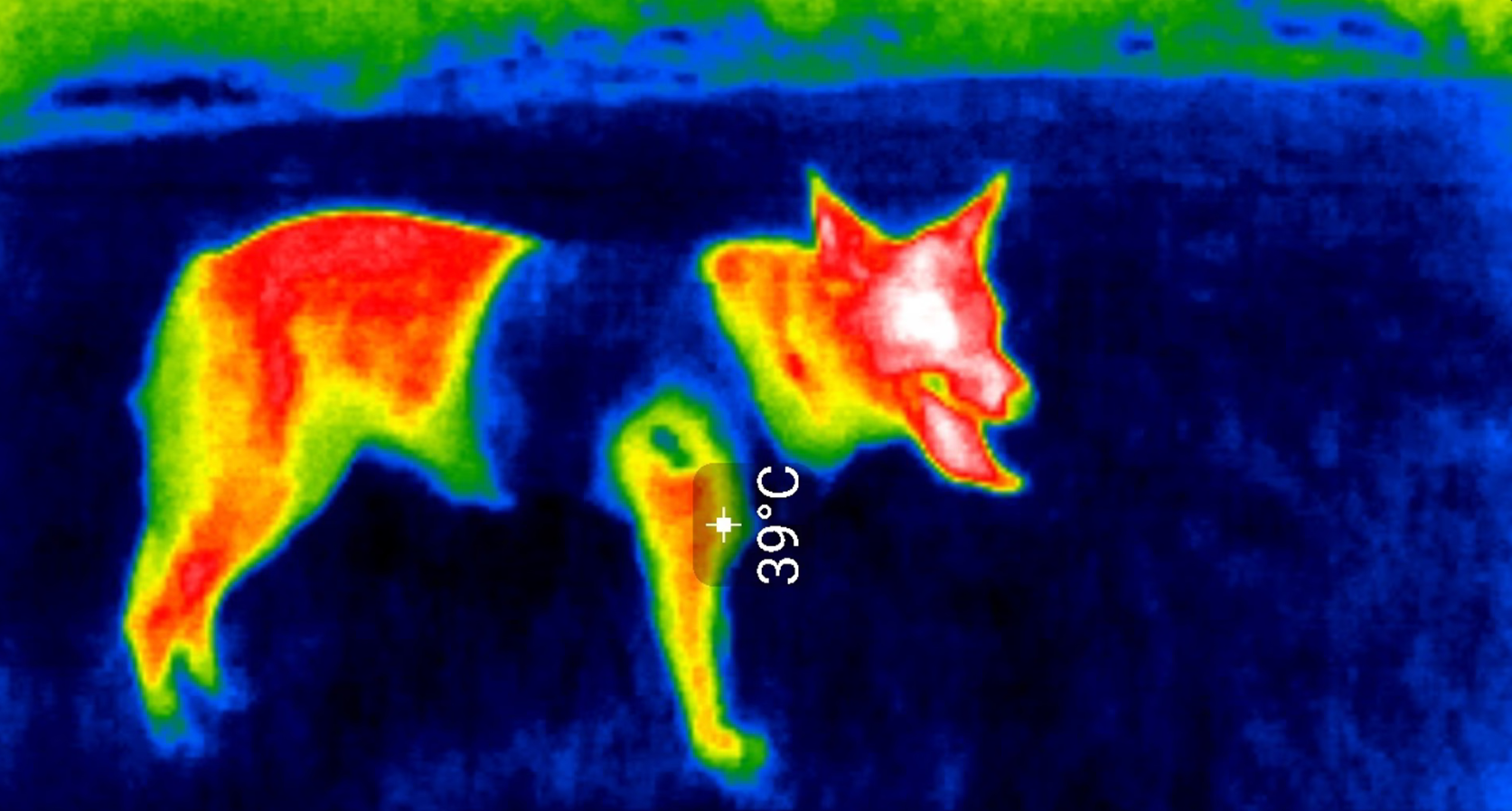
The answer is: yes, but don’t expect them to cool you down as quickly as an air conditioner.
Some tests and studies have shown that evaporative cooling vests can lower a dog’s surface temperature, but the actual effect is affected by factors such as weather, humidity, and exercise intensity.
For example:
Some infrared tests have found that the surface temperature of the fur in areas wearing evaporative cooling vests is several degrees lower than in uncovered areas, especially in dry, windy environments.
In an outdoor test, Labradors wearing cooling vests experienced a decrease in skin temperature of about 5°F (about 2.8°C) after exercise, while dogs not wearing vests showed an increase in skin temperature.
Other tests have also found that dogs wearing cooling vests recover to normal body temperature faster after exercise.
Overall, under suitable conditions, evaporative cooling vests for dogs can generally help lower skin temperature by about 4–6°F (2–3°C) and provide some support for core body temperature.
However, the key lies in the “right conditions.”
In dry outdoor environments, such as hiking, camping, or long walks, moisture evaporates quickly, resulting in a more noticeable cooling effect. But in high-humidity, poorly ventilated environments, moisture cannot evaporate effectively, and the vest may remain damp, limiting its cooling effect.
Therefore, a dog cooling vest is not a panacea, but in the right environment and with the right usage, it can indeed be an effective way to help pets safely get through the summer heat.
How do dog cooling vests work?
It looks like just a wet vest, but the cooling principle behind it actually comes from simple physics.
There are currently three main types of dog cooling vests on the market, and different technologies work in different ways. Only by understanding their differences can you decide which one is more suitable for your dog.
Three common cooling methods include:
-
Evaporative Cooling Vest: The most common type, which stores water through a water-absorbent layer and then uses the water to evaporate to remove heat.
-
Ice pack/PCM cooling vest (Gel/Ice Insert & PCM Vest): Absorbs heat through frozen ice packs or phase change materials to provide continuous cooling.
-
Reflective Fabric Vest: Use special fabric to reduce solar heat absorption and reduce the heat load on the body.
How does evaporative cooling work?
Most dog cooling vests use the principle of evaporative cooling.
As your dog’s body loses heat, the heat is transferred to the absorbent layer on the inside of the vest. As the outer layer of water evaporates, heat is removed with it, helping to lower the surface temperature of the body.
This process is similar to human sweating to cool down, except that dogs don’t sweat a lot through their skin like humans. They mainly rely on panting to dissipate heat. Therefore, the cooling vest is equivalent to helping the dog add an additional way to dissipate heat.
Among them, the absorbent material of the vest is very important. Some highly absorbent fabrics can store large amounts of moisture, allowing it to be released more slowly and continuously, thereby extending the cooling time. At the same time, some products will also add anti-UV fabrics to reduce the heat caused by direct sunlight.
Why is air movement important?
Whether the evaporative cooling effect is good or not depends on the air.
After the water evaporates, it needs to be carried away by the air. If there is no wind in the environment, or the air humidity is high, a layer of moist air will easily form on the surface of the vest, the evaporation rate of water will slow down, and the cooling effect will also decrease.
This is why the same cooling vest that works well in a dry, breezy outdoor environment may just add an extra layer of wet clothing to your dog in hot and humid weather.
What are the differences between the other two cooling technologies?
Ice packs and PCM (phase change material) cooling vests do not rely on water evaporation; instead, they directly absorb heat through low-temperature materials.
Ice packs cool quickly, providing a noticeable cooling sensation in a short time. PCM, on the other hand, maintains its temperature within a set range, making it more stable and less prone to the problem of ice packs becoming too cold initially and then quickly losing their effectiveness. Therefore, in high-humidity environments with poor air circulation, these products are generally more advantageous than evaporative cooling vests.
Reflective cooling vests take a different approach—instead of removing heat, they reduce the amount of heat entering the body. They typically use light-colored, UV-protective materials to reduce solar radiation absorption and are often used in conjunction with other cooling technologies.
How to Scientifically Test the Effectiveness of Dog Cooling Vests?
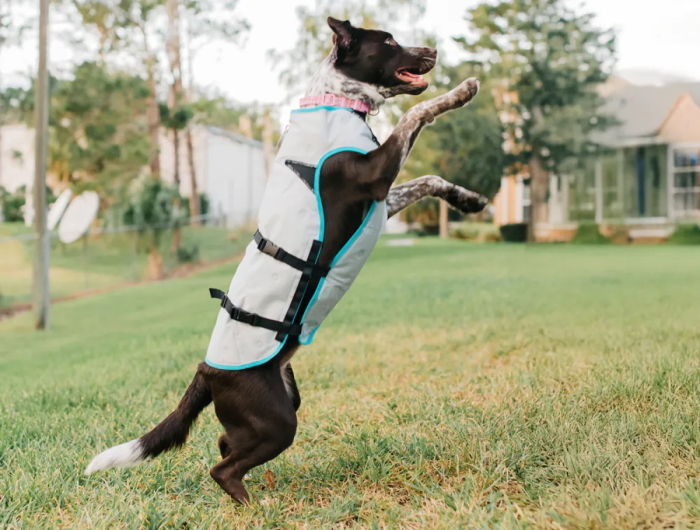
There are many online tests and user reviews about the effectiveness of dog cooling vests, but a simple demonstration video cannot fully represent the actual effect. Truly valuable tests require controlling for more variables, such as ambient temperature, humidity, wind speed, and the dog’s own condition.
In more rigorous tests, researchers typically select multiple dogs for testing, rather than observing the performance of just one dog. They also record temperature and humidity under fixed environmental conditions and keep the dogs in a stable state before putting on the cooling vest, then compare the temperature changes in the covered and uncovered areas.
Some test results show that after wearing an evaporative cooling vest, the skin temperature in the covered area can decrease by an average of about 2.5°C, while the decrease in the uncovered area is about 0.8°C. This indicates that the cooling vest does provide a measurable cooling effect, but it is not a magic device that instantly “cools” dogs.
Currently, most research on dog cooling vests is still small-scale testing, rather than long-term medical studies with large sample sizes. Therefore, existing data demonstrates that it can help lower skin temperature and improve comfort, but further research is needed to verify its effectiveness in reducing the incidence of heatstroke, its long-term health effects, and its performance in extreme heat environments.
For pet owners, it’s crucial to understand that the effectiveness of cooling vests is highly dependent on the environment.
For example, in dry weather with 35°C and 40% humidity, evaporative cooling works well because the air can still absorb moisture released from the vest. However, in humid weather with 32°C and humidity exceeding 80%, the air is nearly saturated, making it difficult for moisture to evaporate further, and the cooling effect of the same vest will significantly decrease.
Therefore, cooling vests for dogs are not a “one-size-fits-all” alternative to heat protection measures, but rather an auxiliary tool that, when used correctly in the right environment and according to the proper method, helps dogs reduce heat stress and improve outdoor comfort.
When are cooling vests most useful for dogs?

Not every hot day requires a cooling vest for your dog. Whether it’s worth buying depends on several factors: your local climate, your dog’s breed, and the type of outdoor activity.
Climate is more important than temperature numbers
Many people believe that the hotter the weather, the more effective the cooling vest will be, but in reality, air humidity is the key factor affecting evaporative cooling.
In dry, hot environments, such as areas with humidity below 40%–50%, evaporative cooling vests usually work best. With some air movement, such as when the dog is walking, playing outdoors, or in a light breeze, the vest’s surface temperature can drop significantly, providing comfort for approximately 1–4 hours.
However, in high humidity environments, especially above 70%, the rate of moisture evaporation slows down considerably. The vest may simply remain damp without effectively dissipating heat. In such cases, PCM or ice pack cooling vests are usually more suitable because they do not rely on air evaporation.
Dog breeds also affect their cooling needs
Different dog breeds have significantly different tolerances to high temperatures.
Brachycephalic breeds like Pugs, French Bulldogs, and English Bulldogs are more susceptible to heat stress due to their weaker respiratory cooling abilities. Even at temperatures around 24-27°C, they may experience noticeable heat stress. Therefore, for these dogs, using cooling gear 15-30 minutes before going out is often more effective than cooling them down during exercise.
For breeds with thick coats, such as Huskies and Alaskan Malamutes, cooling vests can help reduce heat stress during extended walks in dry environments, especially suitable for 30-60 minute outdoor activities.
For energetic working or sporting dogs with high activity levels, cooling vests are more suitable as a pre- and post-exercise aid. For example, they can help cool them down before exercise and aid in recovery afterward.
Different activities require different cooling methods
Short walks (approximately 10-30 minutes) usually don’t require complex cooling equipment. In dry weather, a simply damp evaporative cooling vest is sufficient.
However, for outdoor activities in humid areas, or if a more stable cooling effect is desired, consider PCM (Polymerized Thermal Mass) or ice packs. These provide a more sustained cooling effect and are more suitable for longer outdoor activities.
In short, in dry, windy weather, evaporative cooling vests are generally an economical and practical choice; in humid and stuffy environments, cooling technologies unaffected by humidity, such as PCM or ice packs, are more necessary.
Choosing the right cooling method is more important than simply buying the “coolest” product.
What are the limitations of dog cooling vests?
While dog cooling vests can indeed help reduce heat stress, they are not a universal solution for all situations. Understanding their limitations is crucial to avoid an unsatisfactory experience after purchase.
High humidity environments affect evaporative cooling effectiveness
For most evaporative cooling vests, humidity is the biggest factor affecting their effectiveness.
These products rely on the evaporation of moisture to remove heat, therefore requiring air that can absorb the released moisture. In hot, humid, and windless environments, the moisture cannot evaporate quickly, and the vest may simply remain damp without effectively dissipating heat.
In such cases, the dog may feel more like wearing a damp garment than a clear cooling solution. Therefore, if living in a hot and humid area, when choosing a cooling vest, don’t just focus on the advertised cooling data; consider whether the local climate is suitable for evaporative cooling technology.
Cooling vests cannot replace medical cooling
It’s important to understand that cooling vests are primarily for preventing and alleviating heat stress, not for treating heatstroke.
Studies show that in cases of severe heatstroke, cooling vests are far less effective at lowering body temperature than professional first-aid methods such as immersion in cold water. Therefore, if a dog is already exhibiting symptoms of heatstroke such as severe panting, altered mental status, or inability to stand, a cooling vest alone is insufficient; immediate professional cooling measures and veterinary assistance are necessary.
In other words, cooling vests can help dogs stay more comfortable in hot weather, but they cannot replace emergency medical treatment.
Cooling time is not unlimited
Any cooling product has a limited lifespan.
Evaporative cooling vests lose effectiveness as moisture evaporates; PCM or ice packs gradually return to normal temperature as the cooling effect dissipates. Some tests show that the actual effective cooling time is typically around 1-2 hours, depending on the weather, activity level, and product design.
Once the cooling effect wears off, the vest’s weight and moisture may actually negatively impact comfort. Therefore, for extended outdoor activities, it’s necessary to schedule reactivation, replacement of cooling modules, or rest periods appropriately.
User experience also affects actual effectiveness
Besides cooling ability, many user feedback issues stem from daily use.
For example, some products may be too heavy, ill-fitting, difficult to clean, or restrict movement. Ice pack vests may also experience uneven cooling if the internal cooling packs are not properly positioned, resulting in some areas being too cold while others remain undercooled.
Therefore, when choosing a product, in addition to focusing on cooling effectiveness, it’s also necessary to consider the dog’s size, activity habits, and wearing comfort.
During strenuous exercise, any cooling gear has its limits
During prolonged running, intense play, or continuous exercise, the amount of heat generated by a dog’s own body may exceed the heat that a cooling vest can remove.
While cooling vests can help slow the rise in body temperature, they cannot completely prevent heat buildup. Especially in extremely hot and humid environments, adequate hydration, proper rest, and avoiding prolonged sun exposure remain the most important measures to protect your dog’s safety.
How to Use a Dog Cooling Vest Correctly?
A dog cooling vest doesn’t automatically lower body temperature; proper use determines its effectiveness.
Soaking Method is Crucial
When using an evaporative cooling vest, it’s recommended to soak it thoroughly in clean water first. Place the vest in cool water for about 5-10 minutes to allow the absorbent layer to fully absorb water. Do not use salt water, as salt may affect the absorbent material’s performance.
After soaking, gently wring out excess water from top to bottom, keeping the vest damp but not dripping. A simple way to check is to hang the vest up for a few seconds; if no obvious water drips, it’s generally usable.
To remove excess water faster, you can also gently wrap it in a dry towel for about 30-60 seconds.
Proper Fit is Essential for Effectiveness
The cooling vest needs to fit snugly against the dog’s body to better transfer heat, but it shouldn’t be too tight to restrict movement.
A simple “two-finger test” can be used: place your fingers between the vest and your dog’s body, maintaining a space of approximately 1.5–2 cm. Too tight will affect comfort and movement, while too loose will reduce the cooling effect because the vest cannot effectively contact the body.
Observe the dog’s condition during use.
Don’t judge the effectiveness of cooling solely by the time; the dog’s own condition is more important.
In an environment of 30–35°C, check the vest’s condition approximately every 20–30 minutes. If the vest is still damp and feels cool to the touch, it is still working; if it has dried and become warm, the moisture has mostly evaporated and it needs to be reactivated.
In high-temperature environments exceeding 35°C, or if the dog is exposed to direct sunlight for extended periods, more frequent checks are necessary.
When should you stop using it?
Cooling vests are suitable for helping dogs reduce heat stress, but they cannot replace emergency treatment.
If you notice your dog panting heavily and persistently, its tongue becoming noticeably darker, its movements becoming sluggish, or its mental state becoming abnormal, do not continue to rely on the cooling vest. In this situation, immediately move the dog to a cool, shaded area, provide it with water, and seek veterinary help if necessary.
While a cooling vest can be an effective aid during summer outdoor activities when used correctly, observing the dog’s condition is always more important than relying on any cooling gear.
Buying Guide: How to Choose a Cooling Vest for Your Dog
The best cooling vest for your dog should be tailored to the actual climate of your area.
Consider the climate first, then the function. If you live in a dry area, an evaporative cooling vest is your best choice. If you live in a humid and hot area, the evaporation rate will be much slower. In this case, you should pay attention to the vest’s coverage, fit, and how often it needs to be re-soaked. Gel or phase-change vests don’t need to be soaked at all and can cool quickly, but the product information must clearly state the duration of cooling and how to refill the coolant.
Four Key Factors to Distinguish Between a Good and a Bad Vest
Breathable Outer Fabric. Mesh or lightweight fabrics allow moisture to evaporate; while heavy fabrics trap moisture.
Adjustable Buckles. There should be at least two adjustment points, such as the chest, neck, or abdomen, otherwise the vest will shift during walking.
Clever Coverage Design. Coverage on the back and sides, with open shoulders, is much better than a vest that wraps the dog up like a burrito. Quick-drying. If the product page doesn’t mention “quick-drying” or “drying completely,” washing it at home might be more troublesome.
For hiking and sunny days, in addition to breathability, prioritize UV50 protection. If you need to cool down briefly indoors, you can use a gel pack, but always check for leaks and contact with skin first.
Warning Signs to Watch Out For
Any product claiming to “prevent heatstroke” or “safe in extreme heat” is over-hyped. Vests can improve comfort, but they cannot replace sun protection, water, or veterinary care. Be wary of products that lack a size chart, fabric details, and care information.
Cooling Vests vs. Other Cooling Solutions
Cooling vests and cooling mats address two different problems. One moves with the dog, the other doesn’t.
The coverage and working principles are different from the start. Vests cover approximately 30-50% of a dog’s body—chest, back, and sides—and cool through evaporation, meaning they work best in well-ventilated areas. Cooling pads cover a smaller area, about 20-40% of the body surface, and cool through direct contact with a gel or phase change layer. Dogs simply need to lie down; no wind or water is required.
Duration is key. Evaporative vests can provide cooling for 1-4 hours, depending on humidity. Gel or cooling vests cool faster, typically returning to room temperature after 30-60 minutes. Cooling pads last 1-3 hours, but this duration will be shorter if exposed to direct sunlight.
Where Each One Wins
|
Scenario |
Vest |
Mat |
|---|---|---|
|
Outdoor walk, dry + breezy |
Skin temp drops 2–5°C, strong effect |
Useless while moving |
|
High humidity (70%+ RH) |
Weak, may trap heat |
Still works in shade |
|
Indoor rest, 26–30°C |
Overkill, soaks furniture |
Best option, passive cooling |
|
Senior or brachycephalic dogs |
Some refuse to wear it |
Preferred, no restraint needed |
The safety risks also vary. Vaporizing vests rarely make dogs too cold, but in humid, still air, a soaked vest stops evaporating and can actually act as insulation. Pads offer a gentler cooling effect, and their cooling effect gradually diminishes as the gel temperature reaches room temperature, so excessive cold is rare.
Bags and collars cover a smaller area—only 5% to 10% of the body surface area—and primarily provide localized comfort rather than measurable cooling. In truly hot environments, they cannot replace vests and should only be used as supplementary measures.
Conclusion
Dog cooling vests can indeed be effective, but only if the correct technology, size, and environment are chosen.
The principle of evaporative cooling is real and effective, not just a marketing concept. However, if the vest isn’t fully activated, the size is unsuitable, or the environment isn’t conducive to evaporative cooling, it may not achieve the desired effect.
When choosing a cooling vest, it’s necessary to consider the dog’s coat type, body type, activity habits, and local climate conditions. For everyday home use, cooling mats or other cooling products may be more suitable.
The truly effective cooling solution isn’t choosing the “coolest” product, but rather the one that best meets the dog’s actual needs.
This is also the direction ICEBEAR has always focused on—providing more suitable solutions for different pet scenarios through various cooling technologies. Whether it’s daily walks, outdoor exercise, or customized needs for pet brands, choosing the right materials, structure, and design is crucial for cooling products to truly deliver their value.
Before the next heat wave arrives, it’s wise to understand your dog’s needs in advance and choose appropriate cooling methods to make summer outdoor activities safer and more comfortable.