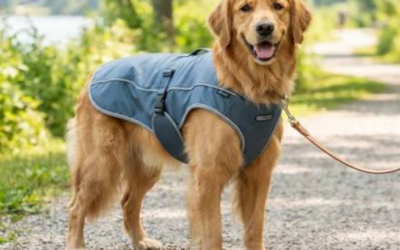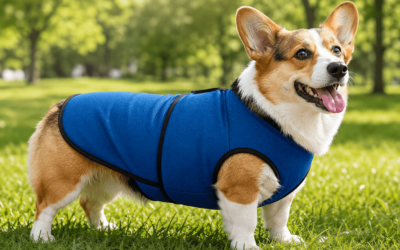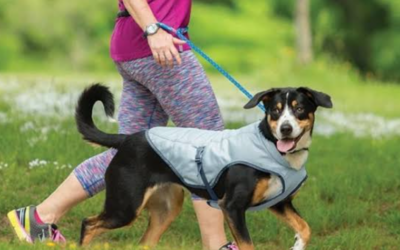
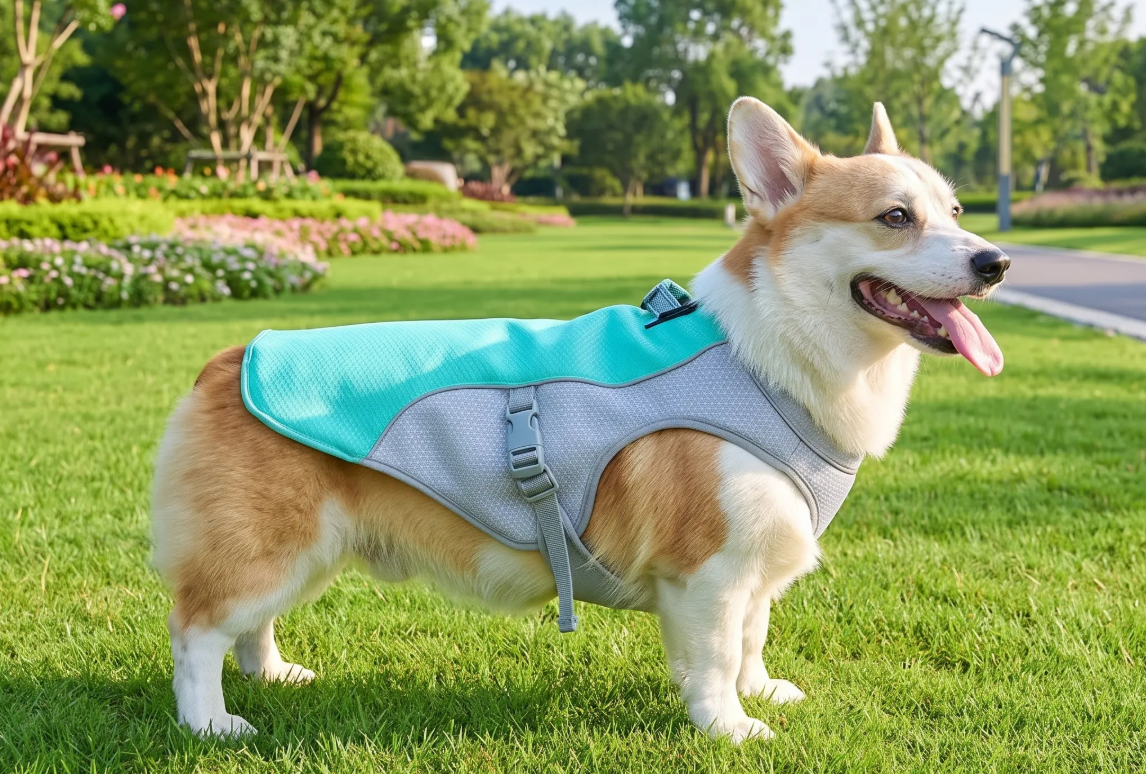
One pet retail chain beat its seasonal sales targets by 27%. The product behind that spike was a dog cooling vest. As summer temperatures climb and more pet owners search for ways to protect their dogs from heat stroke, this once-niche accessory has quietly become one of the fastest-moving categories on the shelf. So what’s actually driving this surge, and does the evaporative cooling vest for dogs live up to the hype behind the numbers? We’ll break down the retailer’s exact growth strategy, explain how cooling vest technology works, and name the specific products customers are buying and rebuying this season. Plus what to look for if you’re choosing one for your own dog.
Sales Milestone Overview: How the Retailer Achieved 27% Growth

Chewy offers the closest public retail benchmark to this kind of milestone. Their FY2025 net sales hit $12.60B, up 6.2% YoY (or 8.3% on a normalized 52-week basis). Profitability is the real signal. Adjusted EBITDA jumped 26% YoY to $719M, nearly matching the 27% figure retailers are chasing with pet cooling gear right now.
That growth came from three moves:
-
Recurring purchases drove the engine. Autoship sales reached $10.5B, representing 83.3% of total revenue and growing 11.8% YoY — faster than the company overall.
-
Margins expanded alongside sales. Gross margin held at 29.8%, proving volume growth didn’t come at the cost of profitability.
-
Customer retention mattered more than acquisition. Active customers grew just 4.0% YoY to 21.3M, yet revenue and EBITDA both outpaced that growth significantly.
For dog cooling vest retailers, this pattern means pairing seasonal demand for hot weather dog gear with subscription-style reorders, tracking normalized growth, and letting margin expansion validate the milestone.
Market Demand Behind the Surge: Why Dog Cooling Vests Are Booming
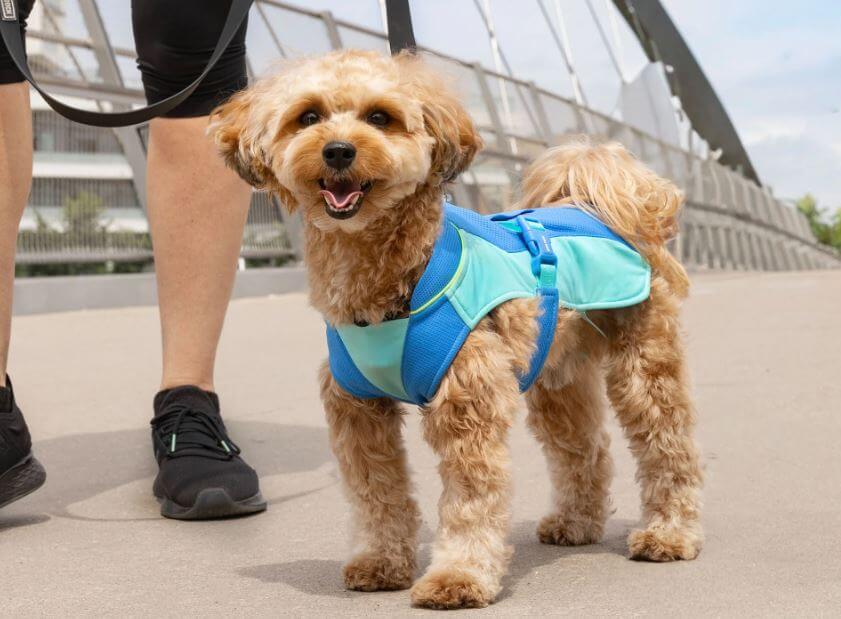
The global dog cooling products market sits at $1.8B in 2025, with projections to hit $3.7B by 2034 at an 8.4% CAGR. That’s a category with staying power.
Cooling vests claim about 26.4% of product revenue in 2025 — roughly $475M in vest sales alone. A more conservative benchmark puts the total market at $545.2M, with vests and apparel still holding 26.32% (around $143.5M). Either way you slice it, the evaporative cooling vest for dogs is a major sub-segment.
Seasonality Is the Real Growth Engine
Search data confirms what any pet retailer already suspects: summer drives everything.
-
Amazon UK’s dog cooling vest niche pulls £101K/year in revenue, backed by 466K searches/year across just 52 tracked products
-
Amazon US shows $162K/year in revenue, 510K searches/year, and only 42 products competing for that demand
-
Peak months land consistently in May, June, and July — the busiest month outperforms the quietest by 298.1× in some markets
That gap between search volume and available products is the opportunity. 510K searches against 42 listings in the US alone signals room for sellers with differentiated cooling vest technology for dogs — whether that’s better fabric, faster evaporative cooling, or smarter sizing.
Cooling mats still lead the category by revenue, but vests rank second — ahead of cooling bandanas and other hot weather dog gear. For retailers watching dog heat stroke prevention trends, that ranking matters. It tells you where buyers are putting their money first.
How Cooling Vest Technology Works: Evaporative Cooling Explained
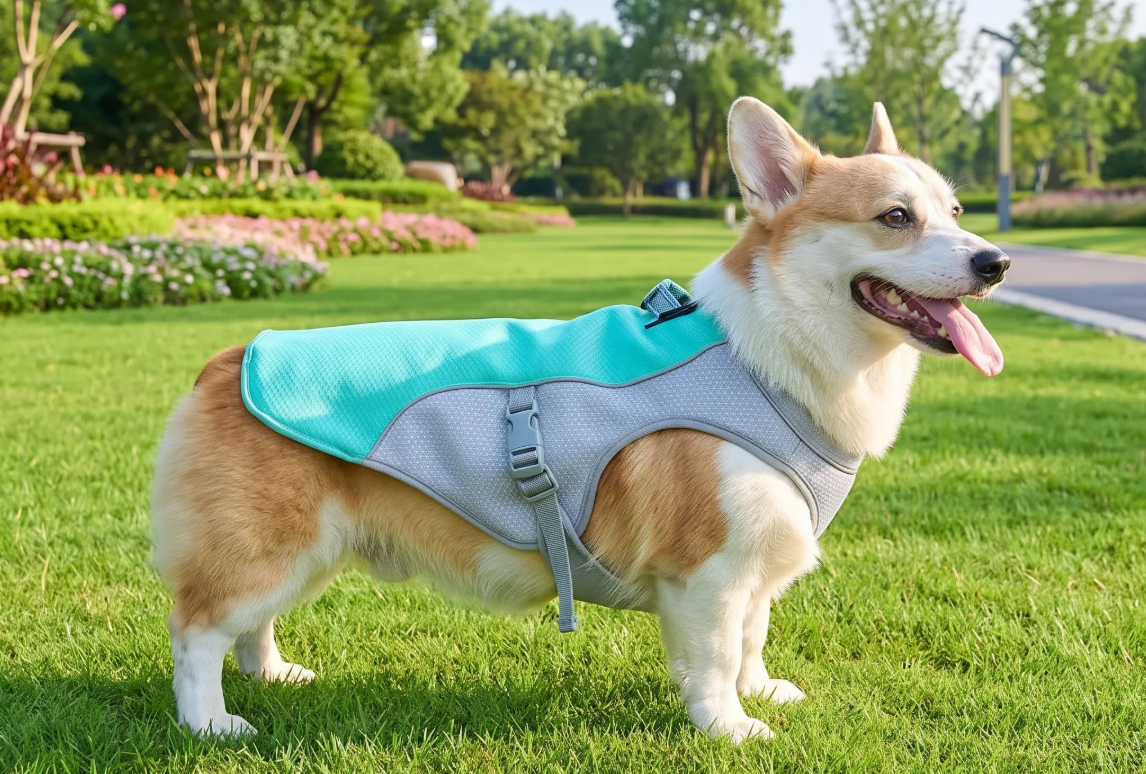
Physics makes these vests work. Soak the fabric in water, and as that water evaporates, it pulls latent heat away from the vest surface and the air right next to your dog’s skin. That’s evaporative cooling in action, the same principle behind swamp coolers and sweat.
The formula is simple. Soak for 1–3 minutes, wring until it’s wet but not dripping, and put it on. Cooling typically lasts 4–8 hours per activation, with some evaporative vests marketed at 5–10 hours. Once the fabric dries out, soak again to restore the effect.
What Actually Drives Performance
Four factors separate a good cooling vest from a mediocre one:
-
Airflow: Moving air dramatically increases evaporation rate. Fan-assisted airflow can boost evaporative heat loss by over 100% in trunk zones compared to still air.
-
Humidity: Dry heat is where these vests shine. Peak performance shows up in conditions like 35–40°C at 20% relative humidity. Humid climates slow evaporation and cut cooling output.
-
Fabric structure: Thinner materials with higher water retention and lower evaporative resistance outperform bulky, less breathable designs.
-
Fit: Closer skin contact means better heat transfer.
The Numbers Behind the Hype
Thermal-manikin testing puts top-performing vest designs at roughly 81.7W of cooling capacity at 40°C and 78.5W at 30°C. Other datasets show cooling power ranging from 22.4W to 47.8W depending on structure and airflow, with efficiency landing anywhere from 40% to 80%+.
If a vest dries fast in extreme heat, that’s a sign it’s working hard. Just plan to re-wet it sooner.
How to Choose the Right Cooling Vest: Size, Fit & Breed Considerations
Skip the weight chart, chest girth is the number that matters when sizing a dog cooling vest, and most buyers get this wrong on their first purchase.
Measure Chest Girth First, Everything Else Second
Wrap a soft tape around the widest part of your dog’s chest, right behind the front legs. That measurement decides the size. Back length comes second, measured from the base of the neck to the base of the tail. Neck circumference only matters if the vest has a high collar or covers the shoulders.
More granular charts break sizes down further, some running from XXS (13–17 in) up through 4XL (34–40 in), pairing chest with back length and weight for extra precision.
Fit Should Be Snug, Not Tight
The chest band needs to sit close enough for heat transfer but loose enough for full lung expansion and front-leg movement. If your dog falls between two sizes, size up on the chest, not the back panel.
Body Shape Changes the Math
-
Deep-chested breeds often need a bigger chest size than their weight suggests.
-
Broad-shouldered dogs — retriever and bully-types — can look short-backed on paper but still need extra chest room.
-
Long-bodied breeds like dachshunds typically want a smaller chest fit paired with a longer back panel.
-
Giant breeds usually land in XL through 4XL, with chest girths climbing past 23 inches.
Adjustable vests handle more of this variance. Some cooling vest lines span chest ranges from 9 in up to 24 in across sizes, giving awkward proportions room to fit without guessing.
Retail Success Playbook: Merchandising & Marketing Strategies That Worked
Placement beats product selection almost every time. That’s the uncomfortable truth behind most retail wins, and it’s what drove this dog cooling vest surge past target.
Checkout Zone: The Highest-Converting Real Estate in the Store
Point-of-sale placement is the single strongest tactic in the playbook. Well-executed checkout displays can lift sales by up to 65%. Promotional checkout programs deliver a 499% average ROI, roughly $5 back for every $1 spent on the display itself.
Height matters more than most retailers admit. Products sitting in the 48–53 inch “golden zone” generate 35% more sales than anything shelved lower. That band sits at natural eye level, right where a shopper’s gaze lands while waiting to pay.
Cooling bandanas and travel-size cooling accessories are the natural fit here. They’re low-ticket, fast-decision, high-margin, the exact profile that wins at checkout.
Store-Zone Playbook That Drove the Numbers
Checkout / register zone: Impulse-friendly cooling gear and add-ons. Highest conversion rate for last-second grabs.
Main aisle / entrance zone: New arrivals, seasonal cooling vest launches, and limited-time promos. This is where hot weather dog gear gets introduced before summer peaks.
Cashier line-of-sight: Merchandise placed directly beside or behind the register outperforms other spots by 35–40%.
The Numbers Behind the Impulse Buy
Self-checkout impulse merchandising boosts impulse purchases by 30% to 75% compared to stores skipping it entirely.
Cross-merchandising near checkout, pairing a cooling vest with a matching bandana or mat, raised average transaction value by 15% to 25%.
Impulse items typically make up 1–3% of inventory, yet they drive 4–8% of total sales and 10–15% of total profits. That ratio alone justifies the shelf space.
Execution Sequence Retailers Followed
-
Identify high-margin small SKUs like cooling bandanas, travel packs, and accessory clips.
-
Place them at 48–53 inches or directly in cashier eye line.
-
Attach a clear promo cue such as a bundle deal, percentage discount, or limited-time flash offer.
-
Pair with complementary items, such as vest plus mat or vest plus bandana, to grow basket size.
-
Test checkout, entrance, and secondary displays against each other, then double down on whichever location moves the most units.
Hyperlocal and festival-timed promos added another layer, tying cooling vest visibility to heatwave forecasts and summer weekend traffic spikes.
Consumer Reviews & Real-World Effectiveness Data
Dig into a 2021 survey of 6,538 U.S. shoppers, and 99.9% said they read reviews at least sometimes. Even in physical stores, 57% pull up dog cooling vest reviews on their phone before checkout.
Timing matters too. 71% care how recent a review is, with 34% favoring feedback from the past month. Stale ratings lose trust fast.
Credibility has a threshold. Shoppers need 112+ reviews and 7 confirming comments before believing a trend. Top individual reviews sway buyers more than the star average alone. That explains why a handful of detailed accounts about a cooling bandana for dogs or evaporative cooling vest for dogs often outperform generic five-star ratings.
Claims of “100% effective” breed skepticism. A 70-80% success rate feels more believable, and more human.
Conclusion
The 27% sales growth demonstrates that this pet retailer has captured a real and continuously growing market demand. As summer heat issues receive increasing attention, pet owners are proactively seeking more suitable ways to cool their dogs during outdoor activities, and Dog Cooling Vests are gradually evolving from a seasonal product into a more noteworthy summer pet product.
For pet owners, instead of waiting for their dogs to show obvious panting and discomfort in hot weather, it’s better to prepare appropriately sized, comfortable Evaporative Dog Cooling Vests in advance, combined with adequate hydration, shaded environments, and reduced activity during the hottest hours, to effectively manage summer heat.
For pet brands, retailers, and distributors, this case also illustrates that Dog Cooling Vests are not just a novelty product. Correct product selection, consumer education, and seasonal promotion can help this category achieve real sales growth and create opportunities for repeat purchases and product line expansion.
With pet owners’ increasing focus on summer cooling needs, Dog Cooling Vests still have room for further development. If you are looking for pet cooling products suitable for retail, wholesale, or private label development, visit ICEBEARTECH to learn more about Dog Cooling Vest, Pet Cooling Mat, and OEM/ODM customization solutions.