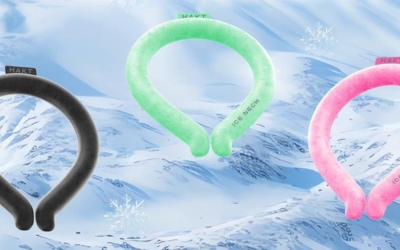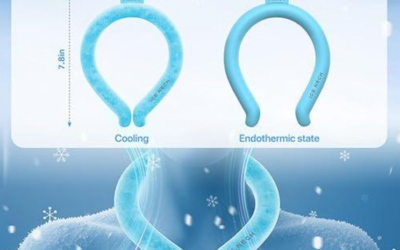
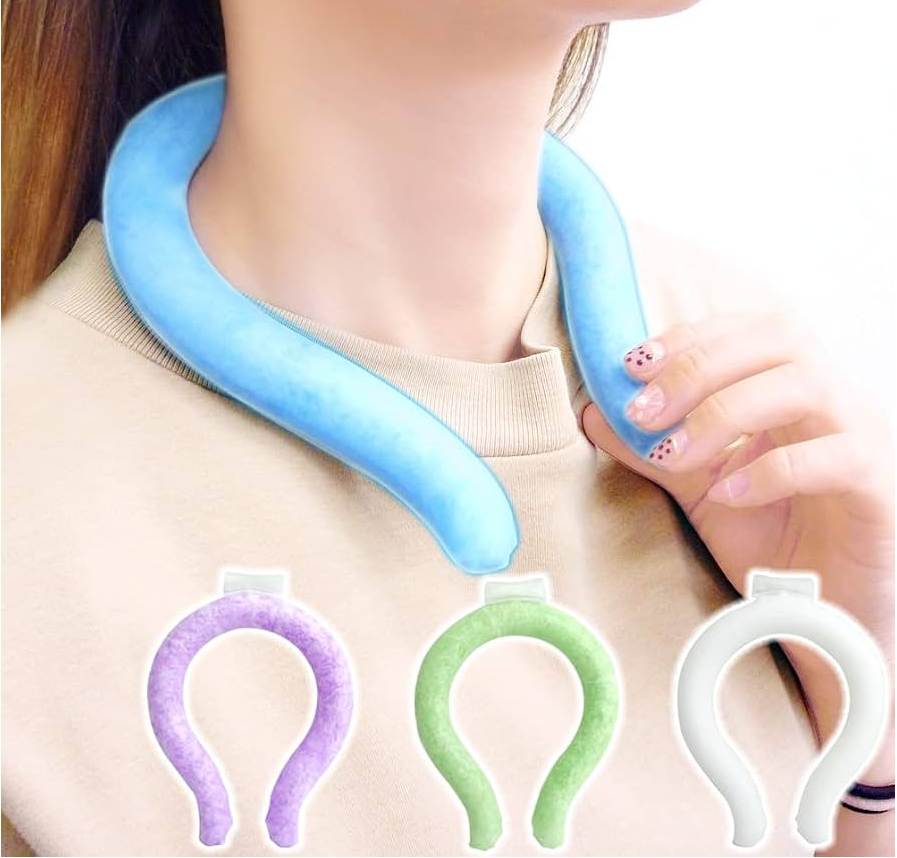
Japan’s summers are brutal enough that the government issues heatstroke warnings on national news. That’s why the Japanese market has become the global testing ground for PCM neck cooler technology, with brands racing to perfect phase change material cooling that works when humidity hits 90%.
Dozens of “PCM technology cooling” products flood Amazon Japan and Yahoo! Shopping, all claiming instant relief, and most buyers have no idea which brands are legitimate innovators versus generic resellers.
We’ve cut through the noise. Below, you’ll find the ten brands worth your attention: from Thanko’s engineering-grade electric coolers to MUJI’s mainstream TPU designs, with melting points, price ranges, and information on who each one is built for.
Understanding PCM Neck Cooler Technology in the Japanese Market
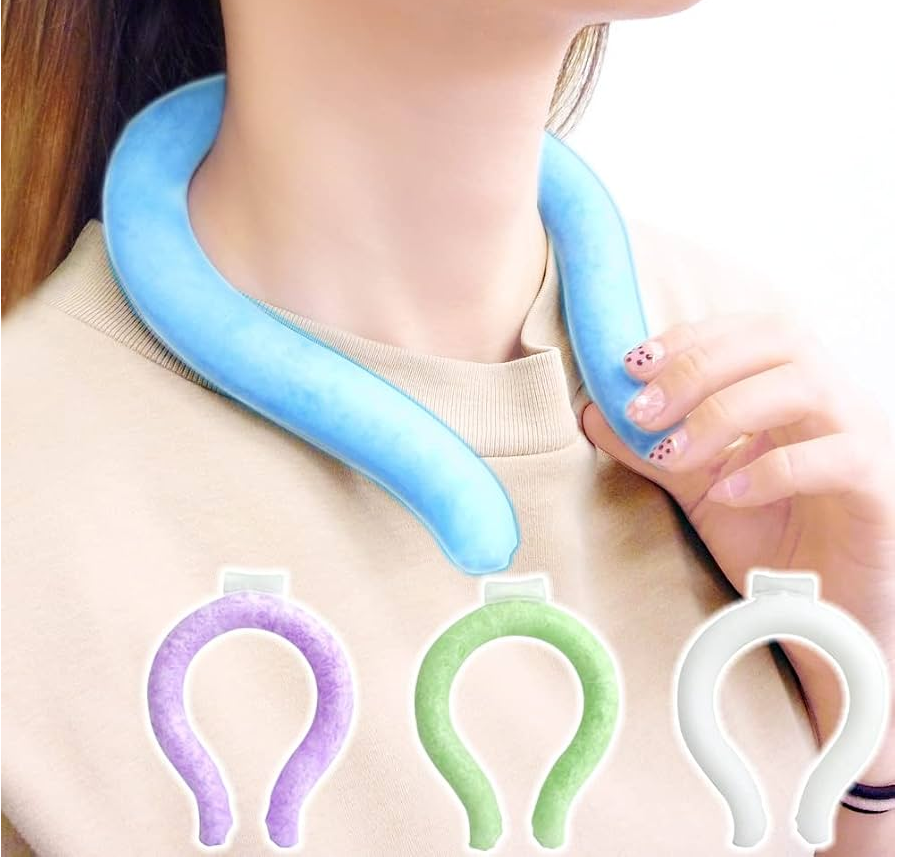
The number that matters most when comparing PCM neck coolers is the phase-change point. Japanese manufacturers build almost every PCM neck cooler around three specific temperatures: 18°C, 24°C, and 28°C. That single spec determines how cold the product feels, how long it lasts, and how wet your neck gets.
The cooling principle is simple. PCM absorbs heat as it melts, holding your skin near that phase-change temperature until the material liquefies. Lower temperature means stronger cooling, faster melt, and more condensation.
If you want the strongest chill, go with 18°C models. They last 30–60 minutes at 30°C ambient and 20–40 minutes at 35°C. These are best for outdoor labor, sports, and extreme heat. The tradeoff is heavy condensation and noticeable neck wetness.
The 24°C models are a compromise. They hold 45–90 minutes at 30°C and 30–60 minutes at 35°C. This temperature is popular with commuters who want cooling without the soak.
The 28°C models are the gentlest option, running 60–120 minutes at 30°C and 45–90 minutes at 35°C. They can re-solidify in a 28°C air-conditioned room, so no freezer required.
Construction is consistent across brands. You get a TPU outer shell, a PCM inner core, and it’s washable, reusable, and uses zero electricity. A typical M-size ring weighs around 140g; L-size runs 160g, fitting neck circumferences of 300–390mm.
Thanko (サンコー) — Japan’s Leading Electric Neck Cooler Brand

Thanko doesn’t mess with passive cooling. While most brands on this list use PCM technology that melts and re-solidifies, Thanko chose a different route: electric, Peltier-powered cooling that actively drops temperature below ambient. That’s a different product category entirely, and you should understand the difference before comparing prices.
The sales numbers back up the “leading brand” claim. Thanko’s Neck Cooler line sold over 500,000 units annually as of 2022, making it the company’s single biggest hit product. Some retail listings put the cumulative total at 800,000 units across the line’s lifetime in Japan. Either number puts Thanko well ahead of most PCM neck cooler competitors in raw volume.
How the Technology Works
Thanko’s core lineup runs on Peltier semiconductor cooling, not phase-change material. Two cooling plates touch your neck and actively freeze using electric power, either from a built-in battery or USB connection. This is the opposite of the passive, plant-derived PCM approach used by brands like SUO.
If you need active, below-ambient cooling and don’t mind charging a battery, Thanko is your benchmark. If you want zero-electronics simplicity, keep reading for the PCM-focused brands below.
MUJI (無印良品) — Mainstream PCM Ice Neck Ring with TPU+PCM Design
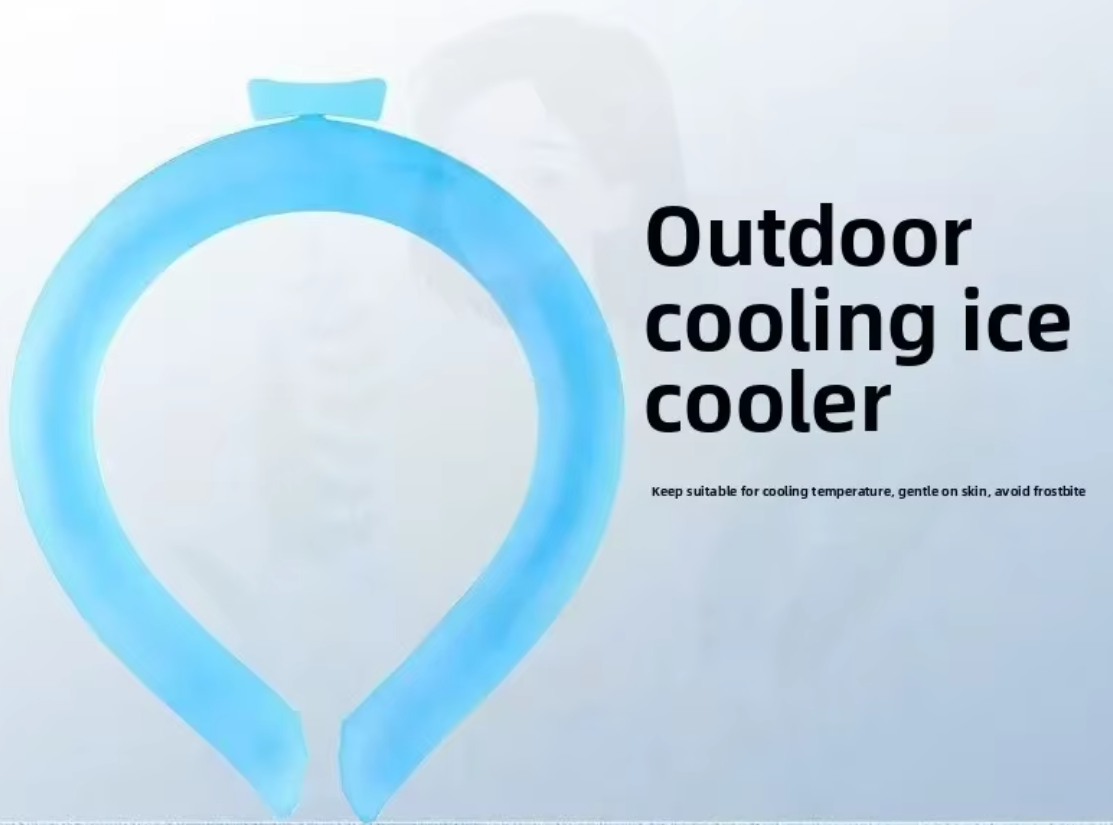
Sold-out shelves tell you everything about demand. MUJI’s ice neck ring reportedly came close to disappearing from stock entirely during peak summer months, turning a simple household brand into an unlikely player in the cooling accessories Japan market.
The construction uses a TPU outer shell wrapping a PCM core, phase-changing at roughly 28°C. That puts it firmly in the gentle-cooling category, no freezer required, no condensation soaking your collar.
Expect 60–120 minutes of noticeable cooling once worn, the same benchmark other 28°C reusable cooling neck wraps hit. Some listings claim up to 5 hours at 28°C ambient, but treat that as the marketing ceiling; the actual cooling duration is usually shorter.
Pricing gets murky outside Japan. Resale markets in Taiwan show units from NT$192 up to NT$449–520, and cross-border platforms like Lazada have flagged stock-outs, confirming demand outpaces supply.
MUJI’s strength is brand recognition, only 17% of surveyed consumers in one Nielsen-style study ranked MUJI as “high value for money.”
MI Creations (MIクリエーションズ) — Industry’s Coolest 18°C PCM Model
MI Creations claims on the packaging that it has the industry’s coldest 18°C freeze point, with the text “Industry’s top-class freezing temperature of 18°C.” The PENTA-18, sold under the product name New Material Neck Cooler PentaCool, backs that up with a polyurethane shell around an ethylene–methyl acrylate copolymer PCM core. Body dimensions are 165 × 152 mm with a 25mm tube, and it weighs 128g (140g with packaging).
At a list price of ¥2,500 (¥2,750 on Rakuten), it falls in the ¥1,800–¥4,500 range for 18°C phase change material cooling products. The manufacturer says it provides about one hour of cooling at 28°C ambient, and it freezes in either a standard freezer or ice water with no special equipment needed.
It’s a good fit for outdoor labor and construction crews who need genuine heatstroke prevention, commuters and students looking for affordable neck cooling under ¥3,000, and event staff who want a condensation-light, battery-free cooling accessory that Japan buyers can trust.
No batteries, reusable, made in China for B2B buyers scaling volume. MI Creations ships 72 units per carton, weighing about 12kg per box, so it’s a practical wholesale option for anyone sourcing outdoor cooling wearables at scale.
Genki Labo (ゲンキラボ) — 24°C Balanced Cooling for All Ages
Not every buyer needs extreme chill. Genki Labo built its whole lineup around that idea, selling its 24°C PCM neck cooler as the middle-ground choice for families who want cooling that lasts through a full workday without soaking through a shirt.
Family-First Sizing and Design
It’s one of the few brands on our list that markets to both adults and kids. The neck-ring line comes in XS, S, M, and L, so parents can order for everyone from the same product page. The PCM core freezes below 24°C and absorbs heat as it melts at that same temperature, and Genki Labo says you get near-zero condensation compared to colder 18°C alternatives. Marketplace listings also claim a 70% more PCM fill than earlier versions, plus a Japanese-company origin story that matters to buyers who don’t trust unbranded imports.
Performance and Pricing
An independent review clocked 2 hours 30 minutes of sustained cooling at the 24°C phase-change point. The reviewer called the strength “standard” rather than intense — better for all-day comfort than peak heat emergencies. You’ll find it for ¥2,760 on Rakuten and as low as roughly ¥1,999 on Amazon during promotions, right inside the ¥1,500–¥3,800 range for reusable cooling neck wraps. The Genki Ice pillow, a companion product, sells for ¥3,499 and claims up to 12 hours of cooling feel with a three-layer, 5mm insulation design.
With over 1,000 Amazon search results tied to the brand and multiple Rakuten size and color variants in stock, Genki Labo looks less like a niche cooling accessory and more like a seasonal staple you reorder each summer rather than buy once and forget.
Mito no Rabo / Osha Ring Sellers — Multi-Melting-Point Heatstroke Prevention Line
Sellers under names like Mito no Rabo and #OSHARING skip brand storytelling. They compete on giving you all three melting points in one product family, so you pick the temperature instead of the brand.
The Multi-Temperature Product Line
OSHARING sells all three variants at ¥880 on au PAY Market: 28°C, 24°C, and 18°C, side by side. The 28°C version anchors volume sales for commuting, housework, and outdoor work. The 24°C version acts as the “slightly colder” upgrade tier. The 18°C version targets short-burst extreme-heat use, like construction sites or sports, where intense cooling matters more than comfort.
Across these listings, the marketing pushes hard on heatstroke prevention with phrases like “熱中症対策” (heatstroke countermeasure) and “凍傷や低温やけどの心配がない” (no frostbite or low-temperature burn risk). Some sellers add ISO 9001 or MHLW inspection claims to reinforce safety credibility.
Pricing Tiers Worth Knowing
Yahoo’s “爽快リング” (Refreshing Ring) costs ¥680: a bare-bones 28°C model with a no-condensation claim, aimed at price-sensitive household buyers. #OSHARING sells its full 28°/24°/18°C lineup for ¥880 on au PAY Market. The “日本製” (Made in Japan) units on Yahoo go for ¥4,400 and are positioned for work sites and serious athletes.
In the broader PCM neck cooler market, the ¥600–1,500 band covers most entry-level competition. Above ¥2,000 you start seeing domestic manufacturing claims or reinforced PCM formulas.
Monotaro Private-Label — Industrial/B2B PCM Cooling Neck Band
Procurement teams don’t shop the same way consumers do, and MonotaRO built its entire PCM neck-cooler category around that fact. This is Japan’s industrial supply platform, and its private-label “冷却ネックバンド 保冷剤付” (cooling neck band with refreezable insert) uses a hook-and-loop closure so you can reuse it — no adhesive, no mess.
The specs read like a procurement sheet:
-
PCM melting point: ~22°C, sitting between the 18°C and 24°C tiers
-
Size: roughly 14.5 × 17 cm, 345mm inner circumference, 135g, free size
-
Alternate SKU: 360g, 130mm inner diameter, 195mm outer diameter, fits up to 41cm necks
-
Re-solidification: ~20 minutes in a freezer, ~30 in a refrigerator, ~40 in tap water
-
Cooling duration: claimed 3–4 hours of usable cooling
The outer shell uses standard TPU; the PCM core is a hydrocarbon-type material, with one listing specifying normal-paraffin (octadecane). One SKU carries RoHS (10-substance) compliance, a detail that matters more to B2B buyers than consumers.
B2B buyers pick MonotaRO because the MOQ starts at a single unit, shipment is “最短即日出荷” (same-day when possible), and pricing runs roughly ¥3,998–4,398 tax-included for the neck band. This is a sourcing channel built for warehouses, logistics crews, and construction sites that need repeatable heatstroke prevention without importing unbranded stock.
Amazon Japan Marketplace — Diverse PCM Neck Cooler Listings
Search “PCM ネッククーラー” on Amazon Japan and you’ll get over 2,000 results. This single platform hosts the densest concentration of neck cooling wearable competition in the country, mixing patented brand names with anonymous white-label sellers on the same results page.
The brand names worth tracking are SUO, Aicenon, Genki Labo, MI Creations, LEMIKKLE, LULUQ, Icenon, and Global Japan. SUO’s official store sells an 18-degree ICE neck ring built around PARAFOL 16-97 PCM, a named patented material. LEMIKKLE uses a 93A TPU shell with plant-derived PCM, requires no charging, and weighs around 130g for the large size (39cm neck fit).
Before you buy, check for multiple product variants, an explicit temperature rating (18/24/28°C), stated material (PCM/TPU), a published size chart (S/M/L/XS), and an official store badge. Listings missing all five are usually generic resellers.
Yahoo! Shopping Marketplace — Sports & OEM-Style PCM Cooling Options
On Yahoo! Shopping’s PCM cooling page, you’ll find commodity neck rings under ¥2,000 sitting next to motorsport vests priced at ¥38,500.
Most of the volume is in the entry tier. An SK Japan PCM COOL neck ring runs ¥1,980 plus ¥770 shipping. It has M/L sizing, TPU outer, PCM fill, and a 28°C phase-change point. Go cheaper and you’ll hit ¥777 listings weighing about 122g, claiming roughly 4 hours of cooling at 30°C ambient while holding neck temperature below 28°C. The “heat countermeasures, cooling gear” cluster alone shows 41 separate PCM cool-vest and cooling items — that’s a broad assortment market.
OEM merchandising fills the gaps. Listings like “PCM Cool Vest / Cooling Vest for Summer Work / Ice Vest PCM COOL GUARD, Free Size” use free-size positioning and “free shipping/next-day delivery” tactics common to generic sellers with no brand story to sell.
Branded Sports Vests at the Premium End
-
SUO’s 28°C Cool Vest 256: ¥14,960, official Japan-made, a clear step above commodity gear
-
ZAMST COOL SHADER ACTIVE VEST: ¥4,499 + ¥900 shipping, UV 97% cut, claims “15°C below skin temperature,” sized 58cm width by 63cm length
-
Water-cooling vest: ¥17,820, fits M–3L, runs a 7.4V 150mA pump at 320–370 ml/min, cooling cycles of 2.5–3.5 hours
-
SPARCO cooling vest: ¥38,500, built for pre- and post-session body-temperature management in motorsport
What Yahoo! Shopping Tells You That Amazon Doesn’t
Yahoo! Shopping focuses on Japanese-domestic products, sports/golf/outdoor/worksite gear, and OEM pricing. Amazon’s comparable PCM vest listing shows 255 reviews, including complaints about failing to cool users in 95°F heat over 4–5 hours. The SK Japan ring shows zero reviews — typical for niche SKUs, meaning buyers rely on spec sheets over social proof.
For procurement screening, verify phase-change temperature (28°C or 24°C dominate), material stack (TPU + PCM), weight, duration claims at 30°C ambient, and size range before trusting any listing.
Japan Trend Shop / Thanko Retail Channel — Premium Cooling Product Access
Overseas buyers who can’t get onto Japanese retail sites turn to Japan Trend Shop, a curated storefront built to ship niche Japanese tech abroad. Thanko dominates its cooling category with six standalone product listings: the Extreme Cooling Refrigerated Short-Sleeve Jacket 4, the Extreme Cooling Refrigerated Vest 4, Neck Cooler Slim (claims up to 17°C below ambient), Senacool Back Cooler (60×129×28mm), Cool Backpack (15°C back-temperature reduction), and Neck Cooler Pocket (160×45×160mm max).
The catch is cost. Buyer reports cite prices running 2–3x Japanese domestic rates. DHL shipments can add a flat ~$20 fee plus customs, pushing total landed cost roughly 40% above sticker price. The site’s own FAQ confirms taxes and duties apply per country, though FedEx offers prepaid duty handling if you request it.
Logistics performance is strong: eBay seller ratings over 12 months show 4.9 for accuracy and perfect 5.0 scores for shipping cost, speed, and communication. Complaints center on damaged units, slow support, and occasional outdated models, not shipping delays. Returns are honored within 7 days for defective or wrong items, with the seller covering return shipping in those cases.
For B2B buyers or consumers chasing Thanko’s engineering-grade cooling gear outside Japan, this channel delivers access.
Wafuu Japan / MUJI Retail Channel — Export Access to MUJI Cooling Products
MUJI’s neck cooler sells for ¥1,490 domestically, but overseas buyers can’t just walk into a Tokyo store. That’s the gap Wafuu Japan fills, operating as a cross-border reseller shipping MUJI goods to 70+ countries, with 37 new regions added as of March 2025.
Beyond the neck ring, Wafuu also stocks MUJI’s Cooling Bag (¥3,990, discounted from ¥4,990) and the Cool Body Sheet, a menthol-based, alcohol-cooled option with no added fragrance or color. Support runs weekdays, 10:00–19:00 Japan Time, via email only — no phone line, so expect email-first troubleshooting.
PCM Neck Cooler Brand Comparison: Melting Point, Material, Price & Best Use Case
Three numbers decide everything in this market: 18, 24, and 28. Pick the wrong one, and you’ll either soak through your collar in an hour or barely notice you’re wearing anything.
Here’s the side-by-side breakdown:
|
Tier |
Material |
Price Range |
Best For |
|---|---|---|---|
|
18°C |
PCM + TPU, larger contact surface on premium models |
¥1,800–¥4,500 |
Outdoor labor, short bursts of extreme heat |
|
24°C |
PCM + TPU, mainstream commuter formula |
¥1,500–¥3,800 (Amazon: ¥1,688–¥1,999; Yahoo: ¥2,885–¥2,955) |
Daily wear, commuting, school |
|
28°C |
PCM + TPU, faster re-freeze cycle |
¥980–¥3,000 (Yahoo/ZOZO: ¥980–¥2,178) |
Indoor use, mild heat, quick re-solidifying |
A few specific models worth flagging:
-
SUO 18°ICE OVAL RING 2 (¥3,200–¥4,500) uses plant-derived PCM, freezes in about 20 minutes in a refrigerator, and quadrupled its skin-contact surface over the previous generation.
-
GENKI ICE 2026 (¥1,980–¥2,800) runs an exclusive 24°C formula with 100% more PCM fill than earlier versions. It re-freezes in 15 minutes refrigerated or 10 minutes under running water.
-
Made-in-China bulk options start at 100-piece MOQs, US$3.90–5.90 per unit — the go-to for B2B buyers scaling wholesale orders instead of retail purchases.
Buying logic, simplified: want maximum chill, go 18°C. Want balance, go 24°C — it’s the current sales leader. Want gentle, all-day comfort, go 28°C. Sourcing in volume? Skip retail entirely and go straight to Made-in-China suppliers.
How to Choose the Right PCM Neck Cooler Based on Your Needs
Your daily routine decides the right melting point faster than any spec sheet. Match the product to the scenario, not the marketing copy.
Pick by use case:
-
For commuting, shopping, or short errands, go with 28°C. It sits closest to comfortable skin temperature, feels steady, and works well for frequent, short-duration wear.
-
Outdoor labor, patrol work, or standing for hours calls for 24°C. It delivers noticeably stronger cooling than 28°C models, which matters when you’re sweating through a shift.
-
For post-workout crash-cooling or heat-intolerant users, 18°C gives the strongest chill, but it hardens faster and gets uncomfortable during long wear. Treat it as short-burst relief, not all-day gear.
PCM beats ice packs on reusability (30–60 minutes to refreeze at home) and safety. It’s far less likely to overcool your skin than a hard ice pack. The tradeoff is duration. Most PCM rings hold strong cooling for 30–60 minutes, occasionally stretching to two hours on premium models. Ice packs cool harder but feel stiffer and carry more frostbite risk against bare neck skin.
A solid PCM neck cooler runs about $17–21. Anything drastically cheaper usually skips material disclosure.
Weight matters more than people expect. Once a neck-worn product crosses 170g, users start reporting a pressing, uncomfortable sensation. Check the spec sheet before buying.
If you don’t have freezer access, skip PCM and look at active cooling devices like Thanko’s Peltier models instead. Reusable cooling neck wraps lose their advantage if you can’t refreeze them.
Conclusion
Choosing the right PCM Neck Cooler isn’t simply about comparing brand names, but rather whether the product suits your target market and actual usage scenarios. Different products vary significantly in PCM phase transition temperature, cooling duration, weight, wearing comfort, and reactivation methods; these parameters are often more important than brand recognition.
For individual users, choose an appropriate phase transition temperature based on scenarios such as daily commutes, outdoor activities, or high-temperature work, avoiding the misconception that “the colder the better.” For brands, importers, and distributors, in addition to product performance, further verification of material safety, test reports, MOQ, sample lead time, bulk supply capabilities, and OEM/ODM customization support is crucial.
If your goal is not just to purchase from existing Japanese brands but to develop your own private label PCM Neck Cooler, then finding an OEM/ODM factory with PCM technology and mass production capabilities might be more suitable.
For example, ICEBEAR TECH offers OEM/ODM services for PCM Neck Coolers and other personal cooling products, allowing for adjustments to phase change temperature, size, color, logo, and packaging to meet different market demands. B2B buyers planning bulk purchases or establishing their own cooling product lines can compare these specialized manufacturers with existing Japanese brands and make a final selection based on sample testing, cost, and supply capabilities.