You’ve probably seen many advertisements for cooling neckbands and scarves, all claiming to provide rapid cooling and a long-lasting cooling sensation. However, for products using PCM (Phase Change Material) technology, many descriptions focus more on marketing effects and rarely explain how it actually works or how much cooling it provides in real-world environments.
So, is a PCM Neck Cooler actually effective? How much temperature does it lower? How long does it last after a single activation? Is it better suited for sports, outdoor activities, or high-temperature work environments?
In this article, we’ll analyze the principles of PCM phase change technology, its actual test performance, and applicable scenarios to help you understand the true effectiveness of this cooling product and determine if it suits your needs.
Do Neck Coolers Really Lower Body Temperature?
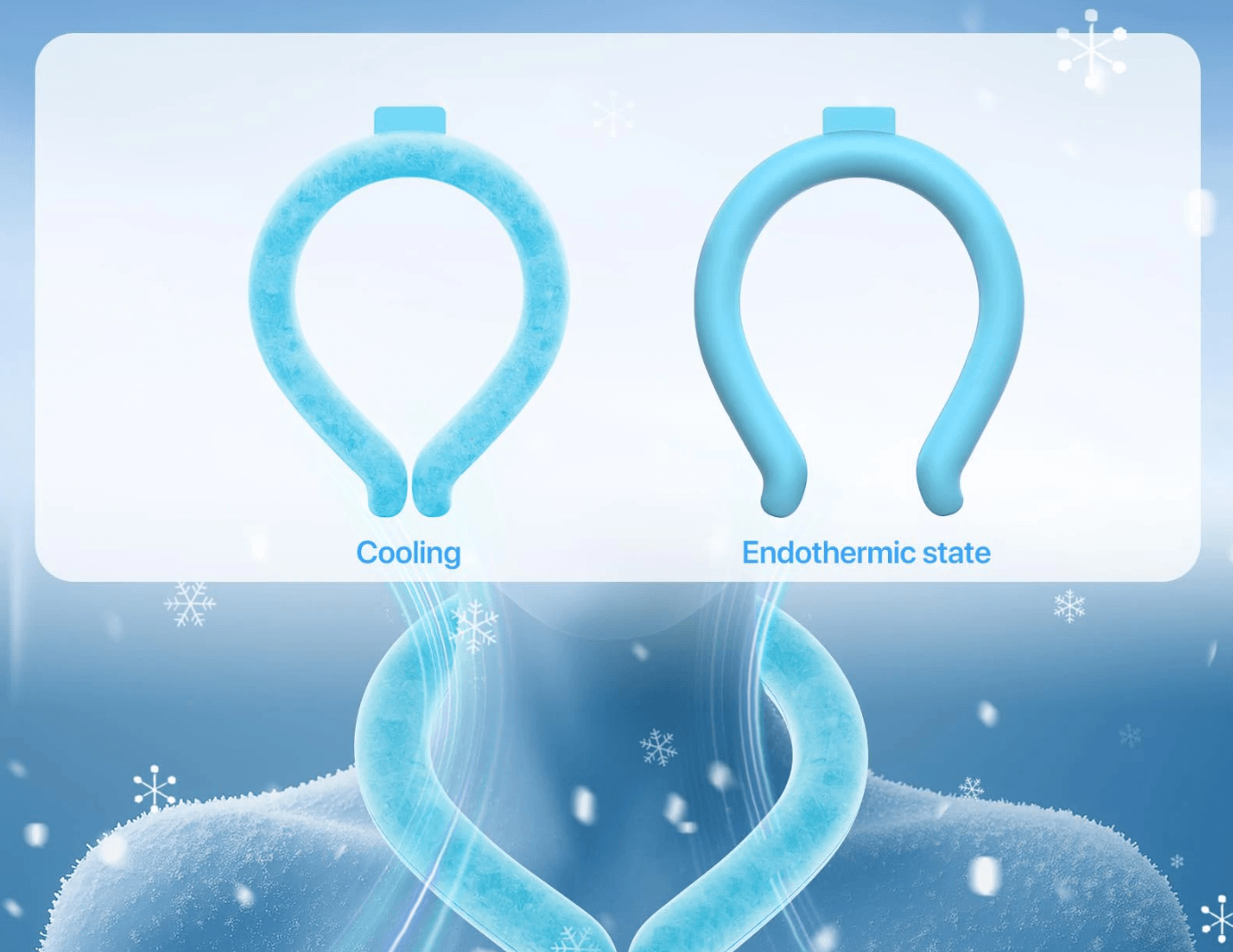
Many people buy Neck Coolers expecting them to quickly lower their overall body temperature like an air conditioner. However, actual research shows that the primary function of cooling neckbands is not to drastically lower core body temperature, but rather to improve comfort in hot environments by lowering the skin temperature of the neck.
Related tests show that the change in core body temperature after using cooling products is usually very limited. For example, in a test conducted in a high-temperature working environment, the difference in core body temperature before and after using the cooling device was not significant. This indicates that Neck Coolers do not work by directly altering the body’s internal temperature.
The real and noticeable change is in the neck’s surface temperature and the sensation of heat. Studies have found that neck skin temperature can decrease by approximately 1–2°C. This cooling stimulation helps reduce heat discomfort, making people feel more comfortable during exercise, outdoor activities, or working in high-temperature environments.
PCM Neck Coolers work based on this principle. The phase change material maintains a stable temperature while absorbing heat, providing localized cooling support to the body by continuously removing heat from the neck area.
Therefore, it is important to understand the PCM Neck Cooler correctly: it is not a tool to replace cooling equipment or heatstroke prevention measures, but a personal cooling product that helps alleviate discomfort from high temperatures and improves wearing comfort.
PCM Cooling Technology Principle: Why Does It Provide a Continuous Cooling Sensation?
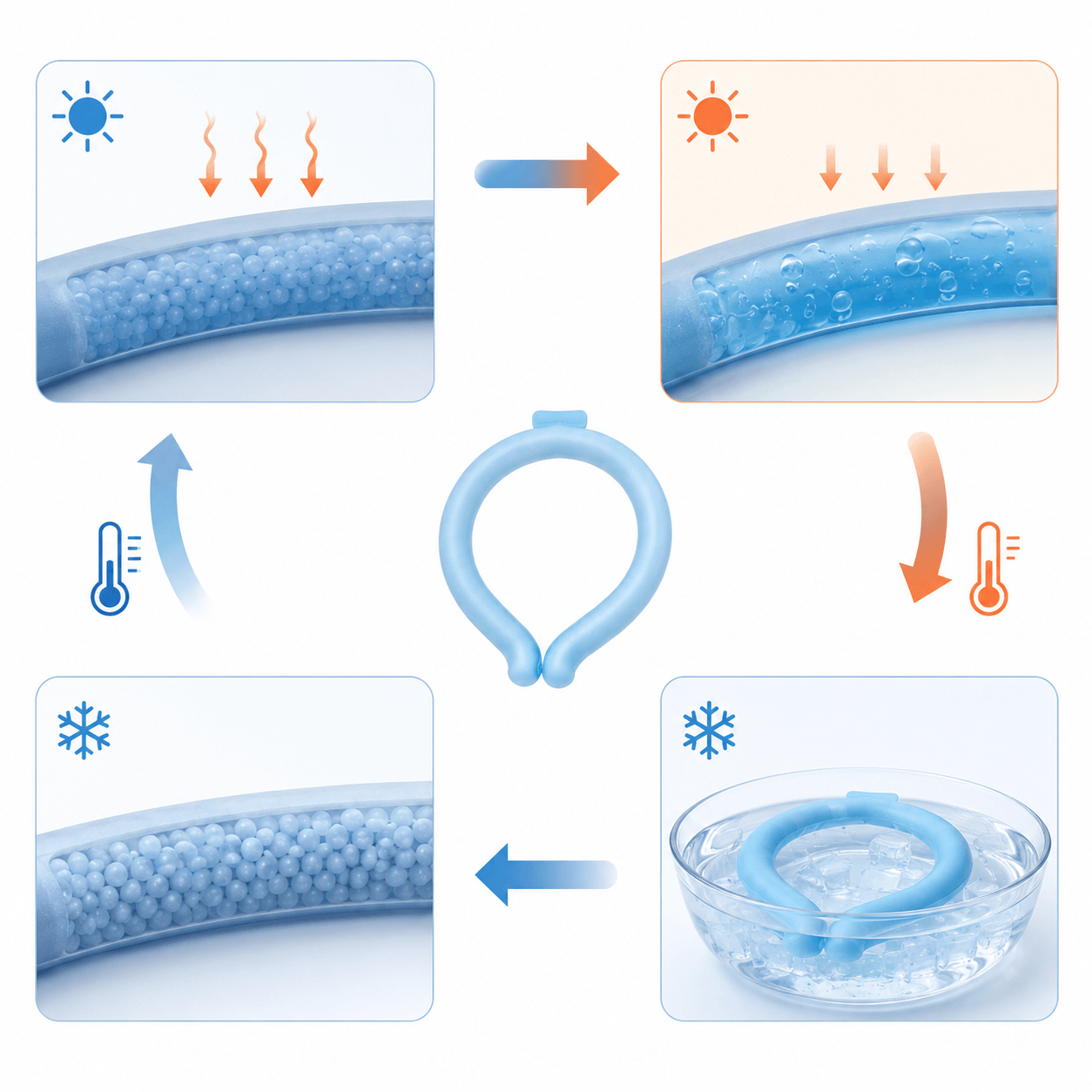
The core of PCM (Phase Change Material) cooling technology is its ability to absorb heat during a phase change process.
Simply put, when PCM material gradually changes from a solid to a liquid state, it absorbs a significant amount of heat while maintaining a relatively stable temperature. This heat absorption process is called “latent heat absorption,” and it’s key to PCM’s continuous cooling effect.
A PCM Neck Cooler typically operates in three stages:
First, the material temperature gradually approaches the set phase change temperature; then, during the phase change, the PCM continuously absorbs heat from the skin, maintaining a relatively stable cooling sensation; once the material has completely melted, the cooling effect gradually weakens, requiring recooling before reuse.
When applying PCM technology to personal cooling products, selecting the appropriate phase change temperature is crucial.
If the temperature is set too low, it may feel too cold initially, but the effect will be short-lived; if the temperature is too high, it won’t provide a noticeable cooling sensation. Therefore, high-quality PCM products are typically designed according to the human body’s comfortable temperature range, ensuring a cooling effect while avoiding excessive skin irritation.
Compared to ordinary fan-type cooling products, PCM Neck Coolers do not rely on airflow or ambient humidity. Fans primarily dissipate heat by accelerating air circulation and sweat evaporation, while PCM cools by absorbing heat itself, thus maintaining stable performance even in hot, low-wind-speed environments.
Simply put, fans rely on “airflow” for cooling, while PCM relies on “heat absorption.” This is why PCM Neck Coolers have unique advantages for outdoor work, sports, commuting, and high-temperature environments.
Real-world Data: How Effective is the PCM Neck Cooler?
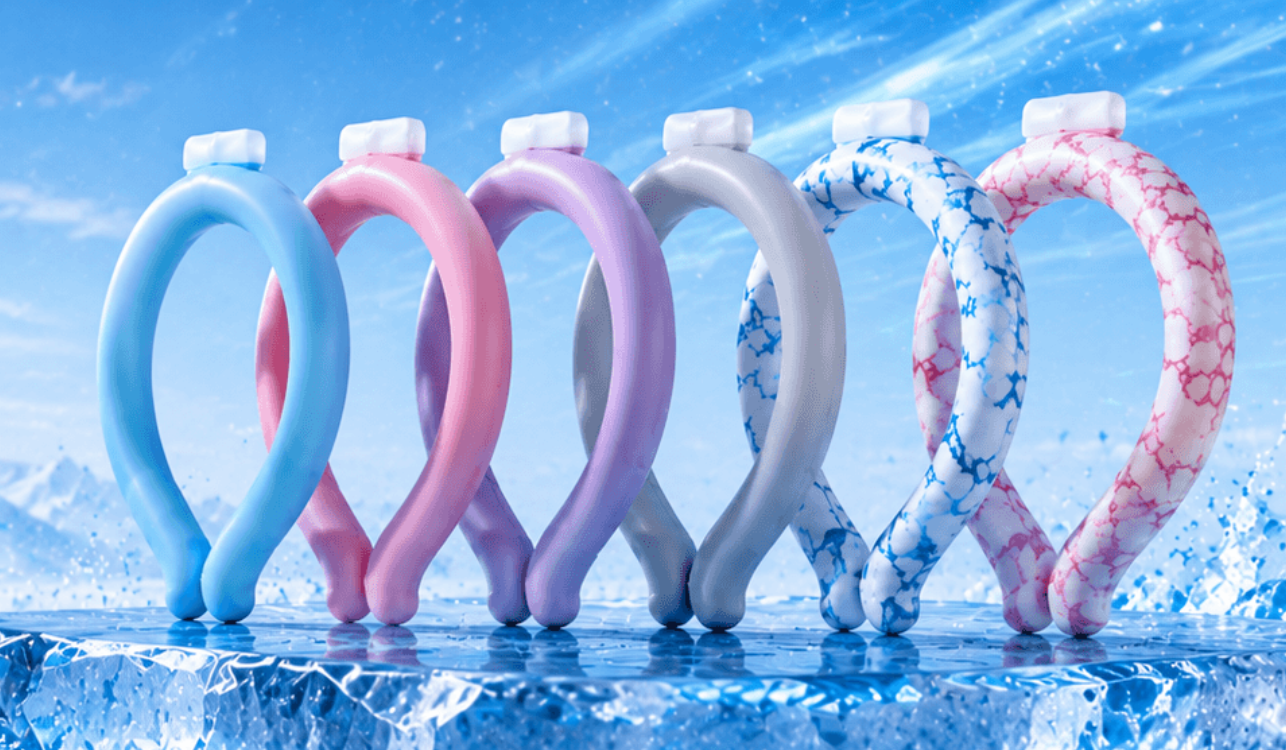
The actual effectiveness of the PCM Neck Cooler is more complex than simply claiming “rapid cooling.”
Research shows that PCM neck cooling products most significantly improve skin temperature and thermal comfort, while their impact on core body temperature is relatively limited.
In high-temperature exercise tests, some studies observed a decrease in core body temperature of approximately 0.1–0.3°C after using the PCM Neck Cooler. While this change is not significant, in high-temperature, high-intensity activity environments, even a small change in heat load can help the body slow heat buildup, improving comfort and exercise endurance.
Current research shows a generally consistent finding:
Neck skin temperature typically decreases significantly;
Core body temperature changes are relatively small;
The cooling effect is primarily manifested in improving localized cooling sensation and reducing thermal discomfort.
This is also the actual positioning of the PCM Neck Cooler: it doesn’t work by drastically lowering internal body temperature, but rather by reducing heat sensation in the neck area, making the body feel more comfortable in hot environments.
Why do different test results vary?
Data from different studies cannot be simply compared because testing methods, environmental conditions, and measurement sites can all differ.
For example, some tests focus on changes in neck skin temperature, while others measure ear temperature or core body temperature; these indicators reflect different levels of thermal status in the body.
Furthermore, the test subjects and usage environment also affect the results. Short-duration exercise tests in the laboratory differ from actual usage scenarios involving outdoor work, prolonged sun exposure, or different populations.
Therefore, when evaluating a PCM Neck Cooler, in addition to focusing on a single temperature reading, it is necessary to consider the actual usage environment, such as:
Ambient temperature and humidity; activity intensity; wearing time; product phase transition temperature and duration.
How to correctly understand the value of a PCM Neck Cooler?
The advantage of a PCM Neck Cooler is not to instantly “cool down” the body by several degrees, but to provide a sustained and stable localized cooling sensation in high-temperature environments, helping to reduce heat discomfort and improve wearing comfort.
For outdoor sports, summer commutes, working in high temperatures, and long-term outdoor activities, this continuous cooling support is often more practical than short-term, intense cold stimulation.
Limitations of Neck Coolers: They primarily provide localized cooling, not whole-body cooling.
The advantage of PCM Neck Coolers lies in improving the cooling experience in the neck area, but they are not intended to replace the body’s own heat dissipation system for whole-body cooling.
Studies show that after using neck cooling products, neck skin temperature can drop significantly, while changes in core body temperature, heart rate, and other systemic indicators are usually smaller. This is because neck cooling covers a limited area, primarily focusing on the skin surface and localized thermal comfort.
Simply put, a neck cooler can help you “feel cooler,” but it won’t lower your overall body temperature like an air conditioner.
Environmental conditions also affect cooling effectiveness.
The performance of neck coolers varies depending on the environment.
In high-temperature, high-activity scenarios, the body generates heat rapidly, limiting the effectiveness of a single neck cooling device. Especially in extremely high-temperature environments, any personal cooling product needs to be combined with adequate rest, hydration, and reduced heat exposure time to achieve better results.
For devices that rely on active cooling, such as semiconductor cooling products, high ambient temperatures can also affect heat dissipation efficiency and overall performance.
The Neck Cooler is best positioned as a portable personal cooling aid.
It’s suitable for sports, outdoor activities, summer commutes, and everyday high-temperature environments, improving comfort by reducing neck heat.
In extremely hot conditions, it should be used in conjunction with heatstroke prevention measures such as adequate hydration, sun protection, and adequate rest, rather than as the sole method of cooling.
Choosing the right cooling product isn’t about finding a “one-size-fits-all” solution, but rather selecting the most suitable solution based on the environment, activity intensity, and duration.
What are the best usage scenarios for the PCM Neck Cooler?
The PCM Neck Cooler is not a universal solution for all high-temperature environments. Its value depends on the usage method, activity intensity, and environmental conditions.
For daily commutes, outdoor leisure, and light activities, the PCM Neck Cooler provides a convenient, quiet, and continuous cooling experience.
For example, during summer walks or bike rides, a lightweight neck cooling product can help alleviate the heat from sun exposure; in environments with poor air circulation, such as offices or home offices, localized cooling close to the skin can also improve comfort.
For outdoor activities, such as camping, watching sporting events, pet walks, or short periods of outdoor work, the portability and power-free nature of the PCM Neck Cooler are also significant advantages.
What factors should be considered when choosing one?
The differences in experience between different products mainly come from weight, cooling duration, and wearing comfort.
For extended daily wear, a lightweight design is even more important. Overly heavy products can increase neck strain and negatively impact the user experience.
Simultaneously, the phase transition temperature and duration of the PCM material need to be considered. A good product should provide a cooling sensation while maintaining comfort, rather than causing excessive cold stimulation.
If the product uses active cooling or fan-assisted design, factors such as battery life, noise, and safety structure also need to be considered.
Which scenarios are unsuitable as the primary cooling method?
For high-intensity physical labor, prolonged work in extreme high temperatures, or high humidity environments, relying solely on a Neck Cooler may not meet all cooling needs.
In high-heat-load work scenarios such as construction and industrial production, it is usually necessary to combine it with more professional Cooling Vest, water circulation cooling systems, or other thermal management measures.
Furthermore, in environments with high humidity and poor air circulation, the body’s heat dissipation capacity itself is affected, so a more suitable cooling solution needs to be selected based on the actual environment.
Choose the right cooling product for you
The advantages of a PCM Neck Cooler are its portability, reusability, and stable localized cooling experience.
It is ideal for people who need lightweight cooling assistance, such as commuters, outdoor enthusiasts, athletes, and users in daily high-temperature environments.
When choosing cooling products, the key is not to find the “strongest” equipment, but to find the most suitable solution based on your activity level, environmental conditions, and usage time.
PCM Neck Cooler vs Cooling Towel vs Neck Fan: Which Fits Your Need
Three products, three different cooling mechanisms, and the marketing makes them sound interchangeable. They’re not.
|
PCM Neck Cooler |
Cooling Towel |
Neck Fan |
|
|---|---|---|---|
|
How it cools |
Melting PCM absorbs heat |
Evaporating water pulls heat away |
Airflow speeds up sweat evaporation |
|
Effective duration |
20–45 min (some sources claim 45–60 min) |
1–2 hours per soak |
3–7 hours; premium units up to 28 hours |
|
Needs power |
No |
No |
Yes, battery |
|
Noise |
Silent |
Silent |
Audible, low-hum |
|
Price |
~3x a cooling towel |
$5–25 |
$15–150 |
|
Humidity sensitivity |
Low |
High—performance drops fast |
Moderate, battery-dependent |
The PCM neck cooler gives you quiet, no-battery cooling, but it runs a sprint, not a marathon. After 20–45 minutes you’re back to room temperature until you refreeze it. A cooling towel costs five bucks, folds flat, and works great in dry heat—but soak it in 90% humidity and you’ll feel the cooling fading fast. A neck fan keeps running for over a day on a charge, but you’re carrying a battery and a faint mechanical hum wherever you go.
Match the tool to the moment:
-
Commuting, standing in line, conference rooms → PCM neck cooler. Silence matters more than how long it lasts here.
-
Post-run recovery, dry outdoor heat → cooling towel. The cheapest option that works.
-
Long outdoor shifts, theme parks, all-day walking → neck fan. Battery life beats everything else.
-
High humidity days → skip the towel, go PCM or fan.
-
Tight budget → towel, no contest.
Ask yourself three things: how long you need cooling per session, whether you can tolerate noise and charging, and how humid your environment actually is. Answer those honestly and the right product picks itself.
How to Use and Reactivate Your PCM Neck Cooler
The activation method you choose determines its recovery speed. Ice water activation is the fastest; simply immerse it completely in water, and it will be back to normal in 10-15 minutes. Freezer activation takes 20-60 minutes, depending on your model and freezer capacity. Refrigerator activation takes 15-60 minutes, sometimes even over an hour. Do not place it in an air-conditioned room—that will take over 60 minutes.
Lay it flat. Do not press it down or pile things on top of it—this will slow down the activation process. It is activated when the PCM is completely solidified with no soft spots or elasticity.
Its cooling time varies by product; some products can last 3-4 hours. Reviewers who have used it in hot environments report a cooling time of around 1-2 hours. Manufacturers claim that storing the activated ice pop in a small insulated bag can extend its lifespan to 12 hours.
It is recommended to buy two and alternate between them, using one while the other is charging. When using, please place the insulated bag in a place away from direct sunlight, and ensure that the popsicles are completely refreezed before the next use. Do not puncture the outer shell. As long as you do not use it as a stress ball, the TPU material can withstand repeated freeze-thaw cycles.
Common Misconceptions about Neck Cooling Devices
Many people mistakenly believe that a cool neck means their body is completely cooled down when using a neck cooler.
In reality, localized cooling and overall body temperature are two different concepts. Neck coolers primarily help alleviate discomfort in hot environments by lowering neck skin temperature, rather than directly replacing the body’s natural cooling system.
What are some common misconceptions?
First, failing to choose the right product for the environment.
In high humidity and poor air circulation, the body’s heat dissipation efficiency decreases, so different types of cooling products will perform differently. When choosing a product, consider the actual climate conditions, not just the advertised cooling time.
Second, assuming the product can provide the same effect continuously for a long time.
The best way to use a neck cooler is usually to adjust it based on the environment and personal comfort. When the cooling effect diminishes, reactivate or replace the product, rather than relying solely on it to cope with the entire high-temperature environment.
Additionally, it’s important to understand its effective range.
Neck coolers are better suited as personal comfort enhancement tools to help alleviate discomfort caused by heat, rather than replacing basic heatstroke prevention measures such as drinking water, resting, and seeking shade.
Safe use is more important than simply pursuing a cooling sensation.
In high-temperature environments, if significant discomfort occurs, such as dizziness, nausea, unusual fatigue, or changes in physical condition, stop activity immediately, move to a cool environment, and rehydrate and rest.
The key to using a neck cooler correctly is not to make the body “feel as cold as possible,” but to utilize localized cooling technology in appropriate situations to improve comfort and tolerance in high-temperature environments.
Frequently Asked Questions about Neck Cooler Effectiveness
Is the Neck Cooler safe?
Under normal use, the PCM Neck Cooler is a safe personal cooling aid. It can help reduce neck heat and improve comfort in high-temperature environments, but it cannot replace basic heatstroke prevention measures such as drinking water, sun protection, and rest.
Does the Neck Cooler help with heat rash?
For temporary heat caused by temperature changes, neck cooling can provide some relief.
By lowering neck skin temperature, the PCM Neck Cooler can help alleviate sudden heat discomfort, making the user feel more comfortable. However, it is an auxiliary cooling product, not a medical treatment.
Can it be used in high humidity environments?
The PCM Neck Cooler does not rely on water evaporation, therefore it is more stable to humidity changes compared to evaporative cooling products.
However, in extremely high-temperature environments, the overall heat load of the human body increases significantly, and the effectiveness of any personal cooling device will be affected by ambient temperature, activity level, and duration of use.
Where should the Neck Cooler be worn for best results?
It’s generally recommended to wear it on the sides or back of the neck, as these areas are close to larger blood vessels and the skin’s surface, making it easier to feel a noticeable cooling sensation.
A proper fit is also important. The product should provide comfortable contact without causing pressure.
How long should it be used at a time?
It’s recommended to adjust the usage time based on the ambient temperature and personal comfort.
In hot environments, intermittent use is recommended. For example, wear it for a period of time, allow it to cool down, and then continue using it to maintain a more consistent experience.
Conclusion
The PCM Neck Cooler isn’t a “mini air conditioner” that works by lowering overall body temperature, but it’s not simply a cooling product either.
By absorbing heat through phase change materials, the PCM Neck Cooler continuously reduces heat in the neck area, providing portable cooling support for sports, outdoor activities, commutes, and everyday high-temperature environments.
Understanding its effective range is crucial. Combined with adequate hydration, rest, and appropriate protective measures, the PCM Neck Cooler can be a practical component of your summer personal cooling strategy.
ICEBEAR specializes in the research and manufacturing of thermal management wearable products such as PCM Cooling Products, Cooling Scarf, and Cooling Vest, providing professional OEM/ODM solutions for brand owners, wholesalers, and enterprise clients.
If you’re looking for cooling products suitable for the sports, outdoor work, or retail market, explore ICEBEAR’s complete product portfolio and discover more customizable cooling solutions.