In hot weather, many pet owners face the same problem: their dog is panting constantly and looking for a shady spot to rest. Should they choose a cooling vest or a cooling mat?
Both types of products can help alleviate discomfort caused by high temperatures, but they work in different ways.
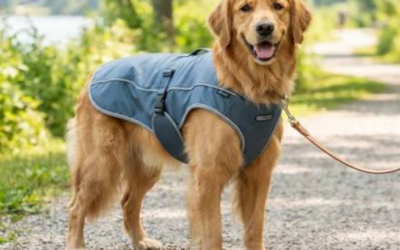
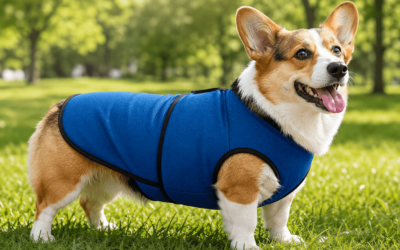
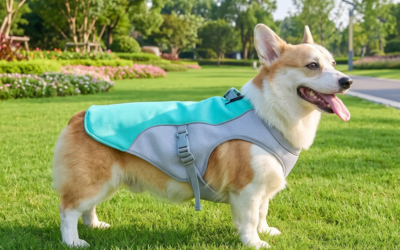
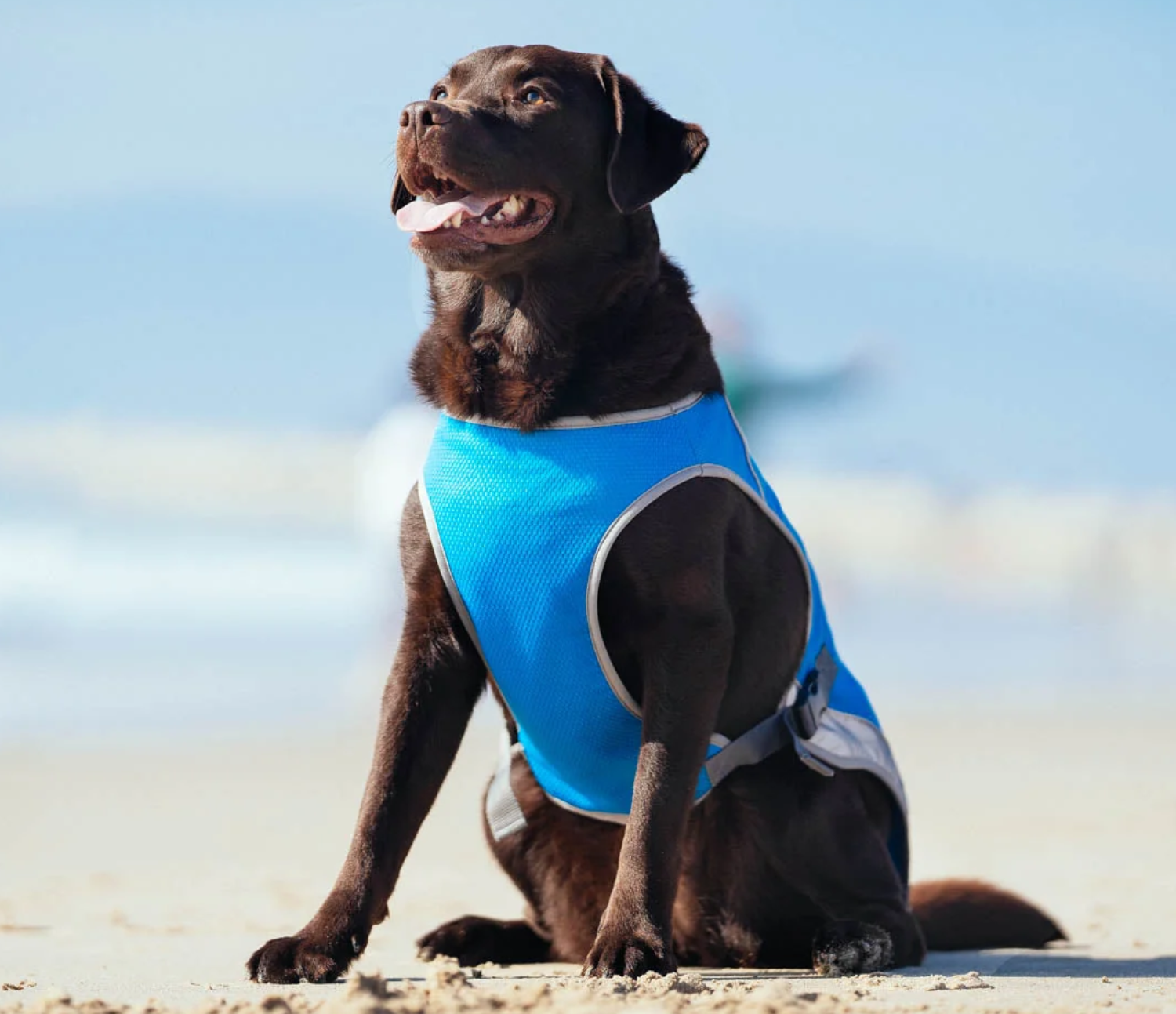
Dog cooling vests primarily help lower skin surface temperature by being close to the body, making them suitable for walks, outdoor activities, travel, and other situations requiring movement.
Cooling mats, on the other hand, provide a cool resting area, making them more suitable for use at home, in the car, or when pets are resting.
Choosing the wrong product doesn’t necessarily mean it’s bad; it simply means it’s not suited to your dog’s lifestyle.
This article will compare the working principles, advantages, and limitations of these two cooling products to help you understand when to choose a cooling vest, when a cooling mat is a better choice, and why many pet owners end up using both products simultaneously depending on the situation.
How Does a Dog Cooling Vest Work? Key Features Explained
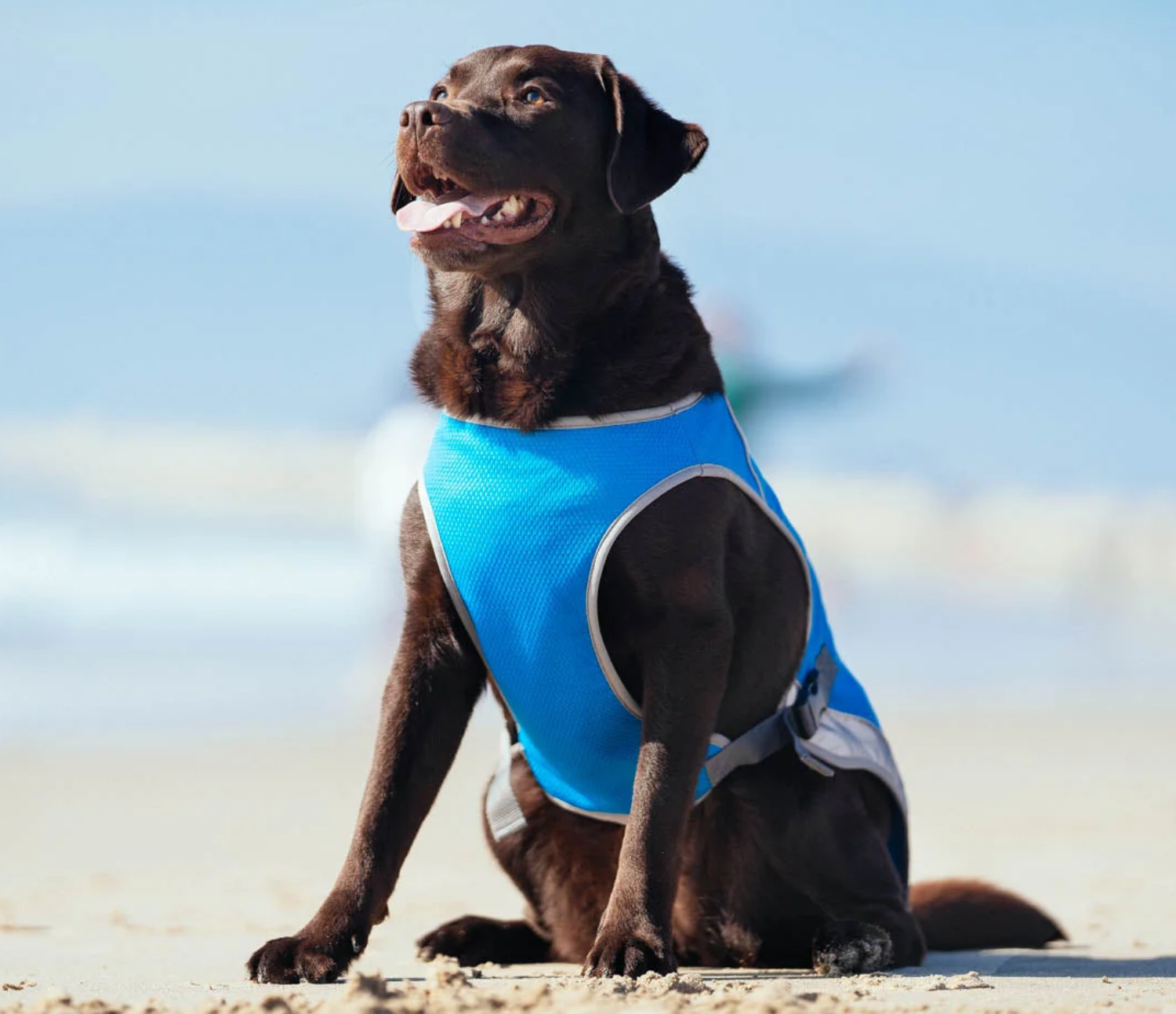
The most common working principle of dog cooling vests is evaporative cooling.
To use, simply soak the vest in clean water, allowing the absorbent material to fully absorb moisture. Then gently wring it out, leaving it damp but not dripping. When the dog wears it, the moisture in the vest will gradually evaporate, carrying away heat from the skin’s surface and helping to reduce discomfort in hot environments.
This principle is similar to how humans cool down by sweating, except that dogs primarily dissipate heat through panting, and their skin’s natural heat dissipation capacity is limited. Therefore, the cooling vest provides an additional auxiliary cooling method.
What are the functions of the materials and structure of a Dog Cooling Vest?
High-quality dog cooling vests typically use a multi-layered fabric structure. Absorbent layers store moisture and increase the surface area of the moisture in contact with air, allowing the evaporation process to last longer.
Some highly absorbent materials can store several times their own weight in water, thus providing a more consistent cooling experience compared to ordinary damp cloths.
The actual cooling effect is affected by many factors, such as:
Ambient humidity; airflow speed; dog’s activity level; vest coverage area.
In dry, windy outdoor environments, evaporation is usually more effective; while in humid, muggy weather, cooling capacity decreases.
When is a Dog Cooling Vest suitable?
The biggest advantage of a dog cooling vest is its ability to continuously provide cooling assistance while the dog is moving.
For example:
Summer walks; hiking; outdoor training; prolonged outdoor activities.
Compared to cooling collars or towels that only cover a limited area, a vest covers the chest and back area, allowing more body area to participate in heat dissipation.
Especially when there is natural wind or airflow generated by movement, the evaporation rate is faster, and the cooling experience is more noticeable.
What are the limitations of a Dog Cooling Vest?
The biggest limitation of evaporative cooling vests is their dependence on environmental conditions.
As the moisture gradually evaporates, they need to be re-soaked to reactivate; otherwise, the cooling effect will gradually weaken.
Meanwhile, in high-humidity environments, the air already contains a lot of moisture, slowing down evaporation and affecting the cooling effect of the vest.
For dogs that spend long periods indoors and are less active, a cooling mat might be a more convenient option, as it provides a consistently cool resting area.
What should you consider when choosing a Dog Cooling Vest?
When purchasing, don’t just focus on advertising figures like “how many degrees it cools down,” but rather on whether the product suits your dog’s actual lifestyle.
Key points to consider:
Whether the absorbent material retains sufficient moisture;
Whether the vest is breathable and lightweight;
Whether it covers the core body area;
Whether it doesn’t restrict shoulder movement and normal breathing.
A good Dog Cooling Vest not only keeps your dog cool but, more importantly, allows it to comfortably integrate into their daily activities.
Dog Cooling Mat: How It Works and Key Features
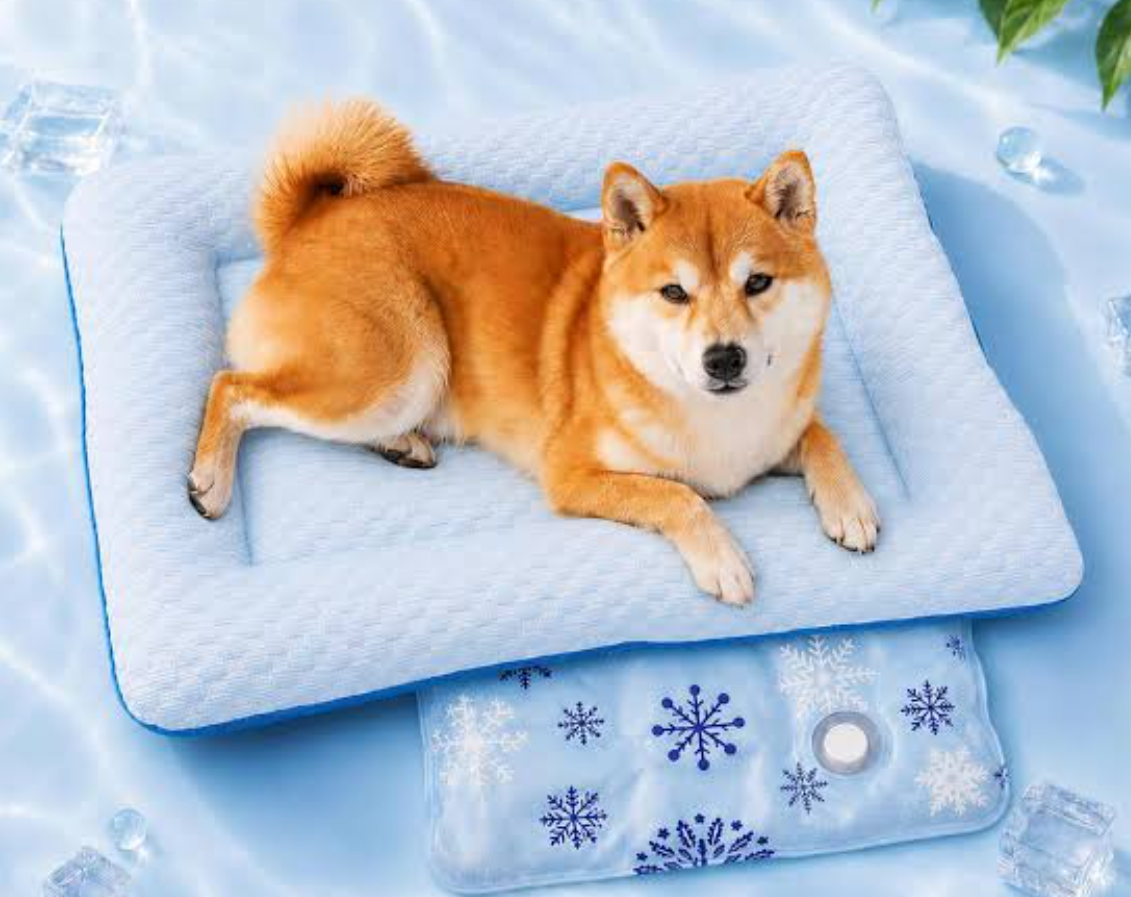
Unlike dog cooling vests, pet cooling mats don’t require water or rely on airflow for cooling. They primarily help relieve heat-related discomfort for dogs through heat transfer.
When a dog lies on the mat, the heat generated by its body is gradually transferred to the mat’s internal cooling layer, such as gel, water-based materials, or PCM phase change materials, and then slowly released into the surrounding environment. Simply put, the mat’s lower surface temperature absorbs heat from the areas in contact with the dog’s body, providing a more comfortable cooling sensation for areas like the abdomen, chest, and paws.
Currently, pet cooling mats on the market mainly use two technologies: gel-based and PCM phase change materials.
Gel cooling mats are the most common type. When a dog lies down, its body weight increases contact with the mat surface, causing the internal gel to absorb heat. After the dog leaves for a while, the gel gradually returns to its original state and regains its heat-absorbing capacity. This design is simple and convenient, making it ideal for everyday household use.
PCM phase change cooling mats use a different approach. Phase change materials (PCMs) undergo a state change within a specific temperature range, continuously absorbing heat and maintaining a relatively stable cooling sensation. Compared to ordinary gels, PCMs offer the advantage of more stable temperature changes, avoiding the problem of initially feeling very cool followed by a rapid warming.
The biggest advantage of dog cooling mats is their convenience. They don’t require pre-filling with water, a power connection, or frequent operation; they’re ready to use as soon as they’re unfolded. Therefore, they are ideal as a cooling tool for dogs during their daily rest, such as placing them near their dog bed, crate, or sofa at home, or using them in the car during summer outings.
However, cooling mats also have their limitations. They primarily reduce the heat felt by the area in contact with the mat, rather than actively lowering the dog’s overall body temperature. When a dog runs, plays, or moves frequently, the contact time between their body and the mat decreases, naturally affecting the cooling effect.
Additionally, as a dog lies in the same position for an extended period, the mat continuously absorbs body heat, gradually approaching the dog’s body temperature, and the cooling sensation slowly diminishes. Placing the cooling mat in direct sunlight or a high-temperature environment will also affect the internal material’s recovery and heat dissipation speed.
Therefore, dog cooling mats are more suitable as a cooling aid for rest, helping dogs find a more comfortable lying area in hot weather. For activities requiring continuous activity, such as walks, hikes, and travel, dog cooling vests, which move with the body, are usually more appropriate.
When choosing a pet cooling mat, it’s not just about how cool it is initially; you also need to consider material durability, surface comfort, ease of cleaning, and whether it suits your dog’s daily activity habits. A truly suitable cooling mat should provide a consistently stable cooling experience that your dog is willing to use.
Key Comparison Points: Performance, Price, and Maintenance Costs
Numbers don’t lie, but they do need context. Comparing a dog cooling vest to a cooling pad isn’t just about which one costs less on the shelf. The real question is what you get for every dollar and every minute you invest—and that’s where total cost of ownership changes the picture.
Performance: Core Temp vs. Surface Temp
Here’s the raw data side by side:
|
Metric |
Cooling Vest |
Cooling Mat |
|---|---|---|
|
Core temperature drop |
1.5–3°F |
1–2°F |
|
Surface temperature drop |
6–12°F |
4–8°F |
|
Maintenance per use |
Requires soaking/re-wetting |
None—unroll and go |
|
Best for |
Continuous use, movement |
Quick, frequent switches |
This vest wins in terms of cooling effect. That extra 1-4 degrees Fahrenheit core temperature reduction is crucial during critical times to prevent heatstroke in dogs—such as hiking in July.
Price isn’t just a number on the label.
Today, a $40 evaporative cooling vest for a dog owner costs far more than $40 over its lifespan. You pay a one-time purchase price, plus ongoing maintenance costs: water bills, soaking time, drying checks, and occasional replacement parts. Without proper maintenance, the vest’s performance deteriorates—or even fails completely.
Pet gel cooling pads eliminate most of these hassles. No water bills, no daily preparation. The main long-term cost is durability—how many summers the gel layer will last before it wears down.
By dividing the price by the expected lifespan, cooling pads generally have the edge, simply because they require less maintenance.
Climate change is the most important factor.
Most buyers overlook this:
Dry and hot: Vests have a clear advantage. Rapid evaporation provides sustained cooling.
Humid climates: Vests are less important – reduced evaporation means less cooling.
Indoors or mixed environments: Floor mats remain stable, unaffected by airflow, and humidity doesn’t impact cooling effectiveness.
For ultimate cooling, choose a vest. For low maintenance and versatility, choose a floor mat. In dry, hot areas, vests are worthwhile. For those who frequently switch between air-conditioned rooms, cars, and short outdoor breaks, the convenience of a floor mat always wins.
How to Choose Cooling Products Based on Dog Type and Usage?
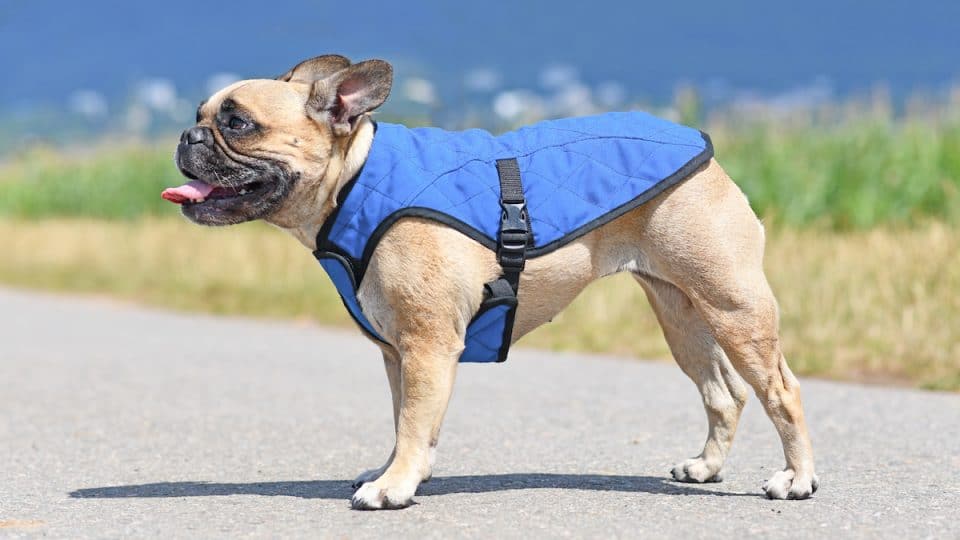
There’s no absolute answer to whether to choose a Dog Cooling Vest or a Dog Cooling Mat. The real deciding factor is two questions:
Where does your dog usually use the product? Is it primarily active or resting?
Understanding these two points usually makes the choice much simpler.
Dogs that are frequently outdoors are better suited to cooling vests.
If your dog often goes for walks, hikes, training sessions, or needs to spend long periods outdoors, then a cooling vest is generally more suitable.
Because the vest moves with the dog, it stays close to the body to provide continuous cooling. Whether walking in the park or doing outdoor training, the dog doesn’t need to stop to find a cool spot, and the cooling effect won’t be lost due to movement.
For energetic, runny dogs, being able to move freely is more important than lying in a fixed position to cool down.
Dogs that prefer rest or have lower activity levels are better suited to cooling mats.
If your dog spends most of its time indoors, likes to lie on the floor to rest, or is older and less active, then a cooling mat may be a more comfortable choice.
Cooling mats provide a consistently cool resting area, allowing dogs to lie down or leave whenever they need to without needing to adjust to wearing them.
For indoor pets, cooling mats are also easier to integrate into daily life, such as placing them in their dog bed, next to the sofa, or in their favorite resting spot.
Different ages and personalities of dogs require different considerations.
For working dogs, high-energy breeds, or frequently trained dogs, maintaining mobility is key, so lightweight, close-fitting cooling vests are usually more suitable.
For small dogs, house dogs, or less active dogs, cooling mats are often more convenient, as they may not need to wear cooling gear continuously.
For senior dogs or dogs in recovery, comfort and minimizing extra burden are more important. A soft, stable cooling area is usually more acceptable than adding extra gear.
Puppies require special attention to safety. Since puppies like to chew on things, when choosing a product, prioritize safe materials, simple construction, and avoid small parts that can easily detach.
The living environment also needs to be considered when choosing a cooling mat.
Besides the dog itself, the environment in which the dog uses the mat is equally important.
If your dog frequently spends time outdoors, such as in the yard, on trips, or hiking, a cooling vest offers more proactive cooling assistance.
If your dog primarily lives indoors and their daily need is simply to help them rest comfortably in hot weather, a cooling mat is usually more practical.
It’s also important to choose the right size based on your dog’s size. Large dogs require consideration of coverage and durability, while small dogs should avoid products that are too large and restrict their movement.
In short:
If your dog enjoys walking, running, playing, and exploring, a Dog Cooling Vest is more suitable;
If your dog prefers to lie down, rest, and sleep, a Dog Cooling Mat is a better choice.
For many pet owners, the two are not complete substitutes, but rather different cooling methods for different scenarios.
Best Solution: Use Dog Cooling Vest and Cooling Mat Together
Many pet owners ask: Which is better, a cooling vest or a cooling mat?
Actually, they address different problems.
A Dog Cooling Vest is better suited for use while your dog is active. It moves with your dog, providing cooling assistance during walks, trips, or outdoor activities.
A Dog Cooling Mat, on the other hand, is better suited as a cooling space for rest, allowing your dog to lie down and recover comfortably after activity.
Using both products together often better suits your dog’s daily routine than choosing just one.
Choose according to your dog’s daily activity schedule
A dog’s cooling needs usually change with their activity level.
When walking, training, or playing, dogs generate more heat and need a way to cool down that moves with them. At this time, a cooling vest stays close to the body, providing more suitable cooling assistance during active periods.
After returning home, dogs usually enter a resting phase. At this time, a cooling mat can provide a cool lying area, allowing your dog to reduce heat while relaxing.
This combination of “wearing during activity and lying down during rest” is more suitable for practical use.
When is it best to use them together?
If your dog goes through two phases daily—outdoor activity and indoor rest—the cooling vest and cooling mat can complement each other well.
For example:
Use the cooling vest during morning or evening walks to help your dog cope with outdoor heat;
After returning home from activity, let your dog rest on the cooling mat to help relieve post-exercise heat;
In hot weather, you can also flexibly switch between them depending on the temperature and activity schedule for the day.
What if you can only choose one?
When budget is limited, prioritize the scenarios your dog most frequently experiences.
If your dog is frequently outdoors, enjoys exercise, or needs to spend long periods outdoors, a Dog Cooling Vest will be more valuable.
If your dog primarily lives indoors and its daily need is to stay comfortable during summer rest, then a Dog Cooling Mat is generally more practical.
The truly suitable cooling solution is not to choose the “stronger” product, but to choose a product that matches your dog’s lifestyle.
Usage Precautions: Cooling products cannot replace basic heatstroke prevention measures.
Whether it’s a Dog Cooling Vest or a Dog Cooling Mat, they are only auxiliary tools to help dogs alleviate discomfort from high temperatures. They cannot replace drinking water, shade, rest, and necessary veterinary care.
In hot weather, if your dog exhibits persistent, severe panting, abnormal behavior, vomiting, or decreased alertness, immediately stop its activity, place it in a cool environment, and seek professional help promptly, rather than waiting for cooling products to take effect.
When using a cooling mat, observe its condition. If the surface no longer provides a noticeable cooling sensation, discontinue use and allow the internal material to recover before resuming. If using it for extended periods in hot weather, prepare a spare cooling mat for rotation.
When using a cooling vest, reactivate it as needed based on the ambient temperature and your dog’s activity level. The vest’s cooling effect will gradually decrease as moisture evaporates. Proper size is also important; the vest should fit the body but not restrict normal activity. Observe for any friction or skin irritation.
For dogs that frequently go outdoors, lightweight products like cooling collars or cooling bandanas can be used as additional cooling aids. However, regardless of the equipment used, minimizing sun exposure, providing ample water, and ensuring adequate rest remain paramount in extremely hot environments.
Dog Cooling Vest vs. Cooling Mat: Which is better for your dog?
There’s no absolute “winner” between dog cooling vests and dog cooling mats, as they address cooling needs in different scenarios.
If your dog enjoys walks, hikes, travel, or outdoor activities, a cooling vest that moves with the body is more suitable. It provides continuous cooling during activity, making outdoor time more comfortable.
For dogs that prefer to rest at home, have lower activity levels, or need quiet recovery after exercise, a cooling mat provides a simple and convenient cool resting area.
For many pet owners, the ideal approach isn’t choosing one or the other, but rather using a combination of products tailored to different scenarios:
Use Dog Cooling Vest for outdoor activities to help your dog manage heat buildup during movement; use Dog Cooling Mat for resting at home to provide a comfortable, cooled space.
This combination covers your dog’s cooling needs throughout the day.
Choose the right cooling solution for your dog
Every dog has a different lifestyle, so the most suitable cooling product will also differ.
Before choosing, consider:
Does your dog spend more time outdoors or resting at home?
Does it need cooling support while on the move, or a fixed, cool space?
ICEBEAR specializes in the research and development and manufacturing of pet cooling products, providing Dog Cooling Vest, Cooling Mat, and OEM/ODM customized solutions to help brand owners, retailers, and pet industry clients develop high-quality cooling products suitable for different market needs.
Whether for summer outdoor activities, pet supply retail, or branded custom projects, ICEBEAR offers material selection, structural design, and production support tailored to different application scenarios.
Learn more about pet cooling solutions and explore the Cooling Vest and Cooling Mat product lines to suit your market needs.