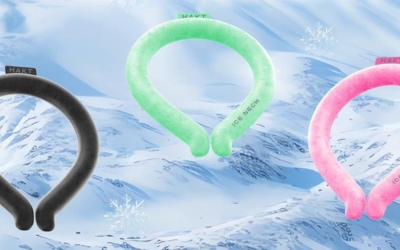
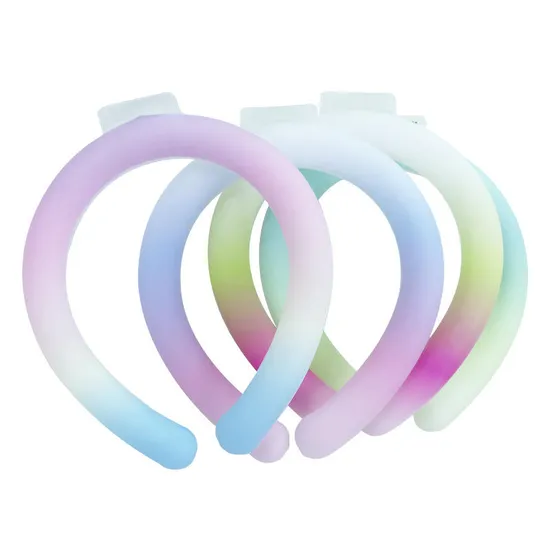
When you first receive a PCM Neck Cooler, it typically provides a noticeable and consistent cooling sensation. However, after a period of use, as the internal PCM material gradually undergoes a phase transition, the cooling effect will slowly diminish. This doesn’t mean the product has failed; rather, it indicates that it needs reactivation.
Using a PCM Neck Cooler is not entirely the same as using a regular ice pack. The correct activation temperature, wearing method, and storage method will all affect the cooling effect and duration of each use.
In this guide, we will detail how to properly use and reactivate a PCM Neck Cooler, including what to do before first use, how to wear it for better comfort, and how to quickly restore its cooling state using a refrigerator, freezer, or ice water. We will also share some simple usage and maintenance methods to help you maximize the cooling effect of your PCM Neck Cooler and extend its lifespan.
How PCM Neck Coolers Work

Your PCM neck cooler runs on a phase-change material that flips between solid and liquid depending on temperature. That switch—solid to liquid—is where the cooling happens. As the material absorbs heat, it melts, and that process pulls thermal energy away from your skin. This is called latent heat absorption, and it’s the entire mechanism behind why the tube feels cold.
The Temperature Thresholds That Matter
Most PCM neck coolers fall into a few standard ranges:
28°C models: The most common type. These freeze solid below 28°C and start melting (absorbing heat) once temps climb above that. Manufacturers market this as the “comfort cooling” zone.
18°C or 21°C models: Built for more aggressive cooling. You’ll find these in gear designed for intense heat or specific work environments.
24–28°C working band: Some products describe their effective range this way, keeping the material close to comfortable skin-surface temperature.
Why It Feels Cold Without Getting “Ice Cold”
Unlike a standard ice pack that keeps dropping toward 0°C, a PCM neck cooler stabilizes near its phase-change point. That’s why most units hover around 27–28°C—a steady cooling plateau instead of a harsh temperature crash.
How This Differs From Ice Packs or Gel Coolers
-
No battery, no electricity—cooling happens through the phase change.
-
No deep freeze required. Many PCM coolers re-solidify below 28°C on their own, while gel or electronic alternatives often need 1–2 hours in the freezer or 30–60 minutes in the fridge.
-
Gentler on skin, with less condensation soaking your collar.
-
Fully reusable once the material re-solidifies.
Working principle
Absorption: ambient heat → PCM melts → your neck cools down.
Recovery: temperature drops → PCM releases heat → solidifies → ready to reuse.
Activation Check Steps Before First Use

When using a PCM Neck Cooler for the first time, it is not recommended to wear it immediately after taking it out of the packaging. Take some time to confirm the product’s phase transition temperature, activation method, and whether the internal PCM has completely solidified, as this will directly affect the actual cooling experience.
First, check the product label or instruction manual. Different PCM materials have different phase transition temperatures, so the activation methods may also differ. Some products can be refrigerated, while others can be quickly activated using ice water or the freezer. Follow the manufacturer’s recommended method; there is no need to freeze for an extended period in pursuit of “cooler” results.
After activation, gently press the Neck Cooler with your hand. If the inside is mostly solidified, the overall state is relatively uniform, and there is no obvious liquid flow or particularly soft areas, it is usually ready for use.
If the outer layer has hardened, but the middle is still noticeably soft, it means that the PCM may not have fully completed its phase transition. In this case, continue cooling for a while.
It is important to note that the key to using a PCM Neck Cooler is not necessarily lower temperatures. The correct activation method is to allow the PCM to complete its phase change and reach the working state designed for the product, so as to obtain a more stable and comfortable cooling sensation.
Matching Method to Speed
|
Method |
Speed |
Risk |
Check For |
|---|---|---|---|
|
Fridge |
Slow, gentle |
Minimal |
Even cooling, no soft spots |
|
Freezer |
Fast |
Cracking, uneven freeze |
Brittleness |
|
Ice water |
Moderate |
Uneven soak |
Consistent firmness |
Quick Checklist
-
Read label for activation temp and warnings
-
Choose one cooling method, don’t switch mid-cycle
-
Pinch-test for solidification
-
Confirm no liquid residue before wearing
How to Wear a PCM Neck Cooler Correctly for More Stable Cooling Effect
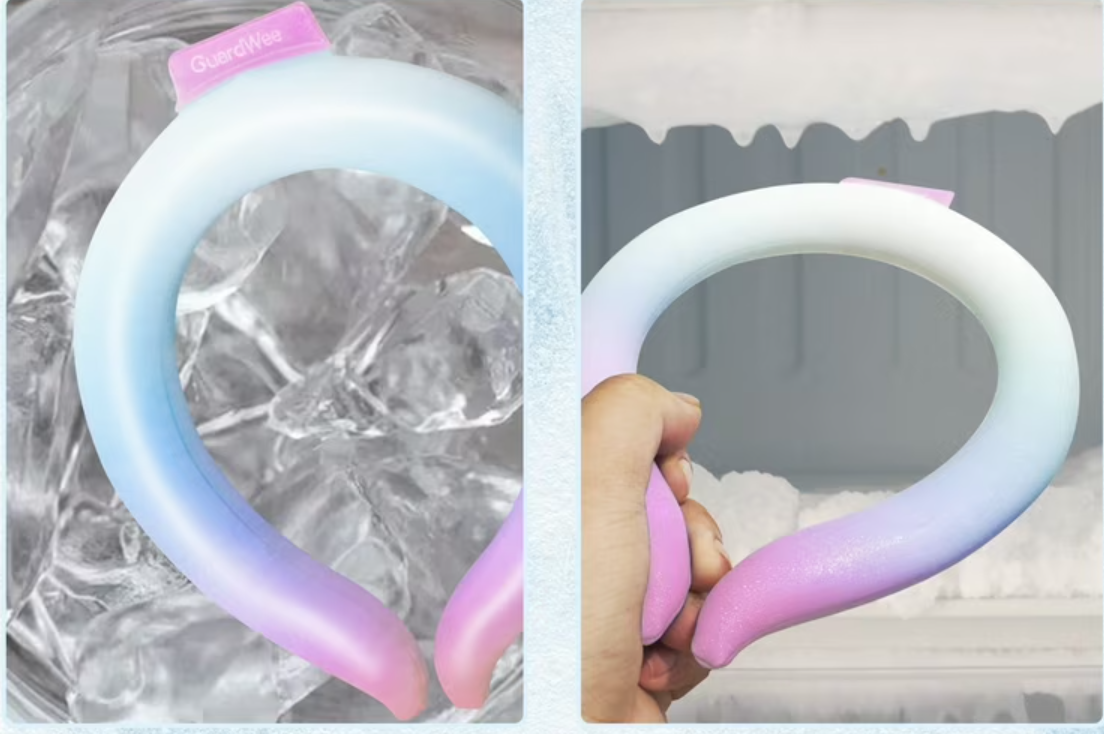
The effectiveness of a PCM Neck Cooler isn’t just about how cold it is; how you wear it is equally important. Even when fully activated, insufficient contact between the product and the neck will affect the actual cooling sensation and the duration of the cooling experience.
The ideal state is a snug fit without noticeable pressure. After putting it on, gently rotate your head a few times to ensure the Neck Cooler doesn’t easily slip, and that normal breathing, swallowing, and movement are unaffected. If it feels too tight, numb, or noticeably uncomfortable, adjust it immediately.
The placement is also crucial.
Generally, the PCM Neck Cooler should fit naturally on the sides and back of the neck, minimizing gaps between the product and the skin. Stable contact helps heat transfer more effectively to the PCM material, resulting in a more noticeable localized cooling sensation.
For activities involving frequent movement, such as walking, commuting, or outdoor activities, pay attention to whether the product easily shifts with body movements. Appropriate size and structural design are often more important than simply achieving the lowest possible temperature.
A few simple preparations before use
It’s recommended to activate the product before going out or exercising, rather than waiting until you feel very hot to start cooling. Before wearing, wipe away sweat from your neck and pull long hair to the outside of the product to allow the Neck Cooler to contact your skin more directly.
If you sweat a lot during use, you can temporarily remove the product, wipe your neck dry, and readjust its position. For extended outdoor activities, you can also prepare a second activated PCM Neck Cooler for rotation, which is more practical than wearing a fully activated product continuously.
Don’t blindly pursue “the colder the better.”
The advantage of the PCM Neck Cooler is that it provides a relatively stable and comfortable cooling sensation, rather than producing a strong low-temperature stimulation like ice cubes.
If you have sensitive skin, you can try wearing it for a short time first. If there is no obvious redness, stinging, or other discomfort, you can extend the usage time. If necessary, you can also add a thin, breathable fabric between the product and your skin.
In short, correct use is not complicated: Fully activate → Wipe your neck dry → Adjust to a comfortable and fiting position → Readjust or rotate as needed during use. Paying attention to these details usually improves the actual user experience of the PCM Neck Cooler more than simply extending the freezing time.
3 Ways to Reactivate a PCM Neck Cooler
When the cooling sensation of a PCM Neck Cooler gradually disappears, and the internal material softens or liquefies again, it doesn’t mean the product has failed. Simply allow the PCM to cool below its phase change temperature and solidify again to resume use.
There are three common reactivation methods: refrigerator cooling, freezer cooling, and ice water activation. The specific method you choose depends on the product’s phase change temperature, the manufacturer’s instructions, and your current usage environment.
Method 1: Refrigeration – Best for Daily Use
For common 28°C PCM Neck Coolers, refrigerator cooling is usually a convenient and stable method.
Lay the product flat in the refrigerator, without folding it, and avoid placing heavy items on top. Depending on the product size, PCM capacity, and refrigerator temperature, it typically takes about 1–4 hours to completely solidify.
Before removing it, gently press it to check. If the inside has solidified evenly and there are no obvious liquid areas, it is ready to wear again.
This method, while not the fastest, is suitable for everyday home preparation.
Method Two: Freezer – For Rapid Activation
If the product instructions explicitly support freezing, you can place the PCM Neck Cooler in the freezer to speed up activation. Some products will refreeze in approximately 30–60 minutes.
However, not all PCM Neck Coolers are suitable for direct freezing. Different PCM formulations, shells, and sealing structures have different temperature tolerances, so it’s best to check the manufacturer’s instructions before use.
If the product is labeled for refrigeration activation only, there’s no need to freeze it for an even lower temperature. The key to PCM activation is completing the phase change, not freezing it as cold as possible.
Method Three: Ice Water Activation – Suitable for Rapid Outdoor Restoration
Ice water is a very practical option when a refrigerator is unavailable.
Completely immerse the PCM Neck Cooler in an ice-water mixture, ensuring the product surface is in full contact with the cold water. Compared to simply placing it in cold water, adding enough ice keeps the water temperature lower and more stable, thus accelerating the refreezing of the PCM.
During use, you can occasionally adjust the product’s position and observe the state of the internal materials. Once the overall structure becomes uniform and stable again, it can be removed, dried, and reused.
This method is particularly suitable for outdoor work, camping, sporting events, or travel where quick replacement of the Neck Cooler is required.
Which method is more suitable?
If time permits, refrigeration is more convenient; for quick preparation, the freezer compartment can be used if the product allows; if you are outdoors, you can directly choose ice water activation.
Regardless of the method used, it is recommended to follow the activation temperature and method specified in the product manual. For PCM Neck Coolers, the real importance is ensuring the phase change material fully and uniformly re-solidifies, rather than simply pursuing lower temperatures.
Quick Comparison
|
Method |
Speed |
Durability |
Best For |
|---|---|---|---|
|
Fridge |
Moderate (2–4 hrs) |
Reliable |
Daily reuse |
|
Freezer |
Fast (30–60 min) |
Longest-lasting |
Planned, freezer-safe units only |
|
Ice Bath |
Fastest |
Short-term |
Emergencies, no fridge access |
When time’s tight, ice bath wins. For consistent daily cycling, the fridge remains the safest bet.
How to Extend the Cooling Time of a PCM Neck Cooler Each Use?
The actual usage time of a PCM Neck Cooler depends not only on the PCM material itself but also on its activation state, ambient temperature, sun exposure, and usage method. Paying attention to a few simple details can maximize the cooling effect after each activation.
First, ensure the PCM has completely re-solidified before use. Wearing it if there are still noticeably soft or liquid areas inside will shorten the actual usable cooling time. Therefore, regardless of whether you activate it in a refrigerator, freezer, or ice water, it’s recommended to ensure the overall state is uniform before use.
Prepare Spare Neck Coolers for Rotation
If you need to spend a long time outdoors, having two or more PCM Neck Coolers is often more practical than simply aiming for one product to last longer.
For example, while one is being worn, another can be placed in a cooler or ice water to reactivate. Replace the current product when its cooling effect noticeably weakens for a more continuous cooling experience.
This method is particularly suitable for construction work, outdoor activities, sporting events, and long commutes.
Minimize Additional Heat Impact
The more heat the PCM absorbs, the faster the phase change process completes. Therefore, when not in use, do not leave the Neck Cooler in direct sunlight, inside a car, or in other high-temperature environments for extended periods.
If you need to carry a spare product, store it in an insulated cooler bag or cooler box along with ice packs. This reduces the amount of ambient heat entering, allowing the activated PCM to remain active for longer.
A Simple Principle
To extend the lifespan of your PCM Neck Cooler, remember three key points:
Fully activate it, avoid high-temperature storage, and have spare products available for rotation.
These usage habits offer more direct benefits to the user experience than repeatedly extending the freezing time. Especially in scenarios requiring continuous cooling for several hours, proper rotation is often more effective than relying on a single Neck Cooler.
Common Misconceptions and Safety Precautions for PCM Neck Coolers
While the structure of a PCM Neck Cooler is not complex, incorrect activation methods, prolonged high-temperature storage, or continued use after the product has been damaged can all affect its cooling effect and lifespan. Therefore, it is essential to briefly check the product’s condition before each use.
Do not over-freeze for greater cooling.
The key function of a PCM Neck Cooler is to bring the phase change material to its designed working state, not simply to lower the temperature as much as possible.
If the manufacturer recommends refrigeration or ice water activation, follow the instructions. Excessively low temperatures may not only make it feel too cold when first worn but may also put additional stress on the casing and sealing structure of some products.
Similarly, PCM Neck Coolers are not suitable for prolonged placement in hot car interiors, near heaters, or in direct sunlight. Sustained high temperatures may accelerate the aging of the material and casing, shortening its lifespan.
Reactivate before use after the cooling sensation disappears.
When the Neck Cooler gradually softens and returns to near ambient temperature, it usually indicates that the PCM has largely completed its phase change. This is a normal phenomenon and does not indicate product damage.
At this point, remove the product and re-refrigerate, freeze, or re-immerse it in ice water according to the instructions. Do not reuse the product before the PCM has fully recovered, otherwise the effective cooling time each time will be significantly shortened.
Do not continue use if damaged or leaking.
Check the outer shell and seals before each use. If you find cracks, leaks, obvious bulges, permanent deformation, or seam cracks, it is recommended to stop using the product and replace it.
If internal material accidentally leaks and comes into contact with skin, wash it immediately; if it comes into contact with eyes or is ingested, follow the product safety instructions and seek professional help if necessary.
Pay attention to your skin’s actual sensation.
Normal wear should feel cool and comfortable, not noticeably stinging or numb.
If you experience persistent redness, numbness, stinging, or significant discomfort during use, remove the Neck Cooler immediately and allow your skin to recover before deciding whether to continue use. People with sensitive skin can also try wearing it for a short time first, or add a thin, breathable fabric between the product and their skin.
When should I replace my PCM Neck Cooler?
While PCM material itself can undergo repeated phase change cycles, the product itself is not indefinitely lifespan. With prolonged use, the casing, sealing structure, and materials will gradually age.
If the product shows obvious damage, or if the cooling duration is significantly shorter than when it was first purchased after proper activation, consider replacement.
For daily use, remember this simple principle:
Activate according to instructions, avoid extreme temperatures, check appearance before use, and stop use immediately if any abnormalities occur.
Proper use and storage not only ensure a more stable cooling effect for the PCM Neck Cooler but also help extend its actual lifespan.
PCM Neck Cooler Usage Check: Remember These Steps
Using a PCM Neck Cooler is not complicated. Once you master the correct activation and wearing method, you can generally follow the same procedure every time you use it.
First, confirm that the PCM has fully solidified. If it is still noticeably soft or has liquid flowing inside, you can continue activation by using a refrigerator, freezer, or ice water. Refer to the product instructions for specific methods.
After activation, adjust the Neck Cooler to the sides or back of your neck, ensuring a natural fit; do not tighten it excessively. During use, if you notice the cooling sensation gradually weakening and the PCM starting to soften, it usually indicates that the phase transition process is nearing completion. At this point, you can reactivate it or switch to a spare product.
Also, pay attention to your actual sensations. If you experience significant pressure, skin redness, numbness, or other discomfort, remove the cooler immediately and readjust it.
In short, remember this sequence:
Check status → Complete activation → Wear correctly → Observe the cooling sensation → Reactivate or rotate.
Slight adjustments may be made depending on the situation. For daily commutes, lightweight and comfortable operation is key; for sports or outdoor activities, pre-activate the device and prepare a spare; if working in a high-temperature environment for extended periods, plan your rotation schedule in advance, along with hydration, sun protection, and adequate rest, rather than relying solely on the Neck Cooler.
Conclusion
The key to using a PCM Neck Cooler correctly is not how cold it gets, but rather full activation, proper wearing, and timely reactivation after the phase change cycle.
Depending on the product design, you can use a refrigerator, freezer, or ice water to restore the PCM to a usable state. If you need to cool continuously for several hours, having two Neck Coolers to rotate is more convenient than repeatedly using the same softened product.
The advantage of the PCM Neck Cooler is that it requires no continuous power supply and does not rely on moisture evaporation; it absorbs heat through phase change material, providing a relatively stable cooling sensation to the neck. Mastering the correct usage and maintenance methods will also ensure a better user experience throughout multiple cooling cycles.
If you’re looking for a PCM neck cooler suitable for outdoor activities, high-temperature work, sports, or daily commutes, ICEBEAR offers a variety of PCM personal cooling products and supports OEM/ODM customization services for colors, sizes, packaging, and brand logos.
Whether you’re purchasing in bulk or developing your own branded products, you can choose the most suitable PCM cooling solution based on your target market and usage scenario.